What Are Chatterbaits?
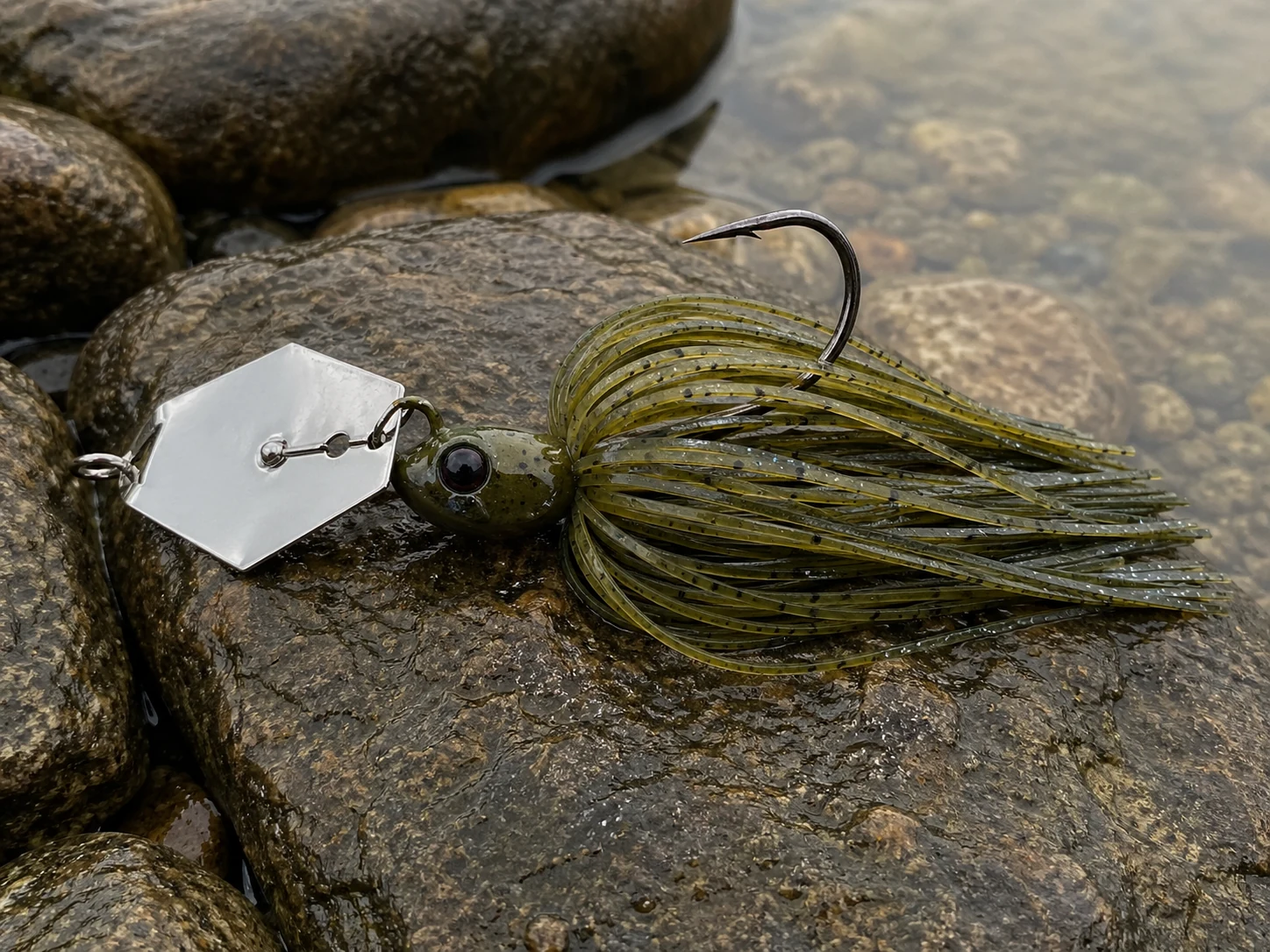
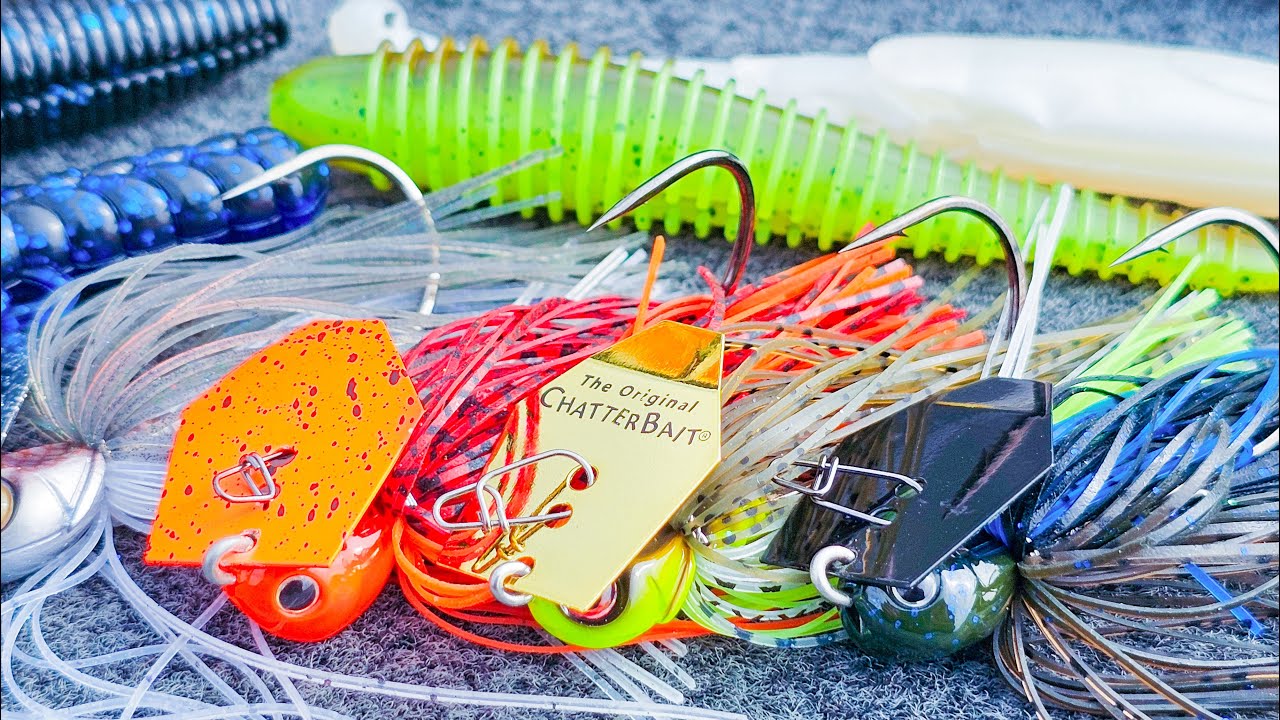
A chatterbait — also called a bladed jig or vibrating jig — pairs a hexagonal blade attached to the front of a skirted jighead. As you reel, the blade deflects water side-to-side, making the jig vibrate, rattle, and dart erratically. Z-Man’s original ChatterBait launched the category in 2006; today every major bass-tackle company sells some version of the design.
The result is a lure that combines the snag-resistance of a jig (point rides upward, brush-guard optional) with the vibration of a crankbait. It runs through grass, over rocks, and around laydowns without constant fouling — which is what makes it deadly on Indiana’s stained reservoirs and river systems.
Why Indiana Bass Love Chatterbaits
- Stained water. Geist, Morse, Eagle Creek, and the lower Wabash all have stained-to-muddy water for much of the year. The chatterbait’s vibration calls fish from cover that flash-only baits can’t penetrate.
- Pre-spawn aggression. Indiana bass move shallow in March and April. A 1/2-oz chatterbait swimming through emerging vegetation triggers reaction strikes from territorial pre-spawn fish.
- Grass. Monroe Lake’s hydrilla, Patoka’s milfoil, and farm-pond pads all hold bass that ambush a chatterbait ripping through the cover.
Sizes and Colors
| Size | When to Use |
|---|---|
| 3/8 oz | Clear water, finesse situations, shallow grass |
| 1/2 oz | Default Indiana size — covers most situations |
| 3/4 oz | Heavy current, deep weed lines, windy days |
| 1 oz | Muskie or pike, deep ledges |
Color cheatsheet: Chartreuse-and-white in stained water, white in clear-to-moderately-stained, black-and-blue in muddy or low-light, junebug for any vegetation-heavy fishery.
How to Fish a Chatterbait
The basic retrieve is a steady reel at moderate speed — fast enough to keep the blade thumping, slow enough to feel each pulse. You’ll feel the vibration through the rod tip; if it goes silent, the blade has fouled with weed and you need to rip it free.
Three standard variations:
- Steady swim along weed edges and in 2-6 feet of water.
- Yo-yo retrieve — cast, count it down, then lift-pause-lift the rod. Strikes usually come on the fall.
- Burn-and-kill — fast retrieve interrupted by sudden pauses. Great for following bass in clear water.
Tackle
A 7’0” to 7’3” medium-heavy fast-action rod, 17-pound fluorocarbon or 30-50 lb braid with a fluoro leader, and a 6.3:1 to 7.3:1 reel covers most chatterbait fishing. Heavier line is fine — chatterbaits aren’t subtle, and you’ll want the muscle to pull big bass out of grass.