Best Fishing Charters and Guides in Indiana
March 19, 2026
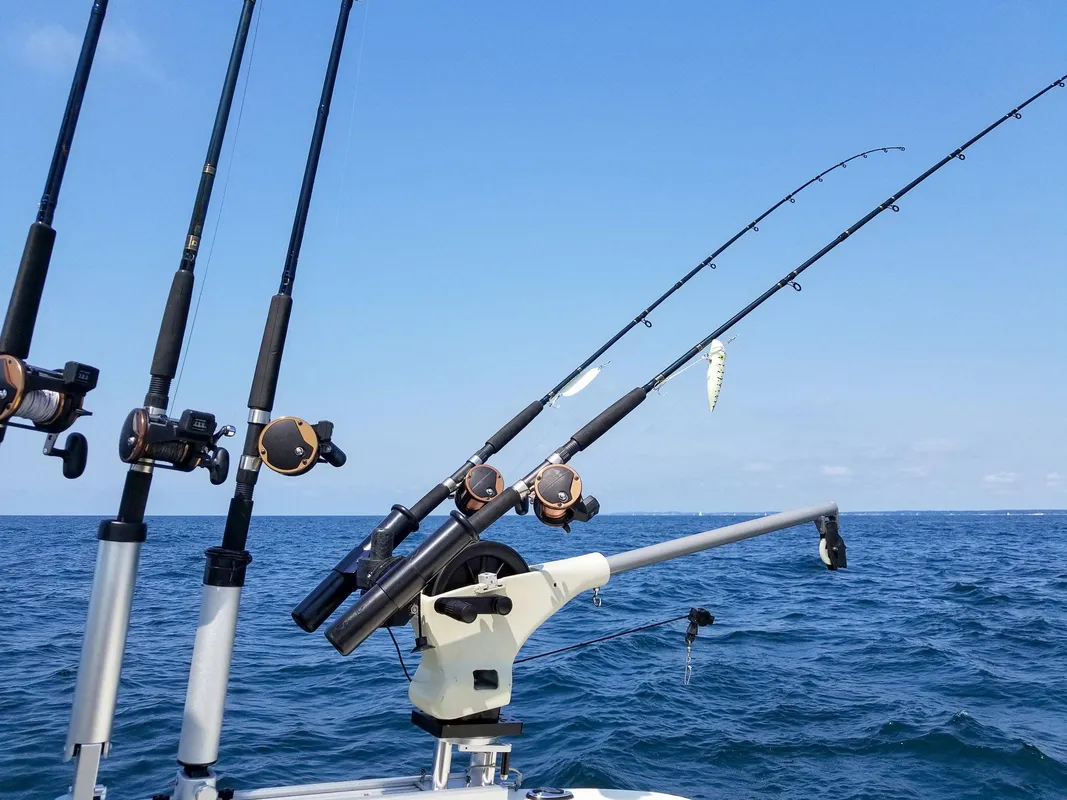
Indiana has over 90 DNR-licensed fishing guides and charter captains operating across the state, from the big water of Lake Michigan to the clear-running rivers of southern Indiana. Whether you want to troll for chinook salmon, jig for walleye, throw topwater for smallmouth, or drift a fly through a limestone creek, there is a professional guide who can put you on the fish.
This guide breaks down the best fishing charter and guide destinations in Indiana by region, so you can find the right trip for your target species and experience level.
Lake Michigan Charters — Salmon, Steelhead, and Perch
Indiana’s 45-mile Lake Michigan coastline is home to the state’s most concentrated charter fleet, with the majority of boats operating out of Michigan City’s Trail Creek harbor. Additional charters depart from Portage/Burns Harbor and the Hammond/East Chicago area.
What makes Indiana’s Lake Michigan fishing special: Indiana’s charter port in Michigan City offers quick access to deep water, which means less travel time and more fishing time compared to some ports farther north on the lake. The thermal bar — the boundary between warm nearshore water and cold open-lake water — sets up close to Indiana’s coast in spring, concentrating baitfish and the predators that follow them.
Target species: Chinook (king) salmon, coho salmon, steelhead (both Skamania and Michigan strains), lake trout, and yellow perch.
Best season: Coho salmon arrive first (May through July), followed by chinook in full force (July through September). Steelhead are available nearly year-round. Perch fishing peaks in summer. Late September through October offers excellent shots at mature chinook staging for their spawning run.
Typical cost: $500 to $800 for a half-day, $700 to $1,200 for a full day, accommodating up to 6 anglers. Split among a full group, the per-person cost ranges from $85 to $200.
Who should book: Anyone wanting to experience Great Lakes sport fishing. Lake Michigan charters are ideal for groups of friends, corporate outings, and family trips. No prior experience needed — the captain and mate handle everything.
[Browse Lake Michigan charter captains on indianafishing.guide]
Brookville Lake Guides — Indiana’s Walleye Capital
Brookville Lake in Franklin County is the premier walleye destination in Indiana. This 5,260-acre U.S. Army Corps of Engineers reservoir consistently produces walleye over 8 pounds, and the DNR stocks walleye fingerlings regularly to maintain the fishery. Brookville also holds an outstanding smallmouth bass population and underrated crappie fishing.
Target species: Walleye (primary), smallmouth bass, crappie, largemouth bass.
Best season: Spring walleye fishing peaks from March through May as fish move to shallow spawning areas and the tailwaters below the dam. Smallmouth bass are best from May through October. Fall walleye fishing (September through November) picks up as water temperatures drop and fish feed aggressively.
Typical cost: $300 to $500 for a half-day, $400 to $600 for a full day, 1-2 anglers.
What to expect: Brookville guides typically fish from well-equipped walleye boats with bow-mount trolling motors and forward-facing sonar. Techniques include jigging with live bait, trolling crankbaits, and casting blade baits. The lake is relatively clear, which makes it technical water — a guide’s electronics and local knowledge make a major difference.
Who should book: Walleye anglers of any skill level. Brookville is arguably the best walleye lake in the state, and a local guide will put you on fish that would take a visiting angler many trips to locate.
[Browse Brookville Lake guides on indianafishing.guide]
Monroe Lake Guides — Best Bass Fishing in Indiana
Monroe Lake in Monroe County is Indiana’s largest inland lake at 10,750 acres and its most famous bass fishery. Monroe produces largemouth bass over 7 pounds with regularity and hosts multiple tournament circuits throughout the year. The lake’s standing timber, creek channel ledges, and extensive shallow cover make it ideal largemouth habitat.
Target species: Largemouth bass (primary), smallmouth bass, crappie, bluegill, catfish.
Best season: Spring (March through June) is prime time. Pre-spawn largemouth stage on secondary points and channel swings in 8 to 12 feet before moving shallow to spawn in April and May. Fall (September through October) produces excellent topwater and crankbait fishing as bass chase shad.
Typical cost: $300 to $450 for a half-day, $400 to $600 for a full day, 1-2 anglers.
What to expect: Monroe Lake guides fish from tournament-style bass boats. Techniques vary by season but include flipping and pitching jigs into standing timber, throwing spinnerbaits and crankbaits along channel ledges, and working topwater in low-light conditions. The lake is large enough that knowing where to start each day is half the battle — a local guide eliminates the guesswork.
Who should book: Bass anglers looking for big fish, tournament anglers scouting for an event, and beginners who want to learn bass fishing on productive water.
[Browse Monroe Lake guides on indianafishing.guide]
River Guides — Smallmouth, Catfish, and More
Indiana’s river systems offer some of the state’s most underrated fishing, and a growing number of guides specialize in float trips and river fishing.
Key rivers: The Wabash River is Indiana’s largest interior river and holds massive flathead and blue catfish along with excellent smallmouth populations. The White River (both east and west forks) provides diverse fishing from Indianapolis south to its confluence with the Wabash. The Tippecanoe River in north-central Indiana is a clear, rocky river with outstanding smallmouth bass fishing.
Target species: Smallmouth bass, channel catfish, flathead catfish, blue catfish, saugeye, white bass.
Best season: Smallmouth bass fishing on rivers is best from May through October, with peak action during the summer months when fish hold on current breaks and rocky structures. Catfish fishing is productive from late spring through fall, with the biggest flatheads coming in June and July.
Typical cost: $250 to $400 for a half-day, $350 to $550 for a full day, 1-2 anglers. Float trips may be priced slightly differently depending on the distance covered.
What to expect: River guides use drift boats, jon boats, or specialized river boats to access stretches of water that bank anglers cannot reach. On float trips, the guide rows or motors between spots while you fish from the boat. On anchor trips, the guide positions the boat on structure and you work the area thoroughly. River fishing is active and engaging — you are constantly casting, moving, and reading the water.
Who should book: Anglers who want a different experience from lake fishing. River trips are especially rewarding for smallmouth bass enthusiasts and anyone interested in catfishing for trophy flatheads.
[Browse river guides on indianafishing.guide]
Fly Fishing Guides — Indiana’s Best Streams
Indiana is not the first state that comes to mind for fly fishing, but the state has a legitimate and growing fly fishing scene, supported by a handful of dedicated guides.
Key waters: Sugar Creek in west-central Indiana (Montgomery and Parke counties) is arguably Indiana’s best fly fishing stream — a scenic, wadeable creek with healthy populations of smallmouth bass, rock bass, and panfish. Blue River in southern Indiana’s Harrison and Crawford counties flows through hill country and offers beautiful float-fishing for smallmouth. The Tippecanoe River provides both wading and float opportunities for fly anglers. During winter and spring, Trail Creek and other Lake Michigan tributaries attract fly anglers targeting steelhead.
Target species: Smallmouth bass (primary), rock bass, panfish, steelhead (seasonal, Lake Michigan tributaries).
Best season: Smallmouth fly fishing is best from May through September. Steelhead runs in tributaries peak from October through April. Summer evenings produce excellent topwater action on crayfish and popper patterns.
Typical cost: $300 to $500 for a full day, $200 to $350 for a half day, 1-2 anglers. Most fly fishing guides provide all equipment including rods, reels, flies, and sometimes waders.
What to expect: Fly fishing guides provide patient, hands-on instruction. If you have never cast a fly rod, expect to spend the first hour learning the basics before you start catching fish. Experienced fly anglers will appreciate a guide’s knowledge of local hatches, effective patterns, and water access. Trips may involve wading, floating in a drift boat, or a combination of both.
Who should book: Anyone curious about fly fishing, experienced fly anglers visiting Indiana, and steelhead chasers looking for guided tributary access during the fall and spring runs.
[Browse fly fishing guides on indianafishing.guide]
How to Choose the Right Guide
With over 90 DNR-licensed guides operating across Indiana, narrowing down your choice comes down to a few key factors:
Decide on your target species first. The best guides specialize. A walleye guide on Brookville and a bass guide on Monroe are both excellent at what they do, but their skills are not interchangeable. Match the guide to the fish you want to catch.
Consider the season. Fishing is seasonal, and the best guides are honest about when their fishery peaks. A great guide will tell you if you are booking during a slow period and suggest better timing.
Read reviews. Consistent five-star reviews with specific praise (not just “great trip”) tell you that a guide consistently puts in the work.
Book early. The best guides fill up weeks or months in advance during peak season. Lake Michigan charters during salmon season and Brookville walleye trips in spring book fastest.
Every guide listed on indianafishing.guide holds a current Indiana DNR guide license. Browse by region, species, or lake to find a guide that fits your fishing goals.
Frequently Asked Questions
What is the best fishing charter in Indiana?
It depends on what you want to catch. For salmon and steelhead, Michigan City's Lake Michigan charters are unmatched. For walleye, Brookville Lake guides are the top choice. For bass, Monroe Lake guides produce the biggest fish. Browse all DNR-licensed guides on indianafishing.guide.
Where can I find a fishing guide near me in Indiana?
indianafishing.guide lists over 90 DNR-licensed guides and charter captains across Indiana. You can search by region, species, or body of water to find a guide operating near your location.
What is the best time to book a fishing guide in Indiana?
Spring (April through June) and fall (September through October) produce the best fishing across most of Indiana. Lake Michigan salmon charters peak from May through September. Crappie and walleye guides are busiest in spring. Book 4-6 weeks ahead during peak seasons.
How much do fishing guides cost in Indiana?
Inland lake and river guides charge $200-$400 for a half day and $350-$600 for a full day for 1-2 anglers. Lake Michigan charters run $500-$1,200 for up to 6 anglers. Fly fishing guides charge $300-$500 for a full day.