Indiana Border Water Fishing Rules — Ohio River, Lake Michigan & Wabash
March 19, 2026
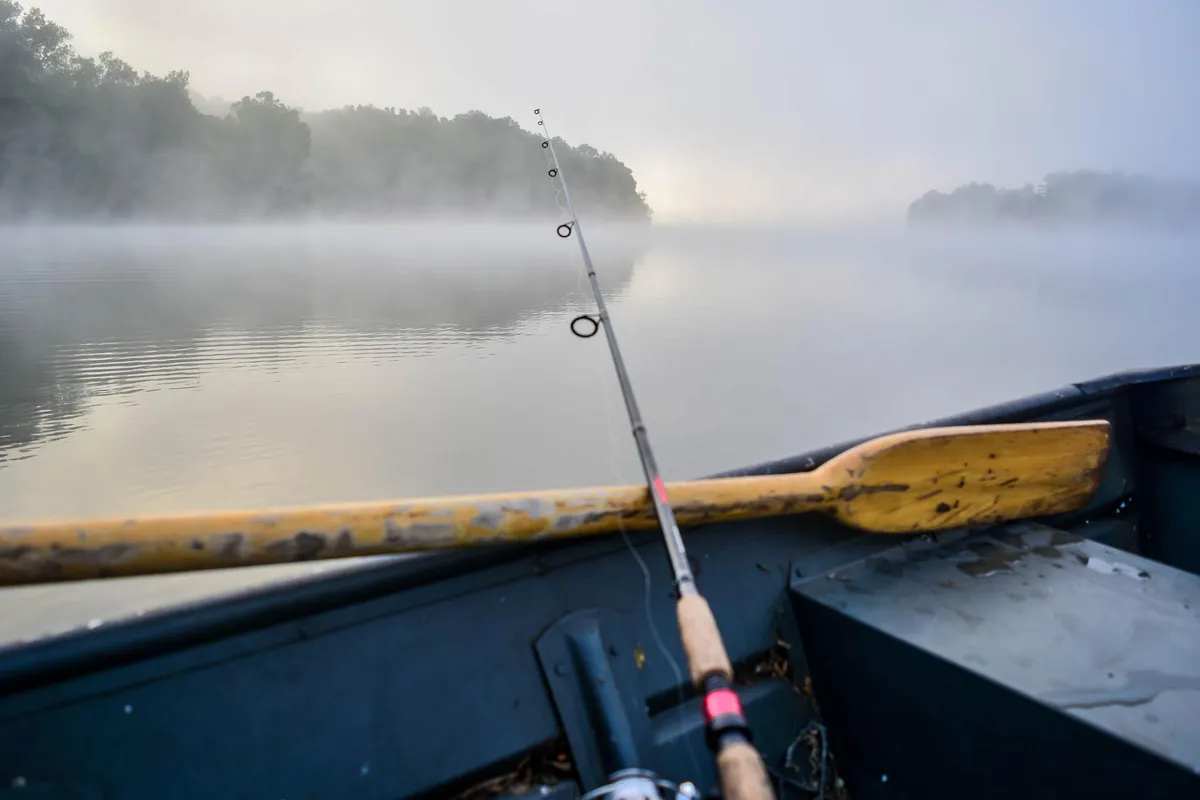
Indiana shares water borders with four states — Kentucky (Ohio River), Michigan and Illinois (Lake Michigan), and Illinois again (Wabash River). Each border water has different rules about which licenses are valid and whose regulations apply. This guide breaks it all down in plain English.
Ohio River — Indiana and Kentucky
The Ohio River forms Indiana’s entire southern border, running roughly 390 miles from the confluence with the Great Miami River near Lawrenceburg to the Mississippi River junction at the state’s southwest tip. It’s one of the best catfish, sauger, and hybrid striped bass fisheries in the Midwest.
The Reciprocal Agreement
Indiana and Kentucky maintain a reciprocal fishing agreement on the main-stem Ohio River. This is the single most important rule for border anglers:
A valid fishing license from EITHER Indiana OR Kentucky allows you to fish the entire width of the Ohio River.
You do not need both states’ licenses. One is enough.
What the Agreement Covers
- The main channel of the Ohio River from bank to bank
- Fishing from a boat anchored anywhere on the river
- Fishing from either bank (but follow that state’s regulations — see below)
What the Agreement Does NOT Cover
- Tributaries — Once you enter a creek mouth, embayment, or tributary stream, you need the license of that state
- Impoundments connected to the Ohio River but managed separately
- Ohio River pools that are entirely within one state’s jurisdiction
Which Regulations Apply?
This is where it gets confusing, but the rule is straightforward:
- Bank fishing: Follow the regulations of the state you are physically standing in. Fishing from the Indiana bank? Follow Indiana rules. Standing on the Kentucky bank? Follow Kentucky rules.
- Boat fishing: You may follow either Indiana or Kentucky regulations, but you must choose ONE state’s rules and follow them consistently. You cannot cherry-pick — for example, using Kentucky’s bass limit but Indiana’s catfish limit.
Ohio River Species Limits (Indiana Regulations)
| Species | Daily Bag Limit | Minimum Size |
|---|---|---|
| Largemouth/smallmouth bass | 6 combined | 12 inches |
| Channel catfish | No limit | 13 inches |
| Blue catfish | No limit | 13 inches |
| Flathead catfish | No limit | 13 inches |
| Crappie (black/white) | 30 combined | None |
| Walleye/sauger | 6 combined | 14 inches |
| Hybrid striped bass | 30 | None |
| Saugeye | 6 (combined with walleye/sauger) | 14 inches |
Important Ohio River Rules
- Snagging is prohibited in Indiana waters
- Paddlefish cannot be taken on a sport fishing license
- Trotlines and setlines are legal in Indiana waters of the Ohio River — check specific gear regulations
- Commercial fishing requires separate permits
- Kentucky regulations may differ — if fishing from the Kentucky bank, check Kentucky Fish & Wildlife
Best Ohio River Access Points (Indiana Side)
The Ohio River is accessible from dozens of public ramps and bank fishing spots. Key areas include:
- Falls of the Ohio (Clarksville) — Fossil beds, wading for smallmouth and drum
- Lawrenceburg/Aurora area — Excellent sauger fishing below Markland Dam
- Madison — Bank fishing downtown, good catfish
- Cannelton — Below Cannelton Locks & Dam for sauger and catfish
- Mount Vernon — Mouth of the Wabash River, diverse species
- New Albany / Jeffersonville — McAlpine Dam tailwaters, trophy sauger
Lake Michigan — Indiana, Michigan, and Illinois
Indiana claims roughly 45 miles of Lake Michigan shoreline and approximately 224 square miles of open water. It’s home to one of the best salmon and steelhead fisheries in the Great Lakes — and it’s less crowded than Michigan or Wisconsin.
License Requirements
- An Indiana fishing license is valid only in Indiana’s portion of Lake Michigan
- If you cross into Michigan or Illinois waters, you need that state’s license
- GPS coordinates define the boundaries — your charter captain will know the lines
- A trout/salmon stamp ($11) is required in addition to your base license for salmonid species
Indiana’s Lake Michigan Boundaries
Indiana’s Lake Michigan waters are bounded by:
- West: The Indiana-Illinois state line (roughly aligned with the state line on shore, extending north)
- East: The Indiana-Michigan state line
- North: The US-Canada international boundary (mid-lake)
Most anglers fishing from Michigan City stay well within Indiana waters. If you’re fishing from a private boat near the state lines, pay attention to your GPS.
Lake Michigan Regulations (Indiana)
| Species | Daily Bag Limit | Minimum Size |
|---|---|---|
| Chinook (king) salmon | 5 (combined with coho) | None |
| Coho salmon | 5 (combined with chinook) | None |
| Lake trout | 3 (within the 5 salmon/trout combined limit) | None |
| Steelhead (rainbow trout) | 5 (combined total) | None |
| Brown trout | 5 (combined total) | None |
| Yellow perch | 15 | None |
| Lake whitefish | 12 | None |
| Smallmouth bass | 6 | 14 inches |
Combined limit: You may keep a total of 5 trout/salmon combined per day, with no more than 3 being lake trout.
Special Lake Michigan Rules
- Tributary rules: Fish caught in Lake Michigan tributaries (Trail Creek, etc.) must be hooked in the mouth. Foul-hooked fish must be released immediately.
- Snagging prohibited in tributaries
- Warmwater discharge areas (BP Whiting Refinery, NIPSCO Michigan City) have special access rules — some allow 24/7 fishing, others sunrise to sunset only
- Most charters depart from Michigan City and Portage/Burns Harbor
For detailed Lake Michigan fishing information, see our Lake Michigan fishing guide and charter guide.
Wabash River — Indiana and Illinois
The Wabash River forms approximately 200 miles of the Indiana-Illinois border, running from near Terre Haute south to where it meets the Ohio River at the state’s southwestern tip. It’s an outstanding smallmouth bass and catfish fishery.
License Requirements
Unlike the Ohio River, there is no broad reciprocal fishing agreement between Indiana and Illinois on the Wabash River.
The general rule:
- Fish from the Indiana bank → Indiana license required
- Fish from the Illinois bank → Illinois license required
- Fishing from a boat → Follow the rules of the state whose waters you are in
Determining the State Line
The Indiana-Illinois boundary on the Wabash River is generally the low-water mark on the Illinois side, meaning most of the river is technically in Indiana. However, this can be ambiguous in practice.
When in doubt:
- If you’re closer to the Indiana bank, you’re almost certainly in Indiana waters
- If you launched from an Indiana ramp, carry an Indiana license
- For current specifics, contact the Indiana DNR at (317) 232-4200 or the Illinois DNR at (217) 782-6302
Wabash River Fishing
The Wabash is a premier river fishery regardless of which side you fish from:
- Smallmouth bass — Excellent fall fishing in the upper and middle Wabash. See our Wabash River guide and fall smallmouth guide.
- Channel catfish — Abundant throughout. Night fishing with cut bait is productive.
- Flathead catfish — Trophy-class fish in deeper pools
- Freshwater drum — Often overlooked but common and fun on light tackle
- Sauger — Below dams in winter
Quick Reference: Which License Do I Need?
| Water | Indiana License | Neighboring State License | Both Needed? |
|---|---|---|---|
| Ohio River (main channel) | Works everywhere | Kentucky works everywhere | No — either one |
| Ohio River tributaries | Indiana side only | Kentucky side only | Yes, if fishing both sides |
| Lake Michigan (Indiana waters) | Yes | Not valid in IN waters | N/A |
| Lake Michigan (Michigan waters) | Not valid | Michigan license needed | N/A |
| Lake Michigan (Illinois waters) | Not valid | Illinois license needed | N/A |
| Wabash River | Indiana bank/waters | Illinois bank/waters | Yes, if fishing both sides |
| All inland lakes and rivers | Required | Not valid | N/A |
Tips for Border Water Anglers
- When in doubt, buy the Indiana license. Non-resident 1-day licenses are $15 — cheap insurance against a citation.
- Know which state you’re in. GPS is your friend on border waters. Many fishing apps show state lines.
- Carry your license where you can reach it. Conservation officers patrol border waters regularly.
- Ask your charter captain. Lake Michigan charters know exactly where the lines are.
- Check both states’ regulations if you plan to fish both sides of a border water. Bag limits and size limits may differ.
- Tributaries are NOT covered by the Ohio River reciprocal agreement. If you paddle up a creek, you need the license of that state.
Related Guides
- Indiana Fishing License — full guide
- Non-Resident Fishing License guide
- Fishing Indiana as a Visitor
- Indiana Fishing Regulations
- Lake Michigan Fishing guide
- Wabash River Fishing guide
- Ohio River species — Catfish fishing guide
Frequently Asked Questions
Can I fish the Ohio River with just a Kentucky license?
Yes. Indiana and Kentucky have a reciprocal agreement on the main-stem Ohio River. A valid fishing license from either state allows you to fish the entire width of the river. This does not extend to tributaries or embayments on either side.
Do I need an Indiana license to fish Lake Michigan from Indiana?
Yes. An Indiana fishing license is required to fish Indiana's portion of Lake Michigan. If you cross into Michigan or Illinois waters, you need that state's license. A trout/salmon stamp ($11) is also required if targeting salmonid species.
Is there a reciprocal fishing agreement on the Wabash River?
There is no broad reciprocal agreement like the Ohio River. You generally need the license of the state you are fishing from. Contact the Indiana DNR at (317) 232-4200 for current specifics on Wabash River border water rules.
What fishing regulations apply on the Ohio River — Indiana's or Kentucky's?
When fishing from the bank, follow the regulations of the state you are standing in. When fishing from a boat, you may follow either state's regulations, but you must follow one state's rules consistently — you cannot pick and choose between them.
Can I keep paddlefish from the Ohio River?
No. Paddlefish cannot be taken on a sport fishing license in Indiana waters of the Ohio River. Commercial harvest requires a separate permit.