Kayak Fishing in Indiana: Best Rivers, Lakes & Gear Guide
March 19, 2026
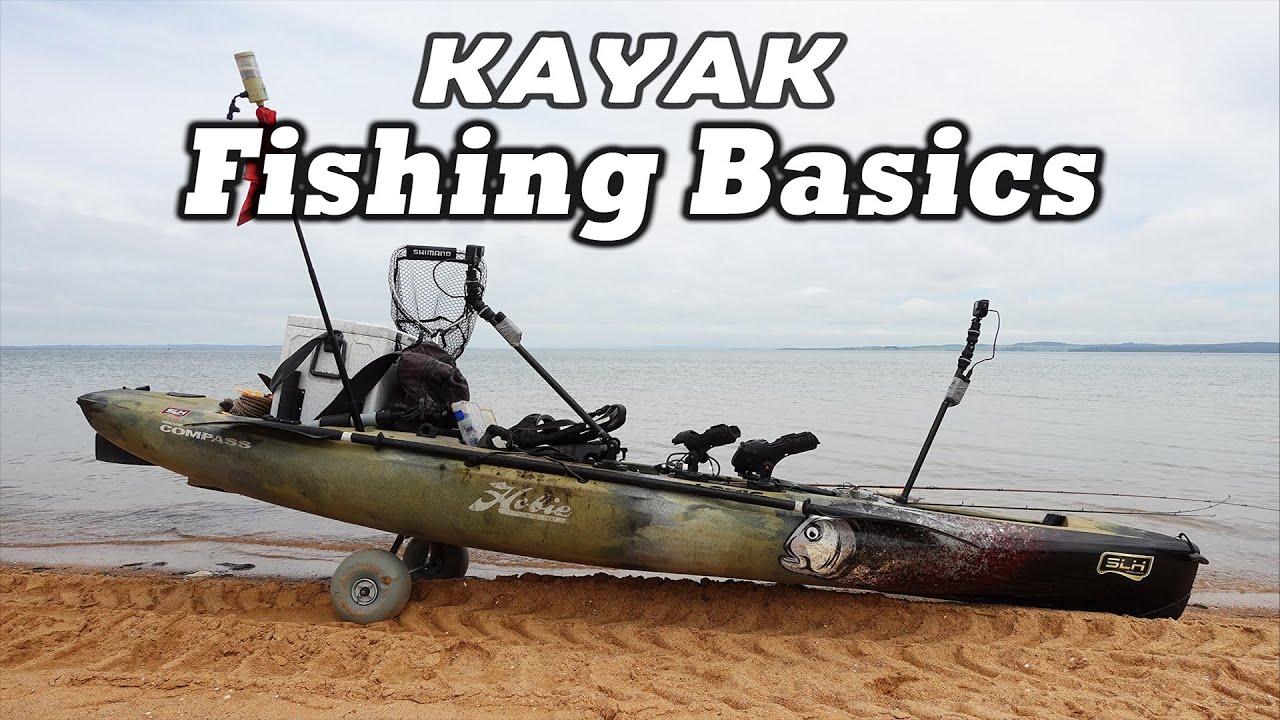
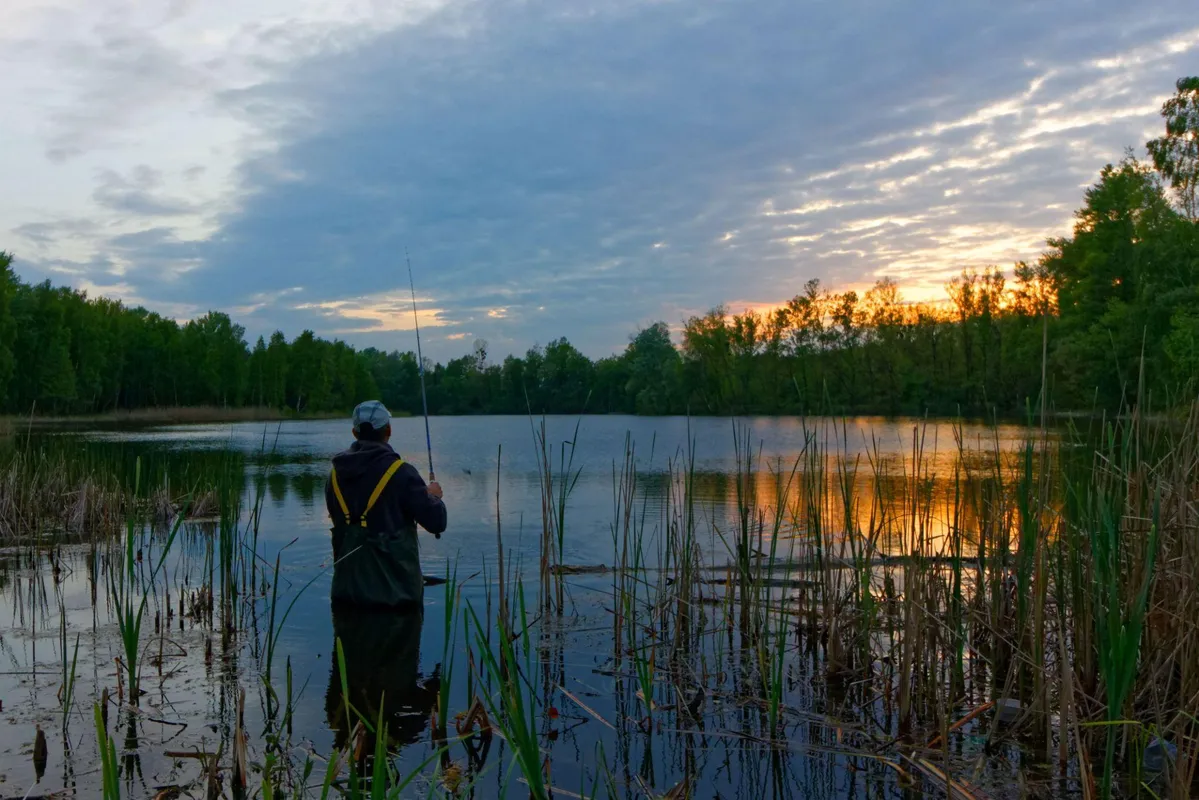
Indiana’s rivers were made for kayak fishing. Hundreds of miles of wadeable, floatable streams wind through farmland, forests, and limestone bluffs — and nearly all of them hold smallmouth bass, rock bass, and panfish that will hit lures and flies cast from a drifting kayak.
Kayak fishing has grown from a niche pursuit to one of the most popular ways to fish Indiana’s inland waters. The reasons are obvious: no boat ramp fees, no gas bills, no trailer to store, and access to water that powerboats cannot reach. A kayak and a paddle open up river stretches that 90% of anglers never see.
Whether you are planning your first river float or looking for new water to explore, this guide covers the best kayak fishing rivers and lakes in Indiana, the gear you need, how to stay safe, and how to plan a successful float trip.
Best Kayak Fishing Rivers in Indiana
Sugar Creek — The Premier Float
Sugar Creek through Parke and Montgomery counties is the gold standard for kayak fishing in Indiana. The river flows over sandstone ledges, past towering bluffs, and through canopies of hardwood forest that make every float scenic regardless of the fishing.
But the fishing is outstanding. Smallmouth bass hold behind every boulder, in every eddy, and along every current seam. Rock bass fill the gaps between smallmouth. The occasional channel catfish grabs a crawfish or soft plastic bounced along the bottom.
Best stretches:
- Shades State Park to Turkey Run State Park — The classic float. Approximately 5-8 miles depending on your put-in, with continuous smallmouth water. Expect 4-6 hours on the water.
- Crawfordsville to Shades — Wider and flatter, good for beginners. Less dramatic scenery but still productive fishing.
- Deer’s Mill Covered Bridge — Public access point with excellent water in both directions.
What to expect: Class I water with occasional riffles. Some shallow gravel bars require getting out and dragging in low water (late summer/fall). No serious rapids, but downed trees and log jams require attention.
Nearby: Parke County fishing | Montgomery County fishing | Bait shops
For more on this river’s smallmouth fishing, see our fall smallmouth guide.
Tippecanoe River — Gentle Current, Excellent Fishing
The Tippecanoe River is one of the most kayak-friendly rivers in Indiana. Its gentle, consistent current moves you downstream at a comfortable pace without demanding constant attention to navigation. This lets you focus on fishing.
Smallmouth bass are the primary target, with populations throughout the river’s length from Kosciusko County down through Fulton, Pulaski, and White counties. Gravel and sand substrate creates visible structure that you can read from your kayak and cast to efficiently.
Best sections:
- Winamac area (Pulaski County) — Good public access and consistent smallmouth fishing through long gravel runs
- Delphi area (Carroll County) — The lower river widens and deepens, holding larger fish
What to expect: Easy floating with few obstacles. The Tippecanoe is an excellent choice for your first kayak fishing float trip in Indiana.
Nearby: Pulaski County fishing | Carroll County fishing
Blue River — Southern Indiana Scenery
The Blue River in Harrison and Crawford counties is southern Indiana’s standout kayak fishing stream. Clear water flows over limestone bedrock through some of the most beautiful river scenery in the state — forested bluffs, caves, and rock outcroppings line the banks.
Smallmouth bass are the main draw, supplemented by rock bass and longear sunfish. The fish tend to run slightly smaller than Sugar Creek or Tippecanoe fish, but the setting and water clarity more than compensate.
Best stretches:
- Fredericksburg to Milltown — The most popular float, with good access and consistent smallmouth water
- Above White Cloud — Less floated, more remote, and productive for anglers willing to explore
What to expect: Generally mild current with occasional riffles. Some stretches run shallow in late summer and may require dragging. The limestone bottom provides exceptional clarity — you can often sight-fish for smallmouth from your kayak.
Nearby: Harrison County fishing | Crawford County fishing
Wildcat Creek — Challenging but Rewarding
Wildcat Creek in Carroll and Tippecanoe counties offers kayak fishing for anglers who want a little more adventure. The creek has more character than the gentle Tippecanoe — steeper gradient in places, tighter turns, and more wood in the water.
The payoff is less fishing pressure and quality smallmouth that see fewer lures than their Sugar Creek counterparts. Wildcat Creek rewards anglers who can maneuver their kayak efficiently and make accurate casts to tight spots along banks and behind rocks.
What to expect: Some sections have swift current and tight bends with overhanging trees. This is not a beginner float. Scout unfamiliar sections on foot first if possible. Portage around any log jams that block the channel.
Nearby: Carroll County fishing | Tippecanoe County fishing
Driftwood River — Easy Float Near Columbus
The Driftwood River near Columbus in Bartholomew County is an accessible kayak fishing option in central Indiana. Formed by the confluence of Big Blue River and Flatrock River, the Driftwood offers wide, gentle water with sand and gravel bars that make easy lunch stops.
Smallmouth bass, channel catfish, and panfish are all available. The river is not as scenic as Sugar Creek or the Blue River, but it is convenient for central Indiana anglers looking for a half-day float.
Nearby: Bartholomew County fishing
Eel River — Northern Indiana, Gentle Water
The Eel River in Whitley and Kosciusko counties is northern Indiana’s best kayak fishing stream. The current is gentle and the river is wide enough to fish comfortably without constantly maneuvering around obstacles.
Smallmouth bass, rock bass, and the occasional largemouth bass make up most of the catch. The river flows through agricultural land with scattered woodlots, and public access points are reasonably well-spaced.
What to expect: Easy floating suitable for beginners. The Eel River is an excellent introductory kayak fishing river for northern Indiana anglers.
Nearby: Whitley County fishing | Kosciusko County fishing
Big Pine Creek — Rapids and Smallmouth
Big Pine Creek in Parke County is the most challenging kayak fishing water on this list. Class I-II rapids through sandstone gorges create fast, technical water that rewards experienced paddlers with excellent smallmouth fishing and dramatic scenery.
This is not water for beginners or for anglers whose primary focus is fishing rather than paddling. You need solid boat-handling skills to navigate the rapids safely while also making casts to productive water. But if you have the skills, Big Pine Creek offers a kayak fishing experience unlike anything else in Indiana.
What to expect: Class I-II rapids, tight chutes, and rock gardens. Wear your PFD (which you should always be doing anyway). Scout rapids from shore before running them in an unfamiliar section.
Nearby: Parke County fishing
Kayak-Friendly Lakes
River float trips get most of the kayak fishing attention in Indiana, but the state’s lakes offer excellent kayak fishing opportunities — especially on waters where powerboat traffic is limited.
Eagle Creek Reservoir (Marion County)
Eagle Creek Reservoir on Indianapolis’s west side has designated no-wake zones and protected coves that are ideal for kayak anglers. The reservoir holds largemouth bass, bluegill, crappie, and channel catfish. Paddle into the creek arms and backwater areas that big boats cannot reach for the best fishing.
Why it works for kayaks: No-wake zones keep conditions calm, and the upper creek arms are too shallow for most motorized boats. You get the water to yourself.
Hardy Lake (Scott County)
Hardy Lake is an electric-motors-only reservoir, which means no powerboat wakes and a quiet fishing experience. The lake holds good populations of largemouth bass, bluegill, and channel catfish. Its coves and standing timber provide visible structure that you can work methodically from a kayak.
Why it works for kayaks: No gas motors allowed — the entire lake is kayak-friendly water.
Mississinewa Lake (Miami/Grant/Wabash Counties)
Mississinewa Lake is a larger reservoir with extensive creek arms and coves that offer protected kayak fishing. While the main lake body does see powerboat traffic, the upper creek arms are shallow enough to limit big boats. Largemouth bass, crappie, and catfish are the main targets.
Nearby: Miami County fishing | Grant County fishing
Chain O’Lakes State Park (Noble County)
Nine interconnected lakes linked by navigable channels create a unique kayak fishing playground. You can paddle from lake to lake, fishing a variety of structure and depth. Bluegill, largemouth bass, and northern pike all inhabit the chain. The connecting channels are particularly productive.
Nearby: Noble County fishing
Smaller State Park Lakes
Many of Indiana’s state park lakes are small enough that kayaks are the ideal fishing platform. Summit Lake, Versailles Lake, Shakamak Lake, and Cagles Mill Lake all offer quality fishing without significant boat traffic. A kayak allows you to reach weed edges, points, and structure that shoreline anglers cannot access.
For more lake options, see our best bass lakes guide.
Gear Essentials for Kayak Fishing
Choosing a Kayak
The single most important gear decision is the kayak itself. For Indiana fishing, a sit-on-top kayak in the 10-13 foot range is the best all-around choice.
| Feature | River Fishing | Lake Fishing |
|---|---|---|
| Length | 10-12 feet (maneuverable) | 12-13 feet (tracks better, faster) |
| Width | 30-34 inches (stable in current) | 32-36 inches (standing stability) |
| Style | Sit-on-top (easy re-entry, self-draining) | Sit-on-top (stability for casting) |
| Weight | Under 65 lbs (portaging over gravel bars) | Less critical — you only carry it to the launch |
| Hull | Flat or pontoon (stability in current) | Flat or pontoon (standing platform) |
Sit-on-top vs. sit-in: Sit-on-top kayaks are the strong recommendation for fishing. They are more stable, easier to fish from, self-draining, and far easier to re-enter if you fall out. Sit-in kayaks are faster and drier but significantly harder to get back into from the water and can fill with water if you capsize.
Pedal-drive kayaks are increasingly popular for lake fishing because they keep your hands free for fishing. They are generally too heavy and have too much draft for shallow Indiana rivers. Save them for lakes.
Rod Holders and Tackle Storage
| Accessory | Purpose |
|---|---|
| Flush-mount rod holders | Keep 1-2 rods rigged and ready while paddling |
| Crate or milk crate | Strapped behind the seat — holds tackle boxes, tools, drinks |
| Tackle trays (not full boxes) | Waterproof trays that fit in hatches or crate |
| Dry bag or dry box | For phone, wallet, keys, and anything that cannot get wet |
| Paddle leash | Tethers paddle to kayak so it does not float away while fishing |
Anchor and Stake-Out Pole
On rivers, you need a way to hold position when you find productive water. Two options:
Stake-out pole — A 6-8 foot fiberglass or aluminum pole that you push into the river bottom to pin your kayak in place. Works in water under 4 feet deep. This is the preferred method for river kayak fishing because it is quiet, quick, and does not snag on rocks.
Small anchor (1.5-3 lbs) — A folding grapnel anchor on a line works in deeper water and on lakes. Use a quick-release system so you can detach instantly if the anchor snags and current pulls your kayak sideways.
Personal Flotation Device (PFD)
Indiana law requires a PFD for every person on a kayak. Wear it — do not just strap it to the deck. A quality fishing PFD sits high on your torso, allows full arm movement for casting and paddling, and has pockets for pliers, tippet, and small tackle.
Inflatable belt-pack PFDs are legal and popular, but traditional foam PFDs provide flotation immediately — without needing to pull a cord. For river fishing, a foam PFD is the safer choice.
Kayak Fishing Techniques
Fishing from a kayak is different from fishing from a bass boat or from shore. The kayak’s low profile, constant motion, and limited casting positions require adjustments to your approach.
Drift Fishing
The most natural technique on rivers. Let the current carry your kayak downstream while casting to structure along both banks. Fan your casts ahead of the kayak as you approach, working the water before your hull drifts over it and spooks fish.
Key principle: Fish ahead and to the sides — never behind. Once your kayak has passed over a spot, those fish are spooked. Make the most of each stretch by casting well ahead of your position.
Anchor Fishing
When you find a productive spot — a deep pool, a boulder garden, a weed edge — stake out or anchor and work the area thoroughly. This is where the stake-out pole earns its place on your kayak. Jam it into the gravel, and you have a stable platform to make repeated, accurate casts.
Current Positioning
On rivers, use the current to your advantage:
- Position above a pool and cast downstream into it. Smallmouth face upstream, so your lure approaches from the direction they are watching.
- Tuck into an eddy behind a boulder or point to hold position without an anchor while you fish the adjacent current seam.
- Ferry across current by angling your kayak upstream and paddling across — this lets you reposition without losing downstream distance.
Casting from a Kayak
Your casting stroke will adapt quickly, but a few adjustments help:
- Keep your backcast high to avoid hooking the water behind you
- Use sidearm casts when wind is a factor — you are sitting low and vulnerable to gusts
- Short, accurate casts beat long, sloppy ones. Most river fish are within 30 feet of your kayak
- Set the hook smoothly — a hard hookset in a kayak can pull you off balance or spin the kayak
Safety on the Water
Kayak fishing in Indiana is safe when you prepare properly and respect the water. Most kayak fishing accidents involve preventable mistakes.
The Non-Negotiable Rules
- Wear your PFD. Every time. No exceptions. It is Indiana law and it is the single thing most likely to save your life.
- Never run a low-head dam. Indiana has dozens of low-head dams on its rivers. They create hydraulics that trap and drown even strong swimmers. Portage around every dam, every time. There is no safe way to run a low-head dam in a kayak.
- Check river levels before you launch. USGS river gauges are available online and updated in real time. Learn the safe floating range for your river. High water after storms turns gentle floats into dangerous situations.
Weather Awareness
- Thunderstorms: Get off the water before storms arrive. You are the tallest object on the water in a kayak. Lightning kills people on open water every year.
- Wind: Wind on lakes can push a kayak faster than you can paddle against it. If the forecast calls for sustained winds over 15 mph, pick a sheltered lake or fish a river instead.
- Cold water: Water below 60°F creates serious risk if you capsize. Cold shock can cause involuntary gasping and rapid loss of motor control. In spring and fall, wear a dry suit or layers that retain insulation when wet. Do not rely on the air temperature — the water temperature is what matters.
Float Plan
Always tell someone who is not on the trip:
- Where you are launching
- Where you are taking out
- What time you expect to finish
- What to do if you do not check in on time
This is a simple precaution that turns a potential emergency into a quick rescue.
River Hazards to Avoid
| Hazard | What to Do |
|---|---|
| Strainers (downed trees in current) | Paddle aggressively away. Water flows through but solid objects (you) get pinned. Never try to duck under or climb over. |
| Low-head dams | Portage. Always. No exceptions. |
| Bridge pilings | Give them wide clearance — current accelerates around them and debris collects upstream |
| Barbed wire fences | Common on agricultural stretches. Look for them at water level and portage around. |
| Shallow gravel bars | Get out and walk your kayak across rather than dragging the hull |
Float Trip Planning
A successful kayak fishing float requires more planning than a trip to the local lake. Here is how to set up a river float from start to finish.
Shuttle Logistics
The biggest logistical challenge of river kayak fishing is the shuttle — getting your vehicle from the put-in to the take-out so it is waiting for you when you finish.
Options:
- Two-vehicle shuttle: Drive both vehicles to the take-out, leave one, then drive together to the put-in. This is the most reliable method.
- Livery shuttle: Some canoe liveries will shuttle your vehicle or drop you at the put-in and pick you up at the take-out. Call ahead to confirm availability and pricing.
- Bike shuttle: Lock a bike at the take-out, float to it, then bike back to get your vehicle at the put-in. Works for shorter floats on roads with shoulders.
Launch and Takeout Points
Indiana’s public access points on rivers include:
- State park access — Shades, Turkey Run, Prophetstown, and others
- Bridge crossings — Many county road bridges have informal launch access. Confirm it is public before using it.
- DNR public access sites — Signed ramps and carry-in access points maintained by the DNR
- City/town parks — Several towns along major rivers maintain kayak launch areas
Checking River Levels
Before every float, check the USGS river gauge for your section. Search “USGS [river name] gauge” to find real-time data.
General guidelines:
| Gauge Reading | Conditions | Float? |
|---|---|---|
| Below normal | Shallow, slow, may need to drag over gravel bars | Yes, but expect slow going |
| Normal | Ideal conditions — good current, adequate depth | Best time to float |
| Above normal | Faster current, murky water, more debris | Experienced paddlers only |
| Flood stage | Dangerous — fast current, submerged hazards, strainers | Do not float |
Estimating Trip Duration
On Indiana rivers at normal levels, plan for approximately 2 miles per hour including fishing stops. A 6-mile float will take roughly 3-4 hours with moderate fishing. A 10-mile float is a full day.
Factors that slow you down:
- Low water (dragging over gravel)
- Headwind
- Lots of fishing stops (the whole point, but it adds time)
- Portaging around obstacles
Start early. It is better to finish with daylight to spare than to be paddling in the dark.
Best Species from a Kayak
Smallmouth Bass — The River King
Smallmouth bass are the number one kayak fishing target in Indiana for good reason. They inhabit every quality river in the state, they hit a wide range of lures and flies, and they fight with an intensity that is amplified by the kayak’s low platform and instability.
Best lures from a kayak: Tubes (green pumpkin, smoke), Ned rigs, small crankbaits (crawfish pattern), topwater poppers in summer. Fly anglers should carry Clouser Minnows and Woolly Buggers.
Learn more about smallmouth bass in Indiana.
Rock Bass
Rock bass are the unsung heroes of Indiana river fishing. They are aggressive, abundant, and hit the same lures as smallmouth. While they top out around a pound, they fill the gaps between smallmouth catches and keep the action steady.
Bluegill
On lakes and in river backwaters, bluegill provide outstanding kayak fishing — especially on light tackle or fly rods. A kayak’s low profile and quiet approach let you get closer to bedding bluegill than you could from a motorized boat.
Channel Catfish
River channel catfish respond well to cut bait and soft plastics fished on the bottom. A kayak anchored above a deep hole with a bait rig on the bottom is an effective and relaxing way to catch catfish on warm summer evenings.
Spotted Bass
Southern Indiana rivers — particularly the Blue River and its tributaries — hold spotted bass alongside smallmouth. Spots tend to hold tighter to cover and hit slightly smaller presentations.
Seasonal Calendar for Kayak Fishing
Spring (March – May)
March-April: Rivers run high from snowmelt and spring rain. Float with caution and only if gauges show safe levels. Pre-spawn smallmouth begin moving to gravel flats as water approaches 55°F. Cold-water safety gear is essential — the water is dangerously cold even on warm days.
May: Water levels stabilize and temperatures warm. Late May is when kayak fishing season truly begins. Smallmouth are post-spawn and feeding. Wet wading starts to be comfortable on warm days.
Summer (June – August)
Prime float season. Water levels are manageable, temperatures are comfortable for wet wading, and fish are active — especially during morning and evening hours.
June: The best overall month for kayak fishing. Water is warm but not hot, flows are moderate, and fish are aggressive. Plan multi-day float trips during June for peak conditions.
July-August: Midday fishing slows as water temperatures peak. Fish early morning (launch at dawn) or late evening. Low water in late summer exposes gravel bars and makes some stretches too shallow for comfortable floating. Check gauges and pick rivers with adequate flow.
Fall (September – November)
September-October: Low, clear water concentrates fish in predictable locations. Fallen leaves add scenic beauty but can obscure shallow hazards. Smallmouth feed heavily in preparation for winter — this is the best fishing of the year even if water levels are challenging. Waders or a wetsuit become necessary as water temperatures drop.
November: Late-season fishing for dedicated anglers. Water is cold, days are short, and most casual float traffic is gone. Dress for immersion and plan shorter floats.
Read more in our fall smallmouth bass guide.
Winter (December – February)
Kayak fishing in Indiana essentially pauses during winter. Cold water temperatures create severe safety risks if you capsize, and fish are sluggish in their deepest winter holes. If you must fish from a kayak in winter, a dry suit is mandatory — not optional.
Most kayak anglers use the winter months to maintain gear, scout new water on foot, and plan spring float trips.
Liveries and Outfitters
If you do not own a kayak or want to fish new water without hauling your boat across the state, Indiana’s canoe and kayak liveries can set you up.
Most liveries near popular float rivers offer:
- Kayak and canoe rentals — Typically $40-$70 for a full day
- Shuttle service — They drive you to the put-in and your vehicle waits at the take-out
- Trip planning — Staff can recommend the right stretch for your skill level and time frame
- Basic gear — PFDs and paddles included with rental
Look for liveries near:
- Sugar Creek (Crawfordsville/Turkey Run area)
- Blue River (Milltown/Fredericksburg area)
- Tippecanoe River (Winamac area)
- Driftwood River (Columbus area)
- Whitewater River (Brookville area)
Ask whether the livery allows fishing from their boats. Most do, but some restrict fishing rod transport on standard canoe livery trips.
For local bait, tackle, and fishing supplies near launch points, check our bait shops directory.
Getting Started
If you have never kayak fished before, here is a practical starting plan:
- Rent before you buy. Float a gentle river like the Tippecanoe or Eel River in a rented kayak. Make sure you enjoy the experience before investing in your own boat.
- Start on calm water. Your first kayak fishing trip should not be on a challenging river. Pick a lake or a gentle river and focus on getting comfortable casting, managing tackle, and maneuvering from a seated position.
- Bring less tackle than you think you need. A single rod rigged with a tube jig or Ned rig will catch smallmouth all day. You do not need six rods on your first float.
- Go with an experienced kayak angler. Learning shuttle logistics, reading water from a kayak, and handling current is much easier when someone can show you firsthand.
- Always wear your PFD and check the river gauge. These two habits prevent the vast majority of kayak fishing accidents.
Indiana’s rivers are waiting. Get a kayak on the water, make some casts, and discover why this is one of the fastest-growing ways to fish the Hoosier State.
Related guides:
- Fall Smallmouth Bass on Indiana Rivers
- Best Bass Lakes in Indiana
- Indiana Fishing License Guide
- Find Bait Shops and Tackle Stores
Frequently Asked Questions
Do you need a fishing license to fish from a kayak in Indiana?
Yes. Fishing from a kayak requires the same Indiana fishing license as fishing from shore or a motorized boat. There is no separate kayak registration requirement in Indiana for non-motorized watercraft, but you must carry your fishing license on your person. If you add an electric trolling motor to your kayak, the vessel must be registered with the Indiana BMV.
What are the best rivers for kayak fishing in Indiana?
Sugar Creek through Parke and Montgomery counties is the premier kayak fishing river, offering outstanding smallmouth bass in a scenic setting. The Tippecanoe River, Blue River, Driftwood River, and Eel River are also excellent. Each offers good public access, manageable current, and productive smallmouth and panfish populations.
Can you kayak fish on Indiana lakes?
Yes. Many Indiana lakes are excellent for kayak fishing. Electric-motor-only lakes like Hardy Lake offer calm conditions with no large boat wakes. Eagle Creek Reservoir has no-wake zones perfect for kayak anglers. Chain O'Lakes State Park and smaller state park lakes also provide outstanding kayak fishing without powerboat traffic.
What type of kayak is best for fishing in Indiana?
A sit-on-top kayak in the 10-13 foot range is the best all-around choice for Indiana fishing. Sit-on-tops are more stable, easier to fish from, and simpler to re-enter if you fall out. Look for models with molded rod holders, a wide beam for stability, and scupper holes for self-draining. For river float trips, choose a shorter kayak (10-12 feet) for maneuverability.
Is kayak fishing safe?
Kayak fishing is safe when you follow basic precautions. Indiana law requires a PFD (life jacket) for every person on a kayak — wear it, do not just carry it. Check river levels before launching (avoid high water after storms), file a float plan with someone who is not on the trip, and avoid low-head dams, which are deadly. Cold-water conditions in spring and fall demand extra caution because capsizing in water below 60°F can cause cold shock and rapid loss of motor function.