Palomar Knot — The Strongest Hook Knot for Braid
April 26, 2026
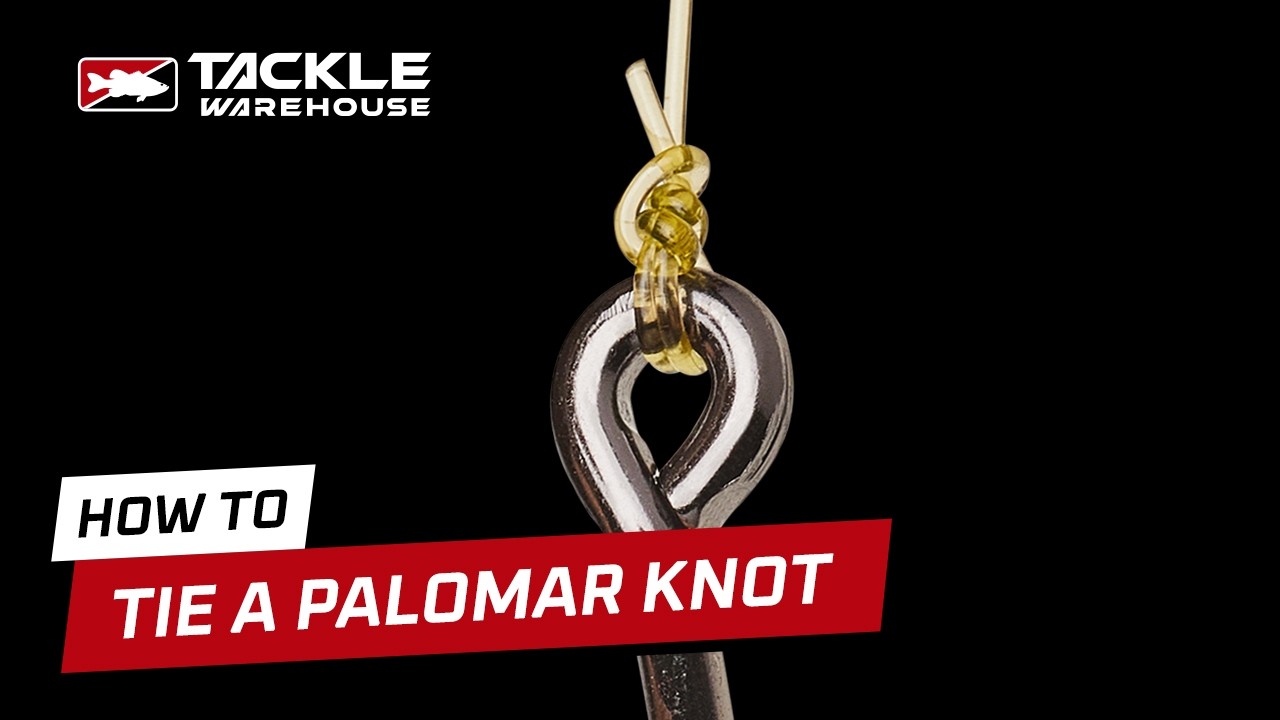
Why the Palomar Knot Matters
If you fish with braided line, learn the Palomar knot today. It’s the strongest, most reliable hook-to-line knot for braid — period. Tested at 95-100% line strength, it doesn’t slip, doesn’t unravel, and ties in under 20 seconds with practice. For Indiana bass anglers using 30-65 lb braid (the standard for bass fishing), the Palomar is the only knot you need.
The improved clinch knot — popular as it is — slips on braid because the slick surface doesn’t grip itself. The Palomar’s double-pass design solves that.
How to Tie a Palomar Knot
- Double the line — make a 4 to 6 inch loop at the end.
- Pass the loop through the hook eye (or lure split ring). Pull it through enough that you have working room.
- Tie a loose overhand knot with the doubled line. Don’t tighten yet — leave a loop big enough to pass the hook through.
- Pass the entire hook through the loop of your overhand knot.
- Wet the knot with saliva.
- Pull both ends slowly to seat the knot. The loop will close down around the hook eye and the overhand knot will tighten above it.
- Trim the tag end to about 1/8 inch.
The whole knot tightens in one pull — when done, you’ll see the doubled line come down to the hook eye and the overhand knot seat above.
When to Use It
- Braided line to any hook or lure — primary application
- Heavy fluorocarbon (15+ lb test) — outperforms the improved clinch at heavy weights
- Tournament bass fishing — when you need 100% confidence in the knot
- Trophy walleye and pike — won’t fail at the knot under heavy fight
When to Skip It
- Very large treble hooks — passing the hook through the loop becomes awkward
- Lures with hard-to-pass-through profiles (some swimbaits, large crankbaits) — the loop has to clear the entire bait
- Tiny dry flies — for trout fishing, a Davy knot or perfection loop ties faster
Common Mistakes
Mistake #1: Twisting the loop. When you double the line and pass through the eye, make sure the doubled section lays flat and untwisted. A twist creates a weak point.
Mistake #2: Tightening with the loop still around the hook bend. Before pulling tight, slide the closing loop down to the eye. If it cinches around the hook bend or shank, it’ll bind weirdly and lose strength.
Mistake #3: Not wetting it. Braid generates significant friction when tightened — heat from a dry knot can permanently weaken it. Always wet.
Indiana Applications
For Indiana anglers, the Palomar is the standard knot for:
- Bass fishing on braid — chatterbaits, spinnerbaits, frogs, jigs, swimbaits
- Pike and muskie leaders — tying braid to wire leaders
- Catfish on braid — channel cat and flathead rigs
- Lake Michigan trolling setups — terminal tackle on braid main lines
- Heavy fluorocarbon leaders for clear-water bass on Brookville, Patoka, and Monroe
Practice Tip
Practice the Palomar with a piece of cord or shoelace at home. The “pass the hook through the loop” step feels awkward the first few times — once your hands learn it, you can tie it in the dark.
Bottom Line
If you fish braid, the Palomar replaces every other hook knot in your toolkit. If you fish mono, the improved clinch still works, but the Palomar is a safe upgrade. Either way, two knots — improved clinch for mono, Palomar for braid — cover every Indiana fishing situation.
Frequently Asked Questions
Is the Palomar knot really the strongest knot?
On braided line, yes — the Palomar consistently tests at 95-100% of line strength. The double-pass through the eye creates a redundant attachment that doesn't slip even under shock loads. On fluorocarbon and mono, the Palomar is similarly strong though only marginally better than a properly tied improved clinch.
Can I tie a Palomar knot on a treble hook?
Yes, but it requires passing the entire hook through the loop in step 3 — easy with smaller hooks, awkward with large trebles. For #6 trebles and larger, many anglers prefer a snap or split ring instead. For single hooks of any size, the Palomar is straightforward.
Why does my Palomar knot break at the knot?
Three causes: not wetting the knot before tightening (heat damage), trimming the tag too close (allowing unraveling), or twisting the loop while tightening (creating a weak point). Wet, pull slowly, and check the loop hasn't twisted before seating.