Rod Action and Power Explained — Decoding Fishing Rod Specs
April 26, 2026
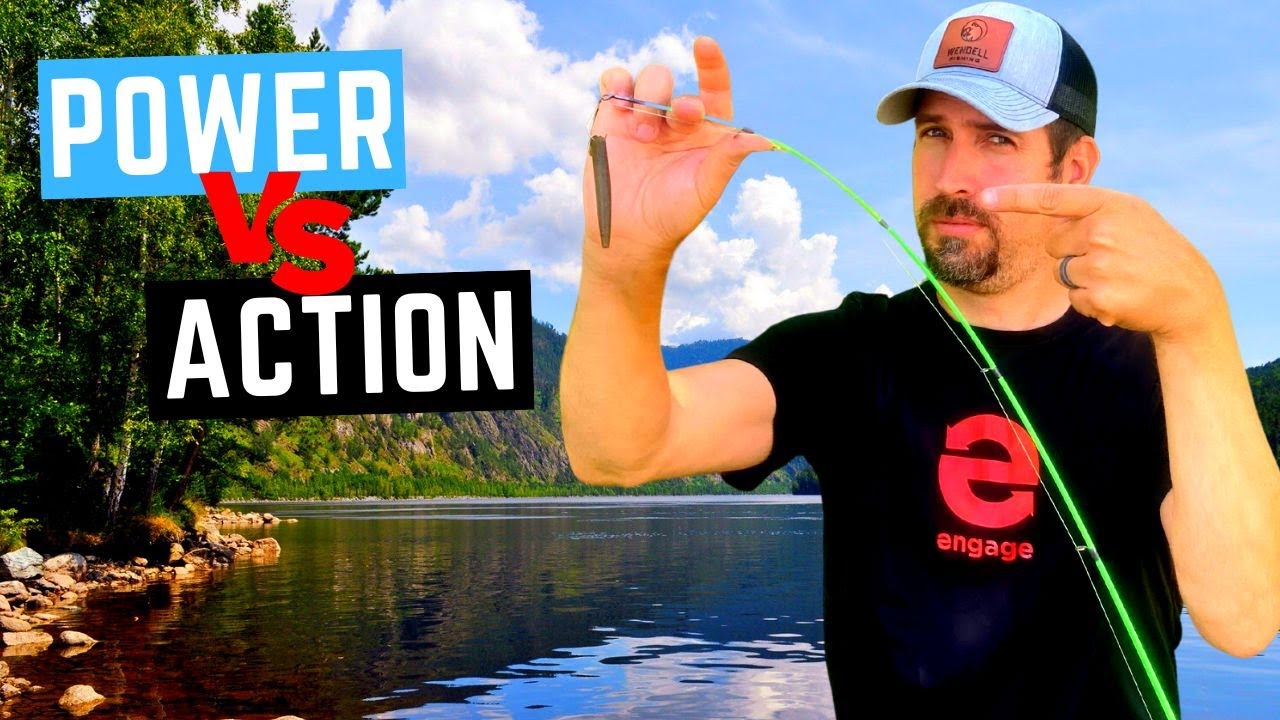
What These Specs Actually Tell You
Every fishing rod has a label printed near the handle that lists three to five specs:
7'0" Medium-Heavy Fast Action 1/4-3/4 oz / 10-17 lbIf you’ve ever stared at that label wondering what it means, this guide is for you.
Power: How Heavy the Rod Is
Power is the force required to flex the rod. It’s also called rod weight, stiffness, or action weight (confusingly — that last one isn’t action).
Standard power ratings (light to heavy):
- Ultralight (UL)
- Light (L)
- Medium-Light (ML)
- Medium (M)
- Medium-Heavy (MH)
- Heavy (H)
- Extra-Heavy (XH)
Some specialty rods go to XXH or Magnum Heavy for muskie and deep-sea applications.
What power controls:
- Lure weight range — Power dictates which lure weights the rod can cast effectively. A light rod feels great with 1/8 oz; you can’t physically cast a 1 oz spinnerbait on it.
- Line strength — Power matches to line test. Light rods pair with 4-8 lb line; heavy rods pair with 17-25+ lb line. Mismatching breaks rods.
- Hooksetting force — Heavier power rods drive bigger hooks into bony fish mouths. A medium-power rod cannot drive a 5/0 flipping hook through a bass jaw the way a heavy-power rod can.
- Fish-fighting strength — Heavier rods extract bigger fish from cover. A medium rod can land a 5 lb bass in open water but struggles to pull that bass out of grass.
Match power to your target species and technique. Bass anglers throwing crankbaits want medium; bass anglers flipping want heavy. Panfish anglers want light; muskie anglers want extra-heavy.
Action: Where the Rod Bends
Action describes where along the rod the flex happens when force is applied.
The four categories from slowest to fastest:
Slow Action (Parabolic)
The entire rod bends from tip to butt under load. Forms a “C” shape when bent.
- Cast feel: Smooth, forgiving, casts very light lures well
- Hookset: Slow, soft — good for treble-hook baits
- Indiana use: Ultralight panfish rods, classic fiberglass crankbait rods
Moderate / Moderate-Fast Action
Bends through the top half of the rod. Holds a fish during fights, doesn’t rip hooks free.
- Cast feel: Smooth, decent distance
- Hookset: Medium speed
- Indiana use: Crankbait rods (treble retention), kid rods, all-around finesse spinning
Fast Action
Bends in the top third of the rod, with the bottom two-thirds staying stiff.
- Cast feel: Crisp, accurate, less forgiving
- Hookset: Fast, powerful
- Indiana use: Most versatile — bass jigs, plastics, walleye, hybrid stripers, all-around
Extra-Fast Action
Bends only in the very tip. Bottom 80% of the rod is stiff.
- Cast feel: Tip-only loading, demands accurate casting form
- Hookset: Maximum power and speed
- Indiana use: Frog fishing, flipping/pitching, big swimbaits, muskie
Why You Pick One Action Over Another
Treble hooks (crankbaits, jerkbaits, topwater plugs) — moderate action. The slower bend keeps trebles from ripping out when fish thrash.
Single hooks (jigs, plastics, frogs) — fast or extra-fast action. Single hooks need a hard, fast hookset to drive home; faster actions deliver that.
Live bait — moderate action. Soft tip helps fish take the bait without feeling resistance.
Distance casting (deep cranks, A-rigs, surf casting) — moderate-fast. A bit of upper-rod load helps load the cast.
Sensitivity-critical (drop shot, jigging, tube fishing) — fast or extra-fast. Stiffer mid-section transmits bottom contact and bites to your hands.
Putting It Together: Reading a Rod Label
7'0" MH F 1/4-3/4 oz / 10-17 lbDecoded:
- 7’0” = 7-foot length
- MH = Medium-Heavy power
- F = Fast action
- 1/4-3/4 oz = optimal lure weight range
- 10-17 lb = optimal line test range
This is a textbook all-around bass rod. Throw a 1/2 oz chatterbait on 14 lb fluoro, and you’ve got an ideal pairing.
A Practical Decision Tree for Indiana Anglers
Q: What species?
- Panfish → Light or Medium-Light
- Trout → Ultralight, Light, or Medium-Light
- Walleye → Medium or Medium-Heavy
- Bass → Medium-Heavy (versatile) or Heavy (cover/frog)
- Catfish (channel) → Medium-Heavy
- Catfish (flathead/blue) → Heavy or Extra-Heavy
- Pike/Muskie → Heavy or Extra-Heavy
- Steelhead → Medium-Heavy
Q: What technique?
- Crankbaits, jerkbaits, topwater plugs → Moderate or Moderate-Fast action
- Jigs, Texas rigs, plastics → Fast action
- Frogs, flipping, big swimbaits → Extra-Fast action
- Live bait → Moderate action
- Drop shot, jigging, finesse → Fast or Extra-Fast action
Combine the two: a Indiana bass angler throwing a chatterbait wants Medium-Heavy power, Fast action. A walleye angler trolling crankbaits wants Medium power, Moderate action.
Common Misconception: Length Doesn’t Replace Action
A 7’6” rod doesn’t equal a “longer fast action” — it just means the same action is on a longer blank. A 7’6” medium-heavy fast-action rod still bends in the upper third, just with more total length to bend through. Length affects casting distance and leverage; action is independent.
The Bottom Line
Once you understand action and power, fishing rod shopping becomes much faster:
- Pick the power based on your target species and lure weight
- Pick the action based on your technique
- Pick the length based on casting distance needs (shorter for accuracy, longer for distance)
- Pick the price tier based on how often you fish
Skip the marketing copy and read the spec label. After a few rods, you’ll know which numbers feel right in your hands without ever touching the rod.
Frequently Asked Questions
What's the difference between action and power on a fishing rod?
Power is how heavy the rod is — how much force it takes to bend. Action is where on the rod the bend happens. A medium-power rod takes a moderate amount of force to bend; a fast-action rod bends mostly in the top third. They describe two different things — both matter for picking the right rod.
Why don't all rod manufacturers use the same action labels?
There's no industry standard. A 'fast-action' Daiwa rod and a 'fast-action' St. Croix may bend differently. Within a single brand, the labels are consistent. When comparing across brands, hold the rods side-by-side or read reviews from anglers who've tested both.
Which is more important — action or power?
Power is more important for matching the rod to your line and lure weight. Action is more important for matching the rod to your technique. Get power right first (medium-heavy for bass, medium for walleye, light for panfish), then choose action based on how you fish.