Channel Catfish Fishing in Indiana
The channel catfish is the most widely distributed and commonly caught catfish species in Indiana. Found in rivers, reservoirs, farm ponds, urban lakes, and streams across all 92 counties, the channel cat offers reliable action for anglers of every skill level. The current state record stands at 37 pounds 8 ounces, pulled from the Wabash River back in 1963 — a testament to how large these fish can grow in Indiana waters.
Identification
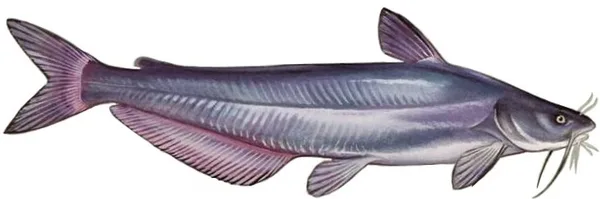
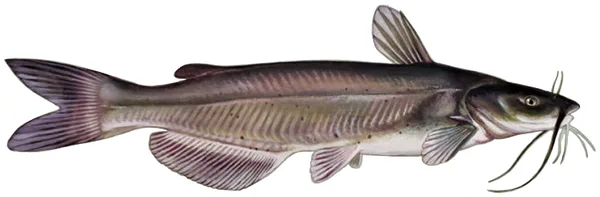
Channel catfish are distinguished from other Indiana catfish species by their deeply forked tail, scattered dark spots (especially prominent on younger fish), and a rounded anal fin with 24 to 29 rays. Adults range from olive-brown to slate-gray on the back with a white belly. They have the typical eight barbels (whiskers) found on all North American catfish. Larger, older fish tend to lose their spots and take on a darker, more uniform coloration.
Where to Find Channel Catfish
Indiana’s river systems are the backbone of channel catfish habitat. The Wabash River, White River (both forks), Tippecanoe River, and St. Joseph River all support strong populations. In reservoirs, look for channel cats near creek channel edges, riprap banks, dam tailwaters, and points that drop into deeper water.
State-managed lakes and reservoirs including Eagle Creek, Geist, Prairie Creek, Mississinewa, Brookville, and Patoka all hold excellent channel catfish populations. The Indiana DNR stocks channel catfish in numerous public lakes, making them available even in smaller impoundments.
Farm ponds across central and southern Indiana often harbor surprising numbers of channels, and many landowners welcome polite anglers willing to ask permission.
Seasonal Patterns
Spring (April-May): As water temperatures climb past 55 degrees, channel catfish move shallow and begin feeding aggressively. Pre-spawn fish stage near rocky banks, riprap, and submerged timber. This is one of the best times to catch numbers of fish.
Summer (June-August): Peak season. Channel cats spawn when water temperatures reach 70 to 80 degrees, typically in June. Males guard eggs in cavities — undercut banks, log jams, and rock crevices. Post-spawn fish feed heavily through mid-summer. Night fishing becomes the primary approach, with fish moving into shallow flats and near-shore structure after dark.
Fall (September-October): Channels feed heavily to build reserves before winter. Fish tend to concentrate near deeper structure — creek channels, ledges, and deeper holes. Cut bait and live bait outperform prepared baits during fall.
Winter (November-March): Channel catfish slow down significantly but can still be caught. Target deep holes in rivers and the deepest portions of lakes. Slow presentations with cut bait or nightcrawlers on the bottom will pick up occasional fish on warmer days.
Tactics and Rigging
The slip sinker rig is the workhorse setup for Indiana channel catfish. Thread a 1/2 to 1 ounce egg sinker on your main line, tie on a barrel swivel, then attach an 18 to 24-inch fluorocarbon or monofilament leader to a size 2/0 to 4/0 circle hook. This rig allows the fish to pick up the bait and move without feeling resistance.
For prepared baits and punch baits, a #6 treble hook dipped into the bait and fished under a slip float or on a Carolina rig is highly effective in warm water.
In rivers, position your bait on the downstream side of current breaks — behind bridge pilings, below wing dams, and along outside bends where deeper holes form. In lakes, focus on points, creek channel intersections, and near inflows after rain events, which wash food into the lake and trigger feeding.
Medium-heavy spinning or baitcasting gear in the 7-foot range handles most channel catfish situations. Spool with 15 to 20-pound monofilament or 30-pound braided line. Circle hooks are strongly recommended — they result in clean corner-of-the-mouth hooksets and make catch-and-release straightforward.