Saugeye Fishing in Indiana
The saugeye is a hatchery-produced hybrid between a female walleye and a male sauger, stocked by the Indiana DNR into select lakes across the state. While it lacks an official state record category, the saugeye has become an important part of Indiana’s fishery management program. These hybrids combine favorable traits from both parent species — the faster growth and larger size potential of walleye with the sauger’s superior ability to thrive in turbid, fertile waters where pure walleye might struggle.
Identification
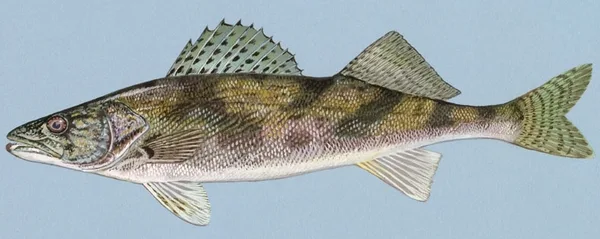
Distinguishing saugeye from their parent species can be genuinely challenging. Saugeye typically display a blend of characteristics. Like sauger, they often show dark saddle-shaped blotches on their back and sides, and may have rows of dark spots on the spiny dorsal fin. Like walleye, they can show a faint white tip on the lower lobe of the tail fin — though this marking is usually less distinct than on a pure walleye. The overall body color tends to be a brassy or bronze-gold, darker than a typical walleye. The eyes have the same light-gathering reflective layer found in both parent species, giving them the characteristic glassy-eyed look. When in doubt, consider the water you are fishing — if it is a lake the DNR stocks with saugeye rather than walleye, chances are good that the fish in your hand is a saugeye.
Where to Find Saugeye
Indiana DNR stocks saugeye in smaller lakes and reservoirs where conditions favor this hybrid over pure walleye. These tend to be shallower, more fertile impoundments with stained or turbid water.
Huntingburg Lake (Dubois County) is one of the more well-known saugeye destinations in southern Indiana. This 145-acre lake receives regular saugeye stockings and provides a quality fishery within a manageable, bank-accessible size.
Glenn Flint Lake (Putnam County) is another consistent saugeye stocking location. This 125-acre lake in Big Walnut State Recreation Area offers good access and holds stocked saugeye alongside largemouth bass and bluegill.
Sullivan Lake (Sullivan County), located within Sullivan City Park, receives saugeye stockings and provides a convenient close-to-town fishery.
Other small to mid-size state-managed lakes may receive saugeye stockings depending on the DNR’s annual management plan. Stocking decisions are based on habitat suitability, forage availability, and management goals for each waterbody. Anglers should check the Indiana DNR’s annual fish stocking report, published each year, for the most current list of saugeye-stocked waters.
Seasonal Patterns
Spring (March-May): The best time of year for saugeye. Like walleye, saugeye become active and move shallow as water temperatures climb through the 45 to 55-degree range. They stage near rocky shorelines, riprap near dams, and gravel areas — instinctively drawn to spawning-type habitat even though reproduction is unlikely. The aggressive pre-spawn and post-spawn feeding windows produce the most consistent action. Jigs tipped with minnows worked along rocky structure are the top spring approach.
Summer (June-August): Saugeye shift deeper and become more structure-oriented. In the smaller lakes where they are stocked, this often means holding along the deepest available contours, near submerged creek channels, or suspended over open water following baitfish schools. Low-light periods — early morning, evening, and night — are the most productive times.
Fall (September-October): Saugeye feed aggressively as water temperatures cool back through the 50s. This is the second-best window after spring. Fish move shallower and roam more actively in search of forage. Blade baits and crankbaits worked along transition banks and points are highly effective during the fall feed-up.
Winter (November-February): Saugeye slow down but remain catchable through winter, especially during warm-up trends. Vertically presented blade baits and small jigs tipped with minnows fished in the deepest water available are the primary winter tactics.
Tactics and Rigging
Saugeye respond to the same presentations used for walleye, with some adjustments for the typically smaller, more turbid lakes they inhabit.
Jig and minnow: A 1/8 to 1/4-ounce jig tipped with a fathead minnow is the most versatile saugeye presentation. Work it slowly along the bottom near rocky structure, riprap, and drop-offs. In stained water, use chartreuse, orange, or white jig colors for visibility.
Blade baits: Heddon Sonar and similar blades are extremely effective for saugeye, especially in cooler water. Vertically jig them with lift-and-drop motions near the bottom. The tight vibration and flash triggers strikes from lethargic fish.
Crankbaits: Medium-diving crankbaits in shad or perch patterns cast and retrieved along rocky banks, points, and rip-rap produce well from spring through fall. A steady, moderate retrieve with occasional pauses is effective.
Jerkbaits: Suspending jerkbaits worked with a twitch-pause-twitch cadence over shallow flats and near rocky shorelines are deadly during the spring pre-spawn period, especially in water temperatures between 42 and 52 degrees.
Saugeye share the excellent low-light vision of both parent species, making dawn, dusk, and night the most productive fishing times. In turbid water, brighter lure colors and baits that produce vibration or noise give saugeye something to home in on. A 6.5 to 7-foot medium-light spinning rod with 6 to 8-pound fluorocarbon line is well suited for most saugeye fishing in Indiana.