White Crappie Fishing in Indiana
White crappie are the workhorses of Indiana’s panfish scene. While black crappie get much of the attention in clear-water lakes, white crappie thrive in the stained and turbid waters that characterize many of the state’s reservoirs and river systems. They are prolific, hard-fighting relative to their size, and produce some of the finest-tasting fillets of any freshwater fish.
Identification
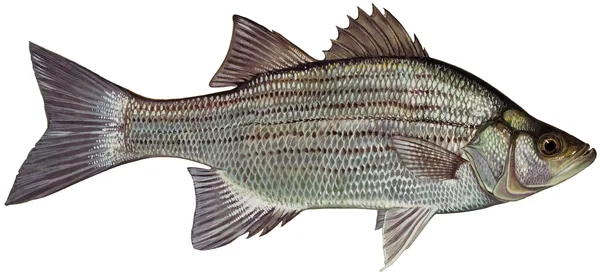
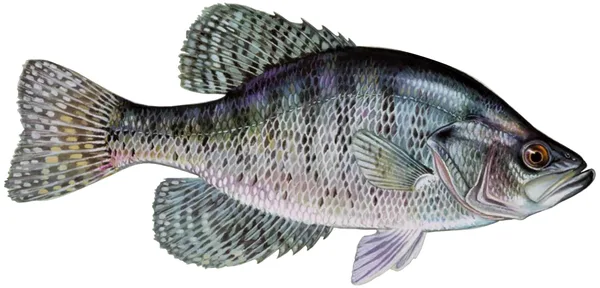
White crappie display dark vertical bars along their silvery sides, giving them a banded appearance that contrasts with the black crappie’s scattered speckled pattern. They possess five or six dorsal spines (count the hard spines in the front portion of the dorsal fin to confirm). Their body tends to be slightly more elongated than the black crappie’s rounder profile. In many Indiana reservoirs, the two species coexist, and hybrids do occur, which can make identification tricky on borderline fish.
Seasonal Patterns in Indiana
Spring (March through May): The spring spawning run is the main event. White crappie begin staging along creek channel ledges and deeper points when water temperatures reach the upper 40s. As temps push into the mid-50s and above, they move shallow to spawn on hard bottom or near woody cover in 3 to 8 feet of water. The spawning migration often begins slightly earlier than black crappie on the same body of water, giving anglers a longer overall crappie season.
Summer (June through August): Post-spawn white crappie retreat to deeper structure. On reservoirs, target submerged brush piles, standing timber, creek channel bends, and bridge pilings in 15 to 25 feet of water. White crappie frequently suspend well off the bottom, so electronics are critical for pinpointing the right depth. Vertical jigging and slow-trolling with long-line presentations produce consistent results.
Fall (September through November): Cooling water triggers feeding activity as shad and other baitfish push into the backs of coves and creek arms. White crappie follow, and anglers who locate baitfish schools can enjoy fast action. Work transitional structure at medium depths — 8 to 15 feet — around points, brush, and channel swings.
Winter (December through February): White crappie remain catchable through winter, though they tend to concentrate in deeper water. On reservoirs that remain ice-free, target the deepest brush piles and channel ledges with small jigs or minnows fished vertically. In northern Indiana where ice forms, white crappie provide solid ice-fishing opportunities on several natural lakes.
Top Tactics
Minnows are the universal white crappie bait in Indiana. A fathead minnow or small shiner on a 1/16-oz jig head under a slip bobber is hard to beat. Set the bobber stop to suspend the bait at the depth where crappie are holding — this is critical, as white crappie often school at a precise depth and will ignore offerings even a foot above or below their zone.
Casting small tube jigs, 2-inch curly-tail grubs, or hair jigs and retrieving slowly through cover is effective when fish are scattered along brushy shorelines. Use 4- to 6-pound test monofilament or fluorocarbon on a light or ultralight spinning rod for the best feel and casting distance.
On larger reservoirs, spider rigging with multiple rods is the dominant boat technique. This allows anglers to cover water efficiently while keeping jigs at the productive depth. Many successful crappie anglers use B’n’M or similar long crappie poles in the 10- to 14-foot range for this purpose.
Top Indiana Waters
Monroe Lake and Patoka Lake are the marquee white crappie destinations, with large populations and plenty of submerged timber structure. Hardy Lake, Cagles Mill Lake (Lieber SRA), and Cecil M. Harden Lake all produce strong white crappie catches. The river backwaters along the Wabash and White River systems hold white crappie as well, particularly in oxbow lakes and slackwater areas. Summit Lake, Raccoon Lake, and Mississinewa Lake round out the list of reliable producers.
Regulations and Limits
Indiana imposes no minimum size limit on white crappie. The daily bag limit is 25 fish, combined total with black crappie. A valid Indiana fishing license is required for anglers 18 and older. Check the current Indiana Fishing Regulations Guide for any location-specific rules that may apply to your destination.