Yellow Perch Fishing in Indiana
Yellow perch hold a unique place in Indiana fishing. They are a cornerstone species in the glacial natural lakes of the northern tier counties and a prized catch on Lake Michigan. For ice anglers, they are often the primary target species. Their firm, white fillets are widely considered among the best-tasting freshwater fish, rivaling walleye and making a perch fry one of the great traditions of northern Indiana.
Identification
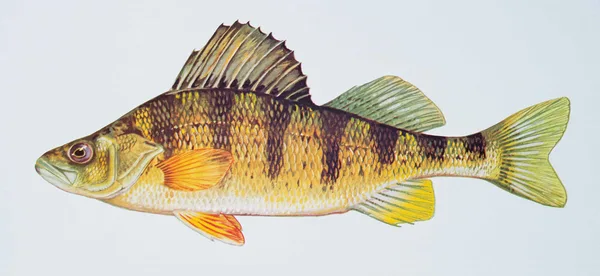
Yellow perch are easy to identify with their golden-yellow body marked by six to eight dark vertical bars along the sides. The lower fins are often bright orange or amber. They have a slightly forked tail, two separate dorsal fins (the front one spiny, the rear soft-rayed), and a relatively elongated body compared to sunfish. Adults in Indiana typically range from 7 to 12 inches, with fish over 12 inches considered excellent.
Seasonal Patterns in Indiana
Winter/Ice Fishing (December through March): This is the marquee season for perch on northern Indiana’s natural lakes. Perch remain active feeders under the ice, roaming in schools over mud flats, sand-gravel transitions, and the edges of submerged weed beds. Target depths of 18 to 30 feet with small jigs tipped with spikes, waxworms, or minnow heads. Perch schools are mobile, so drilling a spread of holes and moving to stay on fish is essential. Popular ice-fishing destinations include Webster Lake, Tippecanoe Lake, Lake Wawasee, Lake James, and numerous smaller Kosciusko and Steuben County lakes.
Spring (April through May): Perch spawn in shallow water when temperatures reach the mid-50s, draping ribbons of eggs over submerged vegetation and woody cover. Spawning fish can be caught in 4 to 10 feet near weed beds and gravel shorelines. After the spawn, they transition back to deeper water. On Lake Michigan, spring brings perch closer to shore along piers, breakwalls, and harbors, offering accessible fishing from Michigan City and Portage.
Summer (June through August): On natural lakes, perch move to deeper structure — weed edges, drop-offs, and open-water flats in 20 to 35 feet. Drifting or anchoring over productive flats with live bait rigs is the standard approach. On Lake Michigan, summer perch fishing from boats can be outstanding, targeting structure and hard-bottom areas in 25 to 45 feet. Charter boats operating out of Michigan City regularly target perch during summer months.
Fall (September through November): Perch feed heavily in preparation for winter, making fall an excellent but underutilized season. They begin moving shallower from their summer depths, often congregating around remaining green weeds in 12 to 20 feet. Fall perch tend to run larger as they have put on weight through the summer.
Top Tactics
Through the ice: A small teardrop jig (1/64-oz to 1/32-oz) tipped with two or three spikes or a waxworm is the classic presentation. Jigging spoons like Swedish Pimples and Hali jigs in 1/8-oz sizes also produce, especially for larger perch. Use a spring bobber or sensitive noodle rod to detect light bites. A flasher or portable sonar unit is invaluable for watching fish approach your bait and adjusting your jigging cadence.
Open water: A simple spreader rig or drop-shot rig with a small hook baited with a minnow, piece of nightcrawler, or leech is the go-to. Lower it to the bottom, lift slightly, and wait. Small blade baits and jigging spoons worked vertically also produce well when perch are aggressive.
Top Indiana Waters
Lake Michigan provides the biggest perch in the state but with more variable year-to-year populations depending on hatch success. The natural lakes of Kosciusko County (Wawasee, Webster, Tippecanoe, Chapman), Steuben County (Lake James, Snow Lake, Clear Lake), LaGrange County (Pretty Lake, Dallas Lake), and Noble County (Sylvan Lake) form the backbone of Indiana’s perch fishing. These glacial lakes produce the most consistent action, particularly through the ice.
Regulations and Limits
On inland waters, there is no minimum size limit for yellow perch, and the daily bag limit is 25 fish. Lake Michigan regulations are managed separately and may include different bag limits, size limits, or seasonal restrictions — always check the current Indiana DNR Lake Michigan regulations before fishing. A valid Indiana fishing license is required for all anglers 18 and older.