
What Are Hollow Body Frogs?
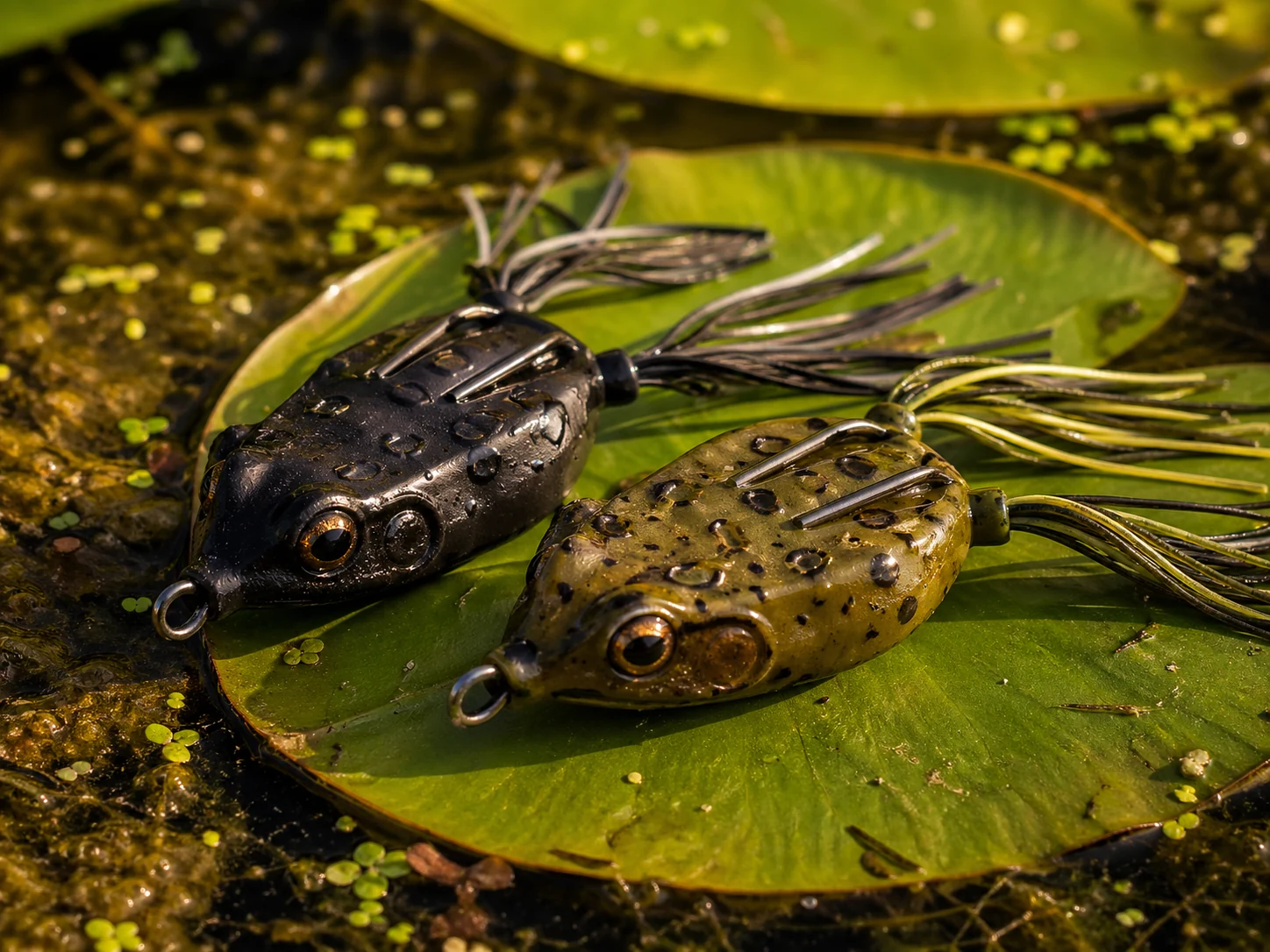
Hollow body frogs are soft-plastic topwater lures shaped like a frog with two upturned hooks molded along the back. The hooks lay flush against the body, making the frog completely weedless — you can drag it across thickest mats of pads, hydrilla, and duckweed without snagging. When a bass blows through the cover and engulfs the frog, the soft body collapses and exposes the hooks.
For Indiana bass anglers, frogs are the secret weapon for fishing places that other lures can’t reach. The lily fields of Wabash backwaters, the matted hydrilla on Monroe and Patoka, the duckweed-covered farm ponds in late summer — all unfishable with anything but a frog.
When to Throw a Frog
Peak season: Late June through early October in Indiana.
Best conditions:
- Water temps 75°F+
- Heavy surface vegetation (mats, pads, slop)
- Calm or light wind
- First/last hour of daylight or overcast days
Two Retrieves: Walk and Pop
Walking retrieve — most popular. Twitch the rod tip in a steady cadence (down, up, down, up) while keeping a small bow in the line. The frog walks side-to-side across open water and through gaps in the mats. Best in thinner cover or open pockets.
Popping retrieve — pause-twitch-pause. Reel-stop, twitch hard, let it sit. The frog spits water and sits motionless for 3-5 seconds. Best in heavy cover where you want to give bass time to commit.
Where to Cast in Indiana
- Monroe Lake — Allens Creek hydrilla flats, Salt Creek arm pad fields
- Patoka Lake — Painters Creek arm vegetation
- Geist Reservoir — back ends of coves with pad fields
- Wabash River oxbows — lily fields and backwater edges
- Farm ponds — duckweed mats and pad fields after July
- Hovey Lake — pad fields are legendary
Hook-Set Discipline
The single biggest mistake on frog fishing is setting too fast. When a bass crashes the frog, you’ll see and hear the explosion. Wait for weight. Count “one Mississippi” or wait until you feel the rod load before sweeping into the fish. Setting on the visual blow-up is how anglers go 0-for-5 on a single morning.
Tackle
A 7’3” to 7’6” heavy-action fast-tip rod, 50- to 65-lb braid (no leader — braid floats and aids the walk action), and a 7:1+ reel. The heavy gear drives the hook through the frog body and lets you horse fish out of vegetation before they bury.