
What Is a Ned Rig?
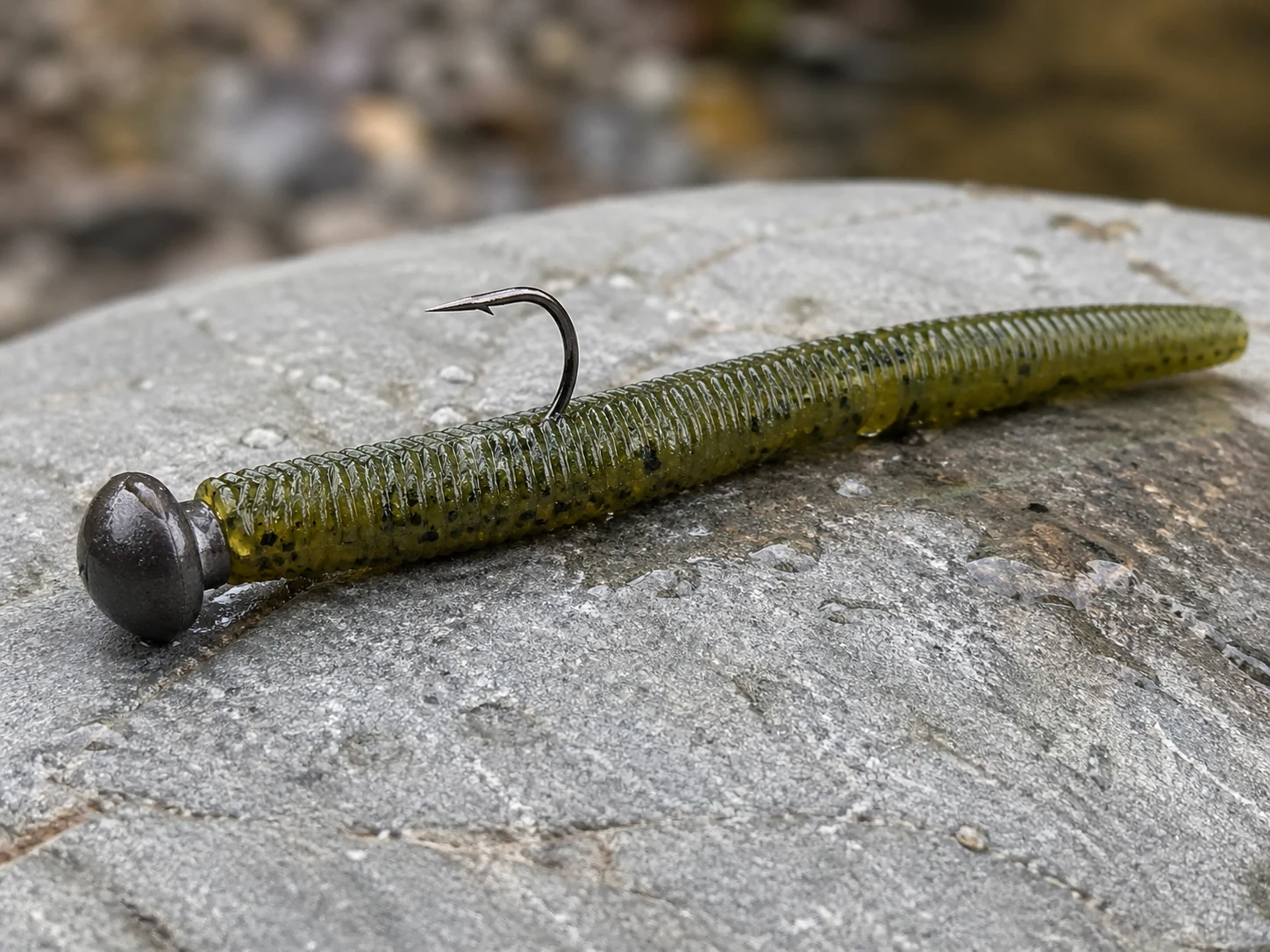
A Ned rig is dead-simple: a 2.5- to 3-inch buoyant soft-plastic stickbait pinched onto a small mushroom-shaped jighead. That’s it. No swivels, no Carolina rig, no skirt. Yet this minimalist setup has become one of the most effective bass presentations of the past 20 years — particularly in pressured waters where bass have refused everything else.
The genius is in the buoyant plastic. Z-Man’s ElaZtech material (and similar formulations from other companies) floats. When the jighead settles on the bottom, the bait stands straight up like a feeding crayfish or a panicked baitfish. Twitch the rod and the whole bait dances on its head. Pause and it stands back up. Bass cannot resist.
Why Ned Rigs Work in Indiana
Indiana bass — particularly on heavily-fished waters like Geist, Eagle Creek, Patoka, and Monroe — see hundreds of plastic worms and jigs every season. The Ned rig’s small profile, light fall, and unique standing-up posture is something most pressured fish haven’t seen. Smallmouth on Brookville, Tippecanoe Lake, and the upper Wabash River are particularly susceptible.
The Ned rig also excels in cold water. When water temps drop below 50°F and bass become lethargic, a 1/10-ounce Ned dragged across rocks is often the only thing they’ll touch.
Components
Jighead: 1/16 to 1/5 ounce, mushroom-shaped (also called shroom heads). 1/10 oz is the all-purpose default. Use heavier in current or wind, lighter in clear shallow water.
Plastic: 2.5 to 3 inches, buoyant material (Z-Man Finesse TRD, Berkley General, X-Zone Pro Series Stickbait). Cut a 5-inch Senko in half if you don’t have a dedicated Ned plastic.
Line: 6-8 lb fluorocarbon, or 15 lb braid + 6 lb fluoro leader.
Rod/reel: Medium-light or medium spinning rod, 7’0” to 7’4”, with a 2500-3000 size reel.
How to Fish a Ned Rig
The standard retrieve is the drag-and-deadstick:
- Cast and let it fall on a slack line (the buoyant plastic helps it flutter, not plummet)
- Once on the bottom, drag the rod tip slowly across structure
- Pause for 3-10 seconds — let the bait stand up
- Repeat
Most strikes come on the pause or the initial fall. Bites are subtle — often just a tap or a slight weight change. Set the hook on anything that feels different.
Color Choices
Keep it simple:
- Green pumpkin — universal default, mimics crayfish
- Watermelon red flake — clear water, sunny days
- Black-and-blue — stained water, low light
- Sprayed grass — natural baitfish color
Best Indiana Waters
- Brookville Reservoir — smallmouth bass on rocky points
- Patoka Lake — main lake structure for largemouth
- Geist and Eagle Creek — pressured suburban bass
- Monroe Lake — deep clear water main lake
- Tippecanoe Lake — natural-lake smallmouth
- Upper Wabash and White rivers — smallmouth bass on rocky riffles