
What Is a Soft Body Toad?
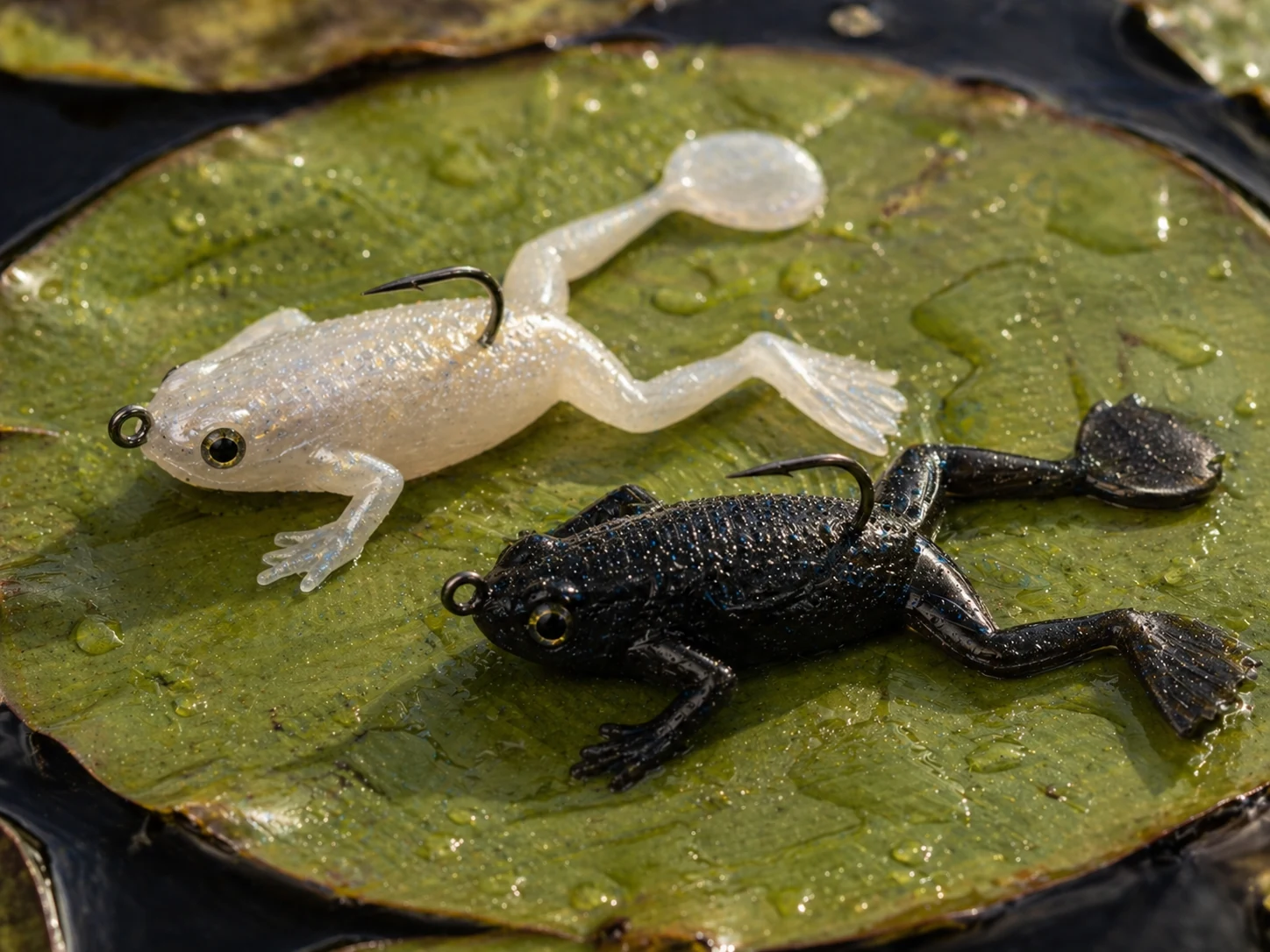
A soft body toad is a soft-plastic frog imitation with two paddle-shaped legs that kick rapidly on retrieve, churning the surface and creating a “putt-putt” sound that draws explosive strikes. The original is the Stanley Ribbit Frog; the most popular modern version is the Stanford Toads, Reaction Innovations Sweet Beaver Frog, and the Strike King Rage Tail Toad.
It’s the topwater frog choice for situations where you need to cover water faster than a hollow body frog allows.
When and Where to Throw a Soft Body Toad
Matted grass edges. When the matted vegetation gives way to open water or sparse grass, a soft body toad ripped along the edge calls bass out of the cover.
Lily pad fields. Skipping a soft body toad across a pad field is one of the most exciting topwater patterns in fishing. Bass blow up through the pads on the kicking baitfish silhouette.
Pre-frontal summer evenings. When humidity is high and pressure is dropping, bass go on a topwater feeding spree. A toad covers more water than a frog and finds active fish faster.
Shallow grass flats in 1-3 feet, especially near the spawn and post-spawn periods.
Rigging and Color
Rig texas-style on a 4/0 to 5/0 extra-wide-gap (EWG) hook with a screw-keeper or a small piece of plastic at the bait nose to hold the hook in place. Skin-hook the point flush to the back so it’s weedless on retrieve and pulls clean on the hookset.
Color selection: White and bone are bright-day standards. Black is dawn, dusk, and night. Green pumpkin and watermelon-red work in clear water. Chartreuse and bluegill-pattern colors are bedded-bass killers around spawning panfish.
Tackle
A 7’4” to 7’6” heavy-power, fast-action baitcasting rod is the standard frog/toad setup, paired with a 7:1 to 8:1 high-speed reel and 50-65 lb braid. Heavy line is non-negotiable — bass dive into cover instantly on the strike, and lighter line will lose half your fish.