Bank Fishing in Indiana: Best Spots & Tips
March 19, 2026

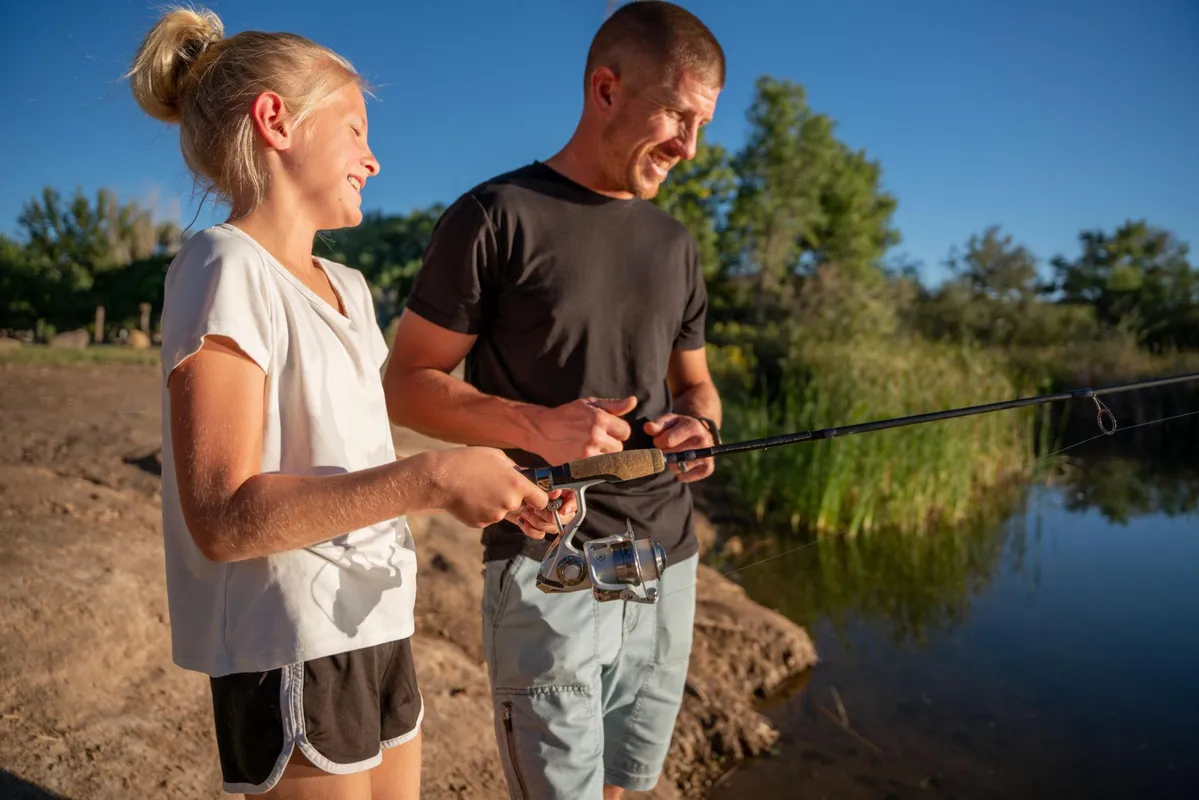
You don’t need a $40,000 bass boat to catch fish in Indiana. You don’t even need a kayak. Some of the most productive and enjoyable fishing in the state happens from the bank — a pair of sneakers, a spinning rod, and a container of worms will put you on fish at hundreds of locations across Indiana.
Bank fishing is how most of us started, and for many Hoosier anglers, it’s still the primary way they fish. Indiana’s network of state parks, urban ponds, reservoir shorelines, and river access points provides more fishable bank space than any single angler could explore in a lifetime. The DNR actively manages many of these waters specifically for shore anglers, stocking catfish, trout, and panfish in locations designed for walk-up access.
Whether you’re a beginner looking for your first bluegill, a parent taking kids fishing, or an experienced angler who just doesn’t feel like trailering a boat, this guide covers the best bank fishing spots in Indiana and how to make the most of them.
Best Bank Fishing Spots by Region
Indianapolis Metro
The Indianapolis area has more bank fishing opportunities than most anglers realize. Within 30 minutes of downtown, you can fish for bass, catfish, crappie, and panfish without touching a boat ramp.
Eagle Creek Reservoir — The crown jewel of Indianapolis bank fishing. This 1,350-acre reservoir inside Eagle Creek Park has miles of accessible shoreline with mowed paths, fishing piers, and concrete access points. The park charges a gate fee ($5 per vehicle for Marion County residents), but the fishing is worth it. Species include largemouth bass, channel catfish, bluegill, crappie, and hybrid striped bass. The dam face, the beach area, and the peninsula near the nature center are all productive bank spots. For more Indianapolis options, see our best fishing spots near Indianapolis guide.
Geist Reservoir — While much of Geist’s shoreline is private residential property, several public parks provide bank access. Fort Harrison State Park’s shoreline on Fall Creek gives access to the upper portion of the reservoir. The Geist Waterfront Park on the southeast end has piers and shoreline access. Bass, crappie, and catfish are all present.
Fort Harrison State Park — The 1,700-acre park in Lawrence has two lakes and Fall Creek access. The ponds are stocked with channel catfish and largemouth bass. Bank access is excellent throughout.
White River Greenway — The White River through Indianapolis has public access points from Broad Ripple south through Southport. Smallmouth bass, channel catfish, and flathead catfish are all catchable from shore. The Broad Ripple dam area, Oliver Avenue, and Raymond Street bridge are popular spots. This is some of the best urban catfish fishing in the state.
Sahm Park Pond / Paul Ruster Park Pond — Several small Indianapolis parks have ponds stocked by the DNR for urban fishing. These are perfect for kids and beginners. Check the Indiana fish stocking schedule for specific stocking dates.
Fort Wayne Area
Lakeside Park — A 150-acre lake in the heart of Fort Wayne with good panfish, bass, and catfish. The park has multiple bank access points and a fishing pier. Stocked with channel catfish periodically.
Shoaff Park — Shoaff Park Lake offers easy bank access for bluegill, bass, and catfish. The south shoreline near the parking area is the most productive bank.
Hurshtown Reservoir — Located just northeast of Fort Wayne in Allen County, this 900-acre reservoir has good bass and panfish fishing from the bank. The dam area and the causeways provide accessible shoreline.
St. Marys River — Flows through downtown Fort Wayne. Smallmouth bass and rock bass are catchable from the Promenade Park area and the Rivergreenway trail access points.
Evansville and Southern Indiana
Diamond Valley Lake — A small lake in Vanderburgh County managed by the DNR for fishing. Stocked with channel catfish, largemouth bass, and bluegill. Excellent for beginners and families.
Garvin Park Lake — A Vanderburgh County park lake that’s stocked annually with catfish and trout. Good shoreline access all the way around.
Scales Lake (Warrick County) — Scales Lake State Beach area provides shore access to a 42-acre lake with bass, bluegill, and catfish. Well-maintained banks with easy casting.
Ohio River — Newburgh Area — The Newburgh Dam creates excellent tailwater fishing accessible from shore. Channel catfish, white bass, sauger, and striped bass are all caught from the bank below the dam.
State Parks with Excellent Bank Fishing
Indiana’s state parks are among the best bank fishing destinations in the Midwest. Well-maintained shorelines, fishing piers, and stocked fish make them ideal for anglers without boats.
| State Park | Lake/Water | Acres | Best Bank Species |
|---|---|---|---|
| Chain O’Lakes | Multiple connected lakes | 127 (total) | Bluegill, bass, pike |
| Potato Creek | Worster Lake | 327 | Bass, bluegill, crappie |
| Hardy Lake | Hardy Lake | 741 | Bass, catfish, crappie |
| Summit Lake | Summit Lake | 800 | Catfish, bass, bluegill |
| Raccoon Lake (Cecil M. Harden) | Raccoon Lake | 2,060 | Bass, catfish, white bass |
| Shakamak | Three lakes | 400 (total) | Bluegill, catfish, bass |
| Versailles | Versailles Lake | 230 | Bass, bluegill, catfish |
| Whitewater Memorial | Brookville tailwater access | — | Walleye, catfish |
Chain O’Lakes State Park (Noble County) — Nine interconnected natural lakes with excellent shoreline access. The park has multiple fishing piers and bank areas. Bluegill fishing is outstanding, especially in Sand Lake and Mud Lake. Northern pike are also present and catchable from shore in spring.
Potato Creek State Park (St. Joseph County) — Worster Lake covers 327 acres and has well-maintained bank access along the dam, the beach area, and multiple shoreline trails. Bluegill and panfish fishing is excellent throughout summer. Bass hold along the shoreline timber.
Hardy Lake (Scott County) — A 741-acre reservoir with good bank access from the dam, beach, and multiple coves. The DNR has placed brush piles within casting range of several bank spots specifically to improve shore fishing for crappie. Channel catfish and bass are also strong.
DNR Urban Fishing Program
The Indiana DNR maintains 16 urban fishing ponds across the state that are stocked regularly with channel catfish and, in some cases, rainbow trout (winter). These ponds are specifically designed for bank fishing — every shoreline is accessible, and fish are stocked at high densities to ensure catching.
Urban fishing sites include locations in Indianapolis, Fort Wayne, Gary, South Bend, Terre Haute, and other cities. They’re free to fish (with a valid Indiana fishing license) and ideal for beginners, families, and anyone who wants quick, no-hassle fishing after work.
Check the DNR website or the stocking schedule for exact stocking dates. Fishing is best in the first 2-3 weeks after a stocking event.
Best Species to Target from the Bank
Not every fish is equally accessible from shore. Here are the species that bank anglers catch most consistently in Indiana, and where to focus your efforts.
Bluegill and Panfish
Bluegill are the most reliable bank fishing species in Indiana. They live in every pond, lake, and slow-moving stream in the state, and they spend most of their lives within 20 feet of shore — well within casting range.
Where to find them from the bank: Look for docks, weed edges, fallen trees, and brush piles near shore. During spawn (late May through June), bluegill move onto shallow sandy or gravel flats where you can see them fanning beds. Ponds and small lakes with clear water are the easiest for locating bluegill from shore.
How to catch them: A bobber, a small hook (#6 or #8), and a piece of worm or cricket fished 2-4 feet deep near cover. That’s it. This is the most effective and simplest fishing setup in existence. Kids can master it in minutes. For larger bluegill, use a 1/32 oz jig with a small wax worm or artificial grub fished tight to weed edges.
Channel Catfish
Channel catfish are the second-best bank fishing species in Indiana, and in terms of size, they’re the most rewarding. The DNR stocks channel catfish in dozens of ponds and lakes specifically for shore anglers. Rivers and large streams throughout the state also hold self-sustaining populations.
Where to find them from the bank: Stocked ponds (check the stocking schedule), river banks below riffles and dams, rip-rap shorelines on reservoirs, and sandy flats adjacent to deeper water. For more detail, see our catfish fishing guide.
How to catch them: A slip sinker rig (1 oz egg sinker, barrel swivel, 18-inch leader, 2/0 circle hook) baited with chicken liver, nightcrawler, or cut shad. Cast to the edge of deeper water and set the rod in a holder. Catfish feed most aggressively at dawn and dusk, but stocked pond catfish bite throughout the day.
Crappie
Crappie can be challenging from the bank because they often suspend over deeper water, but when they move toward shore — which they do in spring and around structure year-round — they’re very catchable.
Where to find them from the bank: Brush piles within casting range (many Indiana lakes have DNR-placed brush piles near shore), dock pilings, bridge abutments, and fallen trees extending into the water. Spring is the best season for bank crappie, when they move shallow to spawn.
How to catch them: A slip float rig with a 1/16 oz jig tipped with a minnow, set to suspend the bait 4-8 feet deep over or near cover. Cast to the edge of brush piles or docks and wait. Crappie usually bite within a few minutes if they’re present. Move to the next piece of structure if you don’t get a bite in 10-15 minutes.
Largemouth Bass
Largemouth bass are shore-oriented fish that spend much of their lives within casting range of the bank. They relate to docks, fallen trees, weed beds, and rocky banks — all of which are fishable from shore.
Where to find them from the bank: Any piece of shoreline structure that breaks up the uniform bank. Docks, laydown logs, rocks, weed patches, and creek inlets all hold bass. Focus on areas where the bottom transitions from hard to soft or shallow to deep.
How to catch them: Spinnerbaits, small crankbaits, and soft plastic worms cast along the shoreline parallel to structure. A 6-inch Texas-rigged plastic worm in green pumpkin or junebug is the most versatile bank fishing bass lure in Indiana. Cast it tight to cover, let it sink to the bottom, and drag it slowly back.
Essential Bank Fishing Gear
One of the best things about bank fishing is how little gear you actually need. Here’s the practical list:
Rod and Reel
A 6.5 to 7-foot medium-action spinning rod paired with a size 2500-3000 spinning reel is the single most versatile bank fishing combo you can own. It handles panfish, catfish, crappie, and bass. Spool with 8 lb monofilament for an all-around setup, or 6 lb if you primarily target panfish and crappie.
If you fish for catfish regularly, add a second rod — a 7-foot medium-heavy spinning combo with 12-15 lb line for dedicated catfish duty. This heavier setup handles big channel cats and flatheads better than a medium rod.
Tackle
Keep it simple and portable. A small tackle backpack or shoulder bag with these items covers 90% of bank fishing situations:
- Hooks: Size 6-8 for panfish, 1/0-2/0 circle hooks for catfish, 2/0-3/0 worm hooks for bass
- Bobbers: Clip-on and slip floats (slip floats are more versatile)
- Sinkers: Split shot (size BB and 3/0), egg sinkers (1/2 oz and 1 oz)
- Jigs: 1/32 oz and 1/16 oz for panfish/crappie, 1/8 oz for crappie/bass
- Soft plastics: 3-inch curly tail grubs (white, chartreuse), 6-inch worms (green pumpkin)
- Spinnerbaits: 1/4 oz white or white/chartreuse (one is enough)
- Swivels: Barrel swivels size 7 for catfish rigs
- Extra line: A spare spool of 8 lb monofilament
Comfort Items
- Folding chair or bucket — You’ll be sitting. A 5-gallon bucket doubles as a seat and tackle carrier.
- Rod holder stake — A bank stick or spike that holds your rod upright while you wait for bites. Essential for catfishing. Available at any bait shop for $5-15.
- Landing net — A small folding net with a rubber mesh bag. Trying to hoist a 5-pound catfish up a steep bank by the line is how you lose fish and break rods.
- Stringer or small cooler — If you plan to keep fish. A wire stringer staked into the bank keeps fish alive and fresh.
- Sunscreen and bug spray — Non-negotiable from May through September.
- Polarized sunglasses — Let you see into the water to spot fish, beds, and structure. Worth every penny for bank fishing.
Bank Fishing Techniques
Bobber and Worm — The Universal Setup
This is the most effective bank fishing technique ever devised. It catches everything — bluegill, crappie, catfish, bass, perch, and more. It’s also the simplest:
- Clip a bobber onto your line 3-4 feet above the hook.
- Add one or two small split shot 6 inches above the hook.
- Thread a piece of nightcrawler or red worm onto a size 6-8 hook.
- Cast near cover — docks, weed edges, fallen trees — and watch the bobber.
- When the bobber goes under or moves sideways, set the hook.
Adjust bobber depth to keep your bait just above the bottom or at the depth where fish are holding. In ponds and small lakes, 3-5 feet is usually right.
Bottom Rig for Catfish
When targeting channel catfish specifically, switch to a bottom rig:
- Thread a 1 oz egg sinker onto your main line.
- Tie on a barrel swivel.
- Attach an 18-inch leader of 15-20 lb monofilament to the swivel.
- Tie on a 2/0 circle hook.
- Bait with chicken liver, nightcrawler, or stink bait.
- Cast to deeper water near the bank — channel edges, holes, or the base of rip-rap.
- Tighten your line, set the rod in a holder, and wait. With circle hooks, don’t jerk — just reel steadily when you feel a bite.
Casting Lures for Bass
Bank fishing for bass with artificial lures is active and exciting:
- Spinnerbait — Cast parallel to the shoreline and retrieve steadily. Let the blades tick off rocks, stumps, and dock pilings. The most forgiving bank fishing bass lure.
- Texas-rigged worm — Cast tight to cover, let the worm sink to the bottom, and drag it slowly back with pauses. This catches bass in every season.
- Small crankbait — A Rapala or Strike King shallow-diving crankbait in shad or crawfish pattern, retrieved parallel to the bank, covers water quickly and triggers reaction strikes.
Slip Float Over Brush Piles for Crappie
When you know a brush pile or submerged structure is within casting range:
- Thread a slip float stop, bead, and slip float onto your line.
- Tie on a 1/16 oz jig.
- Set the stop at the depth you want to fish (start at 6 feet, adjust).
- Tip the jig with a live minnow hooked through the lips.
- Cast past the structure and let the float settle. Your jig will hang at the set depth.
- Wait 3-5 minutes. If no bite, reel in and cast to a different spot on the same structure.
Finding Good Bank Spots
Not all shoreline is created equal. Here’s how to identify productive bank fishing locations:
Look for access points. Parks, bridges, dams, and public boat ramps all have fishable bank space. Even if you’re not launching a boat, the area around a ramp is often productive because the gravel or concrete attracts baitfish and the deeper water near the ramp holds predators.
Find mowed shoreline. Indiana parks and recreation areas maintain mowed grass right to the water’s edge in many locations. These groomed banks are your best friend — you can cast freely without snagging trees, and they’re usually flat enough to set up a chair.
Target structure visible from shore. Docks, fallen trees, rock walls, bridge pilings, creek inlets, and dam faces are all fish magnets. The best bank spots have some kind of structure within 30 feet of where you’re standing.
Check water depth. Banks that drop off quickly into 4+ feet of water are more productive than gradually sloping shallow banks. Fish feel more comfortable holding near steep banks because deep water is close by for escape.
Avoid heavily wooded or steep banks. If you can’t get a backcast without hooking a tree, move on. There’s always another spot. Steep, eroding banks with no flat ground for standing or sitting are unsafe and unproductive.
Use Google Earth. Before you go, look at satellite imagery of the lake or river. You can often identify access points, parking areas, piers, and promising bank structure from the air. Save yourself driving time by scouting digitally first.
Bank Fishing Etiquette
Shared shoreline space means shared responsibility. Follow these guidelines to keep bank fishing enjoyable for everyone:
- Give other anglers space. If someone is already fishing a spot, set up at least 50 feet away unless the area is small and they invite you closer. Don’t cast over their lines.
- Don’t block walking paths. Many bank fishing spots are on park trails and greenways. Set up to the side so walkers, joggers, and cyclists can pass without stepping over your gear.
- Pack out everything. Monofilament line, hook packages, bait containers, and food wrappers all go home with you. Cut line is deadly to birds and wildlife. Bring a plastic bag for trash.
- Respect private property. If there’s no sign saying “public access” and you’re not in a park, you’re probably on private land. Indiana trespass laws apply to anglers. When in doubt, ask.
- Keep noise down. Bank fishing areas in parks are shared with families, picnickers, and people enjoying nature. Loud music and shouting are unwelcome.
- Release fish carefully. If you’re practicing catch and release, wet your hands before handling fish, remove hooks quickly, and release fish in the water rather than tossing them. Barbless hooks or circle hooks make release faster and less harmful.
Tips for Better Bank Fishing
These tips come from years of fishing Indiana banks and watching what separates consistent anglers from those who go home empty-handed:
Fish early. Bank fishing is almost always best in the first two hours after sunrise. Fish are shallow, feeding, and less spooked by shoreline activity. By mid-morning, the joggers, dog walkers, and boat traffic push fish off the banks. Arrive at dawn and you’ll have the water to yourself.
Wear polarized sunglasses. This is the most underrated bank fishing advantage. Polarized lenses cut surface glare and let you see into the water — spotting fish, identifying structure, and gauging depth. You’ll catch more fish when you can see what you’re casting to.
Bring a landing net. Trying to drag a fish up a bank on 8 lb monofilament is how you lose the fish of the day. A small folding net with a 3-4 foot handle lets you control fish at the water’s edge without risking a break-off.
Move if you’re not biting. This is the biggest mistake bank anglers make — staying in one spot for hours because it looks good. If you haven’t had a bite in 30 minutes, move. Walk 100 yards down the bank and try the next piece of cover. Actively searching for fish will always outperform waiting for them to come to you.
Fish the wind-blown bank. Wind pushes plankton and baitfish against the windward shoreline. Predators follow. If one side of the lake has waves lapping the bank and the other is calm, fish the wavy side. It’s less comfortable but significantly more productive.
Match your approach to the species. Don’t fish the same way for every species. Bluegill want a small bait suspended near cover. Catfish want a smelly bait on the bottom in deeper water. Bass want a moving lure worked along structure. Crappie want a jig and minnow over brush. Understand what you’re targeting and set up accordingly.
Pre-rig at home. Tying knots and rigging tackle at the water wastes prime fishing time. At home the night before, tie up your catfish rigs, rig your bobber setups, and pre-spool your jigs. Arrive at the lake ready to cast within five minutes.
Use live bait when in doubt. Artificial lures are fun and effective, but when you need to catch fish — especially from the bank where your casting angles are limited — live bait is more forgiving. A nightcrawler under a bobber, a minnow on a jig, or a cricket on a small hook will catch fish even when your technique isn’t perfect.
Check the stocking report. The Indiana DNR publishes fish stocking reports that tell you exactly which lakes received catfish, trout, or other species and when. Fishing a freshly stocked pond within two weeks of a delivery is the closest thing to a guaranteed catch in all of fishing. Monitor the stocking schedule and plan trips around it.
Getting Started
If you’re new to bank fishing in Indiana — or new to fishing entirely — here’s the simplest path to your first fish:
- Buy an Indiana fishing license (available online, $23 for residents).
- Get a 6.5-foot medium-action spinning combo from any sporting goods store ($30-50 will get a perfectly adequate setup).
- Buy a container of nightcrawlers and a basic terminal tackle kit (hooks, bobbers, split shot) from a local bait shop.
- Drive to the nearest state park, city park pond, or reservoir with bank access.
- Rig a bobber and worm, cast near any visible structure, and wait.
You’ll catch a bluegill within an hour. Probably sooner. And from there, the rest of Indiana’s bank fishing world opens up.
For more destination ideas, check our guides on fishing spots near Indianapolis, bluegill and panfish lakes, and catfish fishing in Indiana.
Frequently Asked Questions
What are the best bank fishing spots in Indiana?
Eagle Creek Reservoir in Indianapolis has miles of accessible shoreline and good bass, catfish, and panfish populations. State parks like Chain O'Lakes, Potato Creek, and Hardy Lake offer well-maintained fishing access. The DNR maintains 16 urban fishing ponds across the state that are stocked regularly and designed specifically for bank fishing.
Do you need a boat to catch fish in Indiana?
No. Hundreds of Indiana lakes, reservoirs, rivers, and ponds offer excellent bank fishing access. The DNR specifically stocks many urban ponds and state park lakes for shore anglers. Some species — especially bluegill, channel catfish, and crappie — are often easier to catch from the bank than from a boat because they hold near shoreline structure.
What should I bring for bank fishing?
A medium-action spinning rod (6-7 feet) handles most bank fishing situations. Bring a small tackle box with hooks, bobbers, split shot, and a few lures. A folding chair, stringer or small cooler, rod holder stake, sunscreen, and bug spray round out the essentials. A landing net is valuable for larger fish. Keep your gear portable — you may need to walk to find the best spots.
What are the best species to target from shore in Indiana?
Bluegill are the easiest and most abundant bank fishing species — they hold near docks, weed edges, and shallow structure within easy casting range. Channel catfish are heavily stocked in Indiana ponds and feed along banks at dawn and dusk. Crappie hold around brush piles and docks near shore. Largemouth bass cruise shoreline cover and are catchable on lures or live bait from the bank.