Carp Fishing in Indiana: Spots, Tactics & Gear
March 19, 2026

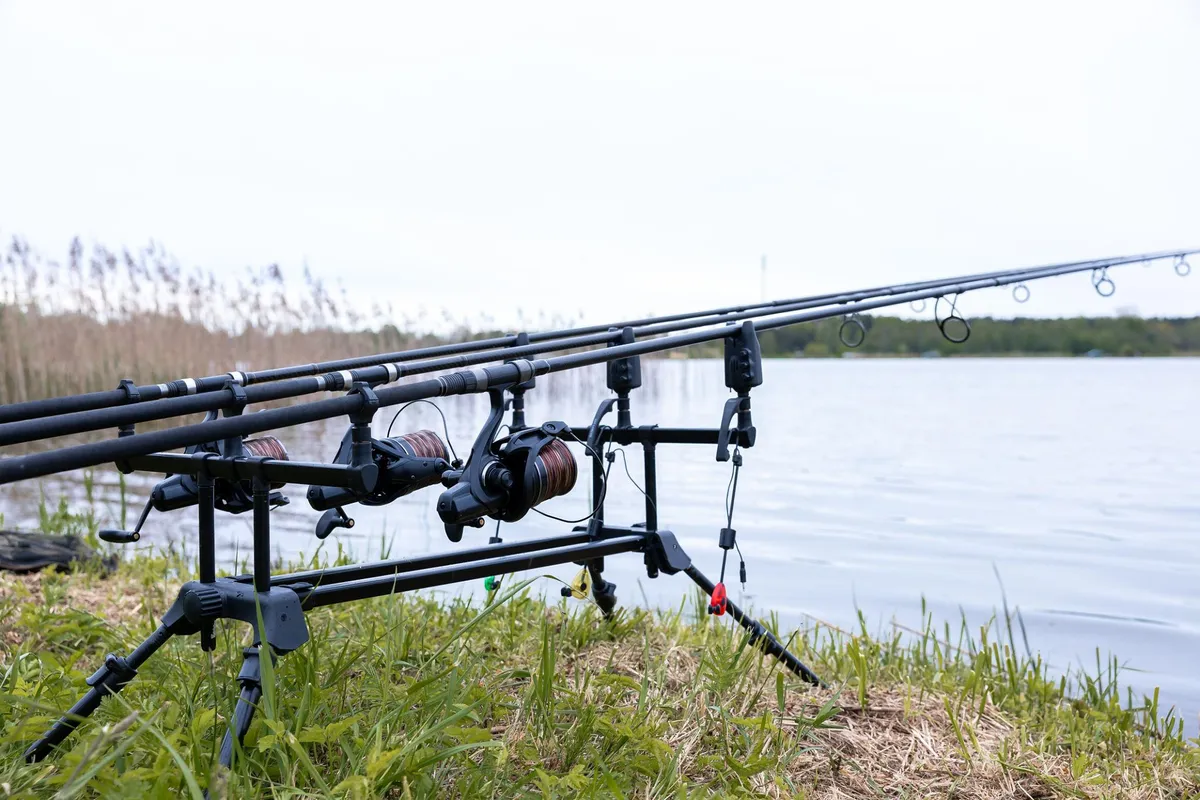
Carp are Indiana’s most overlooked sportfish. While bass tournaments dominate the headlines and walleye anglers crowd the ramps at first light, common carp cruise the shallows of nearly every lake, river, pond, and reservoir in the state — largely ignored. That is a mistake. A 20-pound carp on a 7-foot rod will outfight a largemouth bass twice, strip drag like a steelhead, and test every knot you tied that morning. Carp are everywhere, they grow enormous, and they are free to catch with a can of sweet corn and a fishing license.
Whether you are a seasoned European-style carp angler or a curious bass fisherman looking for a new challenge, Indiana offers world-class carp fishing that costs almost nothing to get into.
Carp Species in Indiana
Three groups of carp swim in Indiana waters. Understanding the differences matters for both fishing strategy and regulations.
Common Carp
The common carp is the primary target for rod-and-reel carp anglers. Originally introduced from Europe in the 1800s, common carp have colonized virtually every body of water in Indiana. They are golden-bronze with large scales, two barbels flanking the mouth, and a thick, powerful body.
Common carp in Indiana typically range from 5 to 15 pounds, but fish over 20 pounds are caught regularly in productive waters. Trophy carp — 30 to 40-plus pounds — exist in rivers like the White River and Wabash River, as well as in several central Indiana reservoirs. Mirror carp (a variant with irregular, oversized scales) occasionally turn up and are prized catches.
Grass Carp
Grass carp are stocked by the Indiana DNR and private landowners to control aquatic vegetation. They grow extremely large — the state record is 69 pounds — but they are much harder to catch on rod and reel. Grass carp are wary, spook easily, and feed primarily on aquatic plants rather than the bottom-feeding diet of common carp.
If you spot grass carp cruising the surface in a lake or pond, try a small piece of bread, a chunk of cherry tomato, or a green-colored boilie fished near weed beds. Patience and stealth are critical.
Asian Carp (Invasive)
Silver carp and bighead carp — collectively called Asian carp — are invasive species found in Indiana’s major river systems, including the Wabash River, White River, and Ohio River. Silver carp are the infamous jumpers that leap from the water when startled by boat motors. Bighead carp grow to enormous sizes (60-plus pounds) but are rarely caught on rod and reel because they are filter feeders.
Asian carp are not typically targeted by rod-and-reel anglers, though some are caught incidentally. Bowfishing is the primary harvest method. Indiana encourages removal of all Asian carp species to protect native fisheries.
Best Carp Fishing Spots in Indiana
Carp live in almost every fishable body of water in the state. The spots listed below consistently produce the largest fish and the best numbers.
Rivers
Rivers are the backbone of Indiana carp fishing. Moving water concentrates carp in predictable feeding areas — below dams, along current seams, in slack-water eddies, and on gravel flats.
| River | Region | Why It’s Good |
|---|---|---|
| White River (West Fork) | Central Indiana | Runs through Indianapolis; huge carp population, easy access, fish to 30+ lbs |
| White River (East Fork) | Southern Indiana | Less pressured, deep pools hold trophy fish |
| Wabash River | Western Indiana | Indiana’s longest free-flowing river; enormous carp, remote stretches |
| Ohio River | Southern border | Massive river with big carp, catfish, and gar; try tailwaters below dams |
| St. Joseph River | Northeast Indiana | Underrated smallmouth and carp fishery near Fort Wayne |
River carp respond best to pack bait and bottom-fishing tactics. Focus on areas where current slows and food accumulates — the inside bends of river curves, the slack water below wing dams, and the tailrace areas below low-head dams.
Lakes and Reservoirs
Indiana’s reservoirs and natural lakes hold healthy carp populations. The advantage of lake fishing is predictability — carp patrol the same flats, points, and weed edges day after day.
| Lake | County | Notes |
|---|---|---|
| Eagle Creek Reservoir | Marion | Close to Indianapolis, excellent bank access, carp to 25+ lbs |
| Geist Reservoir | Hamilton/Marion | Fertile water, large carp, good shore fishing at several parks |
| Monroe Lake | Monroe | Indiana’s largest lake; carp stack up in shallow coves during spawn |
| Morse Reservoir | Hamilton | Consistent carp fishing in a suburban setting |
| Brookville Lake | Franklin | Clear water sight-fishing opportunities in spring |
For lake-specific details, check our lake guides and the full Indiana lake directory.
Urban Waters
Some of the best carp fishing in Indiana requires nothing more than a short drive and a city park. Urban ponds, canals, and park lakes are often overlooked by serious anglers, but they hold surprising numbers of carp that rarely see a hook.
- Indianapolis Canal — the Central Canal towpath offers miles of bank access and a strong carp population
- City park ponds — Southeastway Park, Eagle Creek Park, Fort Harrison State Park, and dozens of other metro parks hold carp
- Retention ponds — subdivision ponds and industrial retention basins often hold large carp. Always verify access permissions before fishing
Urban carp are a perfect entry point for beginners. Bring a loaf of bread, a simple bottom rig, and a lawn chair. Check our guide to the best fishing spots near Indianapolis for more options.
Spawn Flats (May-June)
During the spawn, carp abandon their normal patterns and push into the shallowest water they can find — flooded grass, gravel shorelines, muddy flats with 6 to 18 inches of water. Spawning carp are easy to locate (look for splashing, tailing, and muddy water) but can be difficult to catch because they are focused on reproduction, not feeding.
The best strategy during the spawn is to fish the edges of spawning areas, where pre-spawn and post-spawn fish are still actively feeding. A piece of sweet corn placed 20 feet from a group of spawning carp will often get picked up by a cruiser.
Techniques for Catching Carp
Carp are not stupid. They have excellent senses of smell, taste, and hearing, and they are far more cautious than most freshwater game fish. The techniques below range from simple to advanced.
European-Style Carp Fishing
The modern approach to carp fishing was developed in the United Kingdom and Europe, where carp are the most popular sportfish. European-style carping revolves around the hair rig — a presentation where the bait hangs below the hook on a short piece of line, rather than being threaded onto the hook itself. When a carp sucks in the bait, the hook follows and catches in the lower lip.
Key components of the European approach:
- Hair rig — tied with a small loop of braid below a size 4-8 wide-gape hook. Bait (usually a boilie) is threaded onto the hair with a baiting needle
- Boilies — round, shelf-stable bait balls made from fishmeal, bird food, or nut-based mixes. Available in dozens of flavors. Fruity flavors (pineapple, strawberry, scopex) work well in Indiana
- Method feeder — a flat or inline feeder packed with groundbait. The boilie sits in or near the packed bait, so carp find your hook bait while feeding on the free offerings
- Bite alarms — electronic sensors that detect line movement. They allow you to fish with slack line (which carp prefer) and alert you to runs
European-style carping is the most effective method for consistently catching large carp. The initial gear investment is higher, but the results speak for themselves.
Traditional Bottom Fishing
The simplest and cheapest way to catch carp. Thread sweet corn, a dough ball, or a nightcrawler onto a size 4-6 hook, add a sliding sinker above a swivel, and cast to a likely area. Set the rod in a holder, engage the reel, and wait.
Traditional bottom rigs work best in rivers and smaller waters where carp are concentrated. The key is patience — carp may take 30 minutes to find your bait, and they often mouth it several times before committing. A light-action rod tip or a small bell clip helps detect subtle bites.
Pack Bait Method
Pack bait bridges the gap between European and traditional methods. The idea is simple: mold a ball of sticky bait mixture around a flat weight or method feeder, with your hook bait buried inside or sitting on top.
A basic pack bait recipe:
- Mix quick oats, panko breadcrumbs, and cream corn in a 2:1:1 ratio
- Add just enough water to make it moldable — it should hold together when squeezed but break apart in 10-15 minutes underwater
- Pack the mixture around your flat sinker with the hook bait (corn or a small dough ball) on top
- Cast and let it sit. The pack bait creates a feeding zone that draws carp to your hook
Pack bait is devastatingly effective on river flats and reservoir points. It is the go-to method for many Indiana carp tournament anglers.
Sight Fishing in Shallows
When carp are visible in shallow water — tailing on flats, cruising shorelines, or feeding in skinny water — you can stalk them like bonefish. This is the most exciting way to catch carp.
Use polarized sunglasses to spot fish. Approach slowly and quietly — carp spook at footsteps, shadows, and sudden movements. Place your bait (a single kernel of corn or a small fly) 2-3 feet ahead of a moving carp’s path and let it sink to the bottom. When the carp reaches your bait, watch for the head-down feeding posture and feel for the take.
Sight fishing is most productive from late April through June, when carp are in the shallows for the spawn.
Fly Fishing for Carp
Fly fishing for carp is one of the fastest-growing niches in freshwater fly fishing. Carp on a fly rod are often compared to bonefish and permit — they are spooky, selective, and incredibly powerful when hooked.
Effective carp flies include:
- Clouser Minnow (olive or brown) — a versatile pattern that imitates crayfish and baitfish
- Carp Crack — a small nymph pattern designed specifically for carp
- Backstabber — a crayfish imitation that rides hook-point-up to avoid snags
- San Juan Worm — simple but effective when carp are feeding on the bottom
A 7 or 8-weight fly rod with a floating line handles most Indiana carp. Focus on shallow flats where you can sight-cast to feeding fish. The White River through Indianapolis and Eagle Creek Reservoir are excellent fly-fishing-for-carp destinations.
Best Baits for Indiana Carp
| Bait | Cost | Effectiveness | Best Use |
|---|---|---|---|
| Sweet corn (canned) | Very low | Excellent | Universal — works everywhere |
| Boilies | Moderate | Excellent | Hair rigs, long sessions |
| Bread (crust or flake) | Very low | Good | Surface fishing, urban ponds |
| Dough balls (homemade) | Very low | Good | Bottom fishing, rivers |
| Nightcrawlers | Low | Good | Bottom fishing, spring |
| Commercial carp dough | Low | Good | Convenient, consistent |
Sweet corn is the single best carp bait in Indiana. A 50-cent can of corn will catch more carp than a $15 bag of specialty bait. For anglers who want to target larger fish specifically, boilies on a hair rig are the way to go — the hard outer shell resists small-fish pecking and allows only carp-sized mouths to pick them up.
Gear for Carp Fishing
You do not need expensive gear to catch carp, but you do need tackle that can handle a long, powerful fight.
Rod
A 7 to 10-foot medium-heavy spinning rod is ideal. Longer rods (9-10 ft) are standard in European carping because they cast farther and absorb lunges better. A 7-foot medium-heavy bass rod works fine for beginners. Avoid stiff, fast-action rods — carp have soft mouths, and a rod with some give prevents hook pulls.
Reel
A spinning reel in the 4000-5000 size class with a smooth drag is essential. Carp make long, sustained runs — a jerky drag will pop hooks or break line. Baitrunner reels (which have a secondary drag that allows line to peel freely) are popular in European carping and eliminate the risk of a carp pulling your rod into the water.
Baitcasting reels work for carp fishing in rivers, particularly when you need casting accuracy near structure.
Line
- Monofilament (10-15 lb) — best all-around choice. Stretch absorbs headshakes and lunges
- Braided line (20-30 lb) — better sensitivity and casting distance, but use a monofilament or fluorocarbon leader (10-15 lb) to add stretch near the hook
- Fluorocarbon leader — useful in clear water where carp are line-shy
Terminal Tackle
- Hooks: Size 4-8 wide-gape or curved-shank hooks. Smaller hooks (6-8) for corn and worms; larger hooks (4) for boilies and dough balls
- Sinkers: 1-3 oz flat or inline sinkers for bottom fishing. Egg sinkers on a sliding rig for traditional setups
- Bite alarms (optional) — electronic alarms that beep when line moves. Essential for multi-rod European-style sessions, optional for casual fishing
- Unhooking mat — a padded mat to lay carp on during unhooking. Carp are heavy fish and their scales are easily damaged on rocks, dirt, or boat decks. Serious carp anglers consider this mandatory gear
Landing Net
A large, deep landing net with a soft mesh (knotless) is important. Carp are heavy, and lifting them by the line or swinging them onto the bank damages the fish. A 42-inch or larger net handles even trophy-sized carp.
Seasonal Calendar
Carp are catchable year-round in Indiana, but their behavior shifts dramatically with water temperature.
Spring (March-April): Pre-Spawn Feeding Frenzy
As water temperatures climb past 50 degrees, carp become increasingly active after a sluggish winter. They move from deeper wintering holes to shallow flats and creek arms, feeding aggressively to build energy for the spawn. This is one of the best times of year to catch large numbers of carp.
Where to fish: Shallow bays, creek channels, dam faces that warm first, rip-rap shorelines Best baits: Sweet corn, worms, small PVA bags of crushed boilies
Spawn (May-June): Shallow Water Chaos
When water temperatures reach 60-68 degrees, carp spawn in the shallowest water available. You will see them thrashing in flooded grass, on gravel banks, and in marina shallows. Spawning fish are hard to catch, but the pre-spawn and post-spawn fish feeding nearby are eager biters.
Where to fish: Edges of spawning flats, secondary points near spawning bays, river backwaters Best baits: Corn, bread flake, small bright-colored boilies
Summer (July-August): Deep Feeding Windows
Midsummer carp feed heavily but shift to low-light hours — early morning and late evening are prime. During the day, carp hold in deeper water or under cover (bridge shade, overhanging trees, weed beds). Night fishing is extremely productive in summer.
Where to fish: Points, channel edges, weed lines, deep flats Best baits: Boilies, method feeder with pellets, pack bait
Fall (September-November): Pre-Winter Feeding Binge
Fall is trophy season. Carp feed aggressively to pack on weight before winter, and they are less cautious than at any other time of year. October and November produce some of the biggest carp of the year, particularly in rivers where falling water levels concentrate fish.
Where to fish: River bends, deep reservoir flats, creek mouths, anywhere baitfish and forage concentrate Best baits: High-protein boilies (fishmeal-based), corn, worms
Winter (December-February): Slow but Possible
Carp do not stop feeding in winter, but their metabolism slows significantly. They congregate in the deepest, warmest water they can find and feed in short, sporadic windows — often during the warmest part of the afternoon.
Where to fish: Deep holes, dam tailwaters with warm-water discharge, river bends with slow current Best baits: Single kernel of corn, small worm, tiny PVA bag with crushed boilies
Winter carp fishing requires patience and downsized presentations. Fish a single hook bait with minimal free offerings and be prepared to wait.
Handling and Release
Carp are surprisingly fragile for their size. Their large scales are easily dislodged, their slime coat protects against infection, and their weight can cause internal injuries if they are held improperly. Most serious carp anglers practice strict catch-and-release, and proper handling ensures the fish survives.
Best Practices
- Wet your hands before touching any carp. Dry hands strip slime coat
- Use an unhooking mat or wet grass — never lay a carp on rocks, concrete, or a dry boat deck
- Support the body horizontally with both hands — one under the pectoral fins, one under the belly near the anal fin
- Never lip-grip a carp — they do not have the jaw structure for it, and it causes serious injury
- Keep the fish low — hold carp close to the ground or over the mat so a dropped fish falls inches, not feet
- Photograph quickly — lift, snap, and return. Extended air exposure stresses the fish
- Revive in the water — hold the fish upright in the water, gently rocking it forward to push water through the gills, until it kicks away under its own power
Barbless Hooks
Consider fishing with barbless hooks or crushing the barb with pliers. Barbless hooks are easier to remove (less handling time) and cause less tissue damage. They do not significantly increase the number of lost fish if you keep steady pressure during the fight.
The Indiana Carp Fishing Community
Carp fishing in the United States is experiencing a quiet revolution. European-style carping — with its emphasis on big fish, catch-and-release ethics, and technical tackle — has been growing steadily in the Midwest over the past decade. Indiana is part of that movement.
Several organized carp fishing events take place in Indiana each year, and online communities connect carp anglers across the state. Social media groups dedicated to Indiana carp fishing are active and welcoming to beginners.
The catch-and-release ethic is central to the modern carp fishing community. While carp are classified as rough fish in Indiana (no bag limit, no size limit), dedicated carp anglers return every fish to the water. This philosophy has helped build trophy carp populations in waters where the fish were once considered trash.
If you are new to carp fishing, do not hesitate to reach out to the community. Experienced anglers are typically happy to share spots, techniques, and advice. Check local bait shops for information about carp fishing clubs and events in your area.
Bowfishing Connection
If harvest appeals to you more than catch-and-release, bowfishing is an exciting alternative. Carp are the primary target species for Indiana bowfishers, and there is no bag limit. Bowfishing is legal year-round on most Indiana waters and is particularly productive during the carp spawn in May and June, when fish stack up in shallow water.
Bowfishing and rod-and-reel carp anglers often share the same waters. Practice mutual respect — avoid shooting near someone’s carp rods, and rod-and-reel anglers should understand that bowfishers are legally harvesting a species with no limits.
Getting Started
Carp fishing has the lowest barrier to entry of any type of fishing in Indiana. Here is a simple starter setup:
- Rod and reel: Any medium-heavy spinning combo you already own
- Terminal tackle: Size 6 hooks, 1 oz egg sinkers, barrel swivels, 10 lb monofilament
- Bait: One can of sweet corn ($0.50)
- Rig: Slide the sinker onto the main line, tie to a swivel, attach a 12-inch leader to the hook, thread 2-3 corn kernels on the hook
- Location: Any park pond, reservoir shoreline, or river flat
- Method: Cast, set the rod in a holder, wait, and watch the rod tip
That is all it takes. A $5 investment in terminal tackle and bait, combined with a rod you already own, puts you in the game for fish that regularly exceed 10 pounds. Visit your local bait shop for corn, hooks, and local intel on where carp are biting. If you want to explore the species further, check our carp species page for identification details and records, or connect with a fishing guide who specializes in carp.
Carp fishing in Indiana is free, accessible, challenging, and addictive. The only question is why you have not tried it yet.
Frequently Asked Questions
Are carp good to eat?
Carp are edible and widely eaten in Europe and Asia, but most American anglers find them bony and muddy-tasting unless prepared correctly. Smoking, pressure-cooking, or scoring the flesh and deep-frying are the most popular methods. Fish from clean, cold water taste significantly better than those from warm, silty rivers. Many Indiana carp anglers practice strict catch-and-release.
What is the best bait for carp?
Sweet corn is the most effective and affordable carp bait in Indiana. A few kernels threaded on a hair rig or pressed directly onto a size 6 hook will catch carp in virtually any water. Boilies (flavored dough balls used in European carping) are a close second, offering durability and scent dispersion that attract larger fish. Bread, homemade dough balls, and nightcrawlers also produce well.
What is the biggest carp caught in Indiana?
The Indiana state record common carp weighed 43 pounds 4 ounces and was caught by Russell Long in 1989 from Pike Lake in Kosciusko County, a public lake. Fish in the 20-30 pound range are caught regularly from the White River, Wabash River, and several central Indiana reservoirs. The state record grass carp is even larger — 69 pounds, caught at Westons Pond in Hamilton County in 2018.
Is carp fishing legal year-round in Indiana?
Yes. There is no closed season for carp in Indiana, and there is no daily bag limit or size restriction. You can fish for carp 365 days a year with a valid Indiana fishing license. Carp can also be harvested by bowfishing, snagging, and other legal methods in addition to rod and reel.