Catch-and-Release Best Practices for Indiana Fish
March 19, 2026

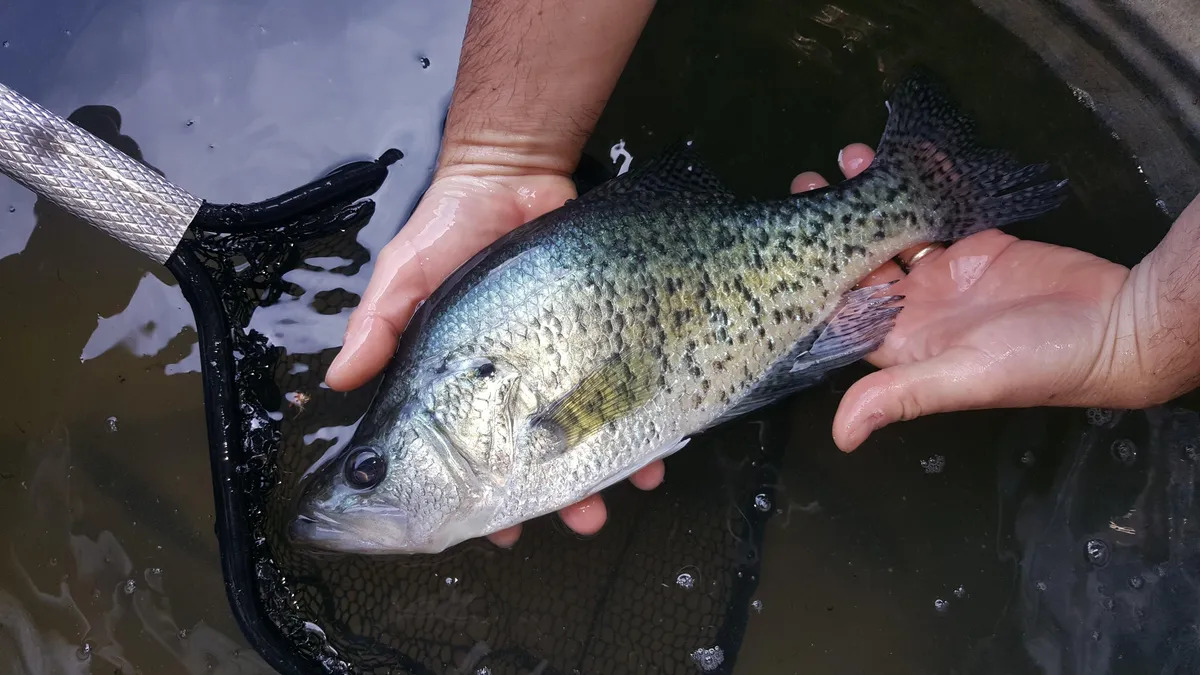
Catch-and-release fishing is one of the most important conservation tools Indiana anglers have. Every year, millions of fish are caught and released on Indiana’s lakes, reservoirs, and rivers. When it’s done correctly, those fish swim away healthy, grow bigger, and contribute to the fishery for years to come. When it’s done poorly, those fish swim away and die within hours — wasted.
The difference between a fish that survives release and one that doesn’t comes down almost entirely to angler technique. This guide covers everything you need to know to give every released fish the best possible chance.
Why Catch-and-Release Matters in Indiana
Indiana’s fisheries management depends heavily on catch-and-release. The Indiana Department of Natural Resources (DNR) sets regulations with the expectation that a significant percentage of caught fish will be released alive.
Species like largemouth bass, smallmouth bass, muskellunge, and northern pike are released far more often than they’re kept. The best bass lakes in Indiana produce quality fish because anglers return them to the water. Trophy muskie programs exist because virtually every muskie and pike caught in Indiana waters is released — those fish can take a decade or more to reach trophy size.
But here’s the uncomfortable truth: a released fish that dies within 24 hours is a worse outcome than a kept fish that gets eaten. At least the kept fish fed someone. A poorly released fish is simply wasted — the angler gets neither a meal nor a healthy fish returned to the population.
Estimated catch-and-release mortality rates vary by species and conditions:
| Species | Mortality Rate (proper technique) | Mortality Rate (poor technique) |
|---|---|---|
| Largemouth bass | 2-5% | 15-30% |
| Smallmouth bass | 3-7% | 20-35% |
| Muskellunge | 3-10% | 25-50% |
| Northern pike | 3-8% | 20-40% |
| Walleye | 5-10% | 20-40% |
| Channel catfish | 2-5% | 10-20% |
| Bluegill/panfish | 2-5% | 10-25% |
| Trout (stocked) | 5-15% | 30-60% |
The range is dramatic. Technique matters enormously.
Before the Catch: Gear Choices That Improve Survival
The single best thing you can do for released fish happens before you even make a cast. Your gear decisions directly affect how easy it is to unhook and release a fish quickly.
Use Barbless Hooks
Barbless hooks — or hooks with the barb crimped flat with pliers — are the most impactful change you can make. They penetrate more easily (you’ll actually feel more hooksets connect), they remove in seconds without tearing flesh, and they cause far less tissue damage than barbed hooks.
Will you lose more fish? Slightly. Studies suggest barbless hooks result in about a 5-10% increase in lost fish compared to barbed hooks. That tradeoff is worth it when the alternative is spending two minutes digging a barbed treble out of a bass’s throat.
If you’re not ready to go fully barbless, at minimum crimp your barbs when fishing catch-and-release-only waters or when targeting species you know you’ll release.
Choose Circle Hooks for Bait Fishing
If you’re fishing with live bait — cut bait for catfish, minnows for walleye, nightcrawlers for bass — circle hooks are far superior to J-hooks for catch-and-release. The circular shape naturally rotates the hook to the corner of the fish’s mouth as it takes the bait, virtually eliminating gut-hooking.
Gut-hooked fish (those hooked deep in the throat or stomach) have mortality rates of 40-60% regardless of what you do. Circle hooks reduce deep hooking to under 5%. The one rule: don’t set the hook with a circle. Just reel until the line comes tight. The hook does the work.
Use Appropriate Tackle Weight
Playing a fish to exhaustion on ultralight tackle might be fun, but it’s terrible for the fish. A bass that fights for five minutes on 4-pound test accumulates far more lactic acid than one landed in 90 seconds on 12-pound test. That lactic acid buildup causes delayed mortality — the fish may swim away looking fine and die hours later.
Use tackle heavy enough to land your target species reasonably quickly. This doesn’t mean horsing fish in on broomstick rods, but it does mean matching your gear to the fish you expect to catch. If you’re targeting 4-pound bass, don’t bring a panfish rod.
Landing the Fish
How you bring a fish to hand sets the stage for everything that follows.
Use a Rubber-Coated Net
A quality rubber-coated landing net is one of the best investments a catch-and-release angler can make. Compared to knotted nylon mesh, rubber nets:
- Cause far less damage to the fish’s protective slime coat
- Don’t tangle hooks (saving time with the fish out of water)
- Don’t snag and break fins
- Are easier to clean
Keep the net in the water and guide the fish in headfirst. Don’t chase the fish with the net or scoop at it — let the fish swim into the bag.
Avoid Lip Grippers on Large Fish
Lip grippers (the spring-loaded clamps that grab a fish’s lower jaw) are convenient, but they can cause jaw damage on larger fish, especially when the fish’s full body weight hangs from the lip at an angle. If you must use a gripper, support the fish’s body with your other hand so the weight isn’t concentrated on the jaw.
For bass under about 3 pounds, a thumb-in-the-lip hold is fine. For anything larger, support the body.
Never Drag Fish Onto Shore
This should go without saying, but dragging a fish up a gravel bank or onto rocks strips the slime coat, damages scales, and often injures the fish internally. If you’re bank fishing without a net, lead the fish into shallow water and handle it there.
Keep the Fish in Water
The gold standard is never removing the fish from the water at all. Unhook it in the net while the net is submerged. If that’s not possible, minimize air exposure — every second a fish spends out of water is a second its gills can’t extract oxygen.
Handling the Fish
Your hands are the most common source of damage to a released fish. A few simple practices make a major difference.
Wet Your Hands
Before you touch any fish, dip your hands in the water. Dry hands — especially on a hot day — strip the mucus layer (slime coat) that protects fish from bacteria and parasites. That slime coat is the fish’s immune system. Without it, infections set in quickly and are often fatal within days.
This applies in all weather. Even in October, wet your hands.
Support the Body Horizontally
Fish are designed to be supported by water along their entire body. When you lift a fish vertically — especially a large fish — its internal organs shift and can be damaged by the weight. Largemouth bass are somewhat tolerant of the vertical lip hold at smaller sizes, but a 6-pound bass held vertically by the lip with its body hanging can suffer jaw damage and internal stress.
Always support the fish horizontally with one hand under the belly or pectoral area and the other hand gripping the lip or tail. Think of it as cradling, not dangling.
Remove Hooks Quickly
Have your tools ready before you bring the fish to hand. A pair of long-nose hemostats or fishing pliers should be in your hand or clipped to your vest at all times.
Grip the hook shank with the hemostats and back the hook out along the same path it entered. Quick, smooth motions cause less damage than tentative poking. If the hook rotates out cleanly, you’ve done it right.
If the Fish Is Deeply Hooked
Sometimes despite your best efforts, a fish swallows the bait and the hook is buried in the throat or gill arches. When this happens:
Cut the line as close to the hook as possible and leave the hook in the fish.
This feels wrong — it seems like leaving a hook in a fish would be more harmful than removing it. But research consistently shows the opposite. Attempting to extract a deeply set hook almost always tears gill tissue, causing fatal bleeding. Left in place, the hook will corrode and dissolve (especially if it’s carbon steel rather than stainless), or the fish’s body will encapsulate and expel it over time.
The survival rate for gut-hooked fish with the line cut is roughly 2-3 times higher than for fish where the hook is forcibly removed.
Photographing Your Catch
A photo of a beautiful fish is a great thing. A dead fish from a bad photo session is not. Plan your shot so the fish spends minimal time in the air.
The Process
- Get your camera or phone ready first. Unlock the phone, open the camera app, frame the shot — all before you lift the fish.
- Keep the fish over the water. Hold the fish over the lake, river, or net. If you fumble and drop it, it falls safely into the water rather than onto rocks or a boat deck.
- Follow the 10-second rule. A fish should be out of water no longer than you can comfortably hold your breath. If you need to hold your breath to time it, do it. When you gasp for air, the fish goes back in the water.
- One or two shots, then release. Don’t hold a fish in the air for a dozen angles. Get your shot and let it go.
- Cradle, don’t grip. A white-knuckle death grip on a fish looks bad in photos and compresses internal organs. Open your hand slightly and let the fish’s weight rest on your palm.
Handling Large Fish for Photos
For trophy bass, muskie, pike, or catfish, the fish should ideally never leave the water. Kneel in the shallows, support the fish just below the surface, and shoot from above or at water level. Some of the most striking fish photos are taken with the fish partially submerged.
If you must lift a large fish, use both hands — one under the belly forward of the pelvic fins and one gripping the tail or lower jaw. Keep the fish horizontal and close to the water. Lift, shoot, lower. Five seconds.
Reviving a Fish Before Release
Not every fish is ready to swim away the moment you unhook it. Fish that fought hard, were played for a long time, or are being released in warm water may need help recovering.
The Revival Process
- Hold the fish upright in the water, supporting its belly with one hand and lightly gripping the tail with the other.
- In current (rivers, streams, tailwaters): face the fish upstream so water flows into its mouth and over its gills naturally.
- In still water (lakes, ponds): move the fish slowly forward through the water. Never move a fish backward — this forces the gill plates open against their natural direction and can suffocate the fish.
- Hold the fish until it begins to kick strongly against your hand. You’ll feel its tail pushing with increasing force.
- When the fish pulls firmly away from your grip, open your hand and let it swim off under its own power.
Do not release a fish that can’t maintain an upright position. A fish that rolls on its side or floats belly-up isn’t recovered. Gently right it and continue holding until it stabilizes.
Warm Water Complications
Water temperature has a massive impact on a fish’s ability to recover from the stress of being caught. Warm water holds less dissolved oxygen, and a stressed fish needs more oxygen to clear lactic acid.
When water temperatures exceed 80°F — common on Indiana lakes in July and August — revival times can be significantly longer. A bass that would recover in 30 seconds in 65°F water might need three or four minutes in 85°F water.
Be patient. If after several minutes of steady revival the fish still can’t maintain its balance or swim away, it may not survive. In that case, the ethical choice is to keep the fish (assuming it’s legal) rather than releasing it to die uncounted.
Species-Specific Catch-and-Release Tips
Different species have different vulnerabilities. Here’s what to know for Indiana’s most commonly released fish.
Largemouth and Smallmouth Bass
Bass are among the hardier species for catch-and-release, which is one reason bass tournaments are viable. The thumb-in-the-lip hold works well for largemouth bass up to about 3 pounds. For larger fish, always support the body with a second hand.
Smallmouth bass are slightly more sensitive to handling stress than largemouth, particularly in warmer water. They tend to fight harder pound-for-pound, which means more lactic acid buildup. Land them quickly and minimize air exposure.
Key tip: During the spawn (May-June in most of Indiana), consider not fishing for bass on beds. A bass removed from a nest — even briefly — leaves eggs and fry vulnerable to predation by bluegill and other panfish. The bass may or may not return to the nest after release.
Muskellunge and Northern Pike
Muskie and pike are the species where catch-and-release technique matters most. These are long-lived, slow-growing apex predators. A legal muskie in Indiana is the product of 8-15 years of growth. Killing one through poor handling is a significant loss to the fishery.
- Keep the fish in the water. Muskie and pike should be unhooked and released without ever leaving the water if possible. Use a large rubber-coated net (at least 30 inches deep) and leave the fish in the net in the water while you work.
- Use long pliers or hookouts. Muskie and pike have rows of razor-sharp teeth. You will be cut if you put your fingers in their mouth. Use 12-inch needle-nose pliers or a specialized hookout tool.
- Cradle with both hands. If you must lift a muskie for a photo, one hand goes under the gill plate (not in the gills — under the plate) and the other supports the belly or tail. Keep the fish horizontal.
- Watch for delayed mortality. Muskie are prone to post-release death, especially in warm water. If a muskie seems sluggish during revival, take extra time.
Catfish
Catfish are generally tough and survive release well, but their pectoral and dorsal spines require careful handling. Grip a catfish by placing your hand behind the pectoral fins and in front of the dorsal spine, with the spines fitting between your fingers. This immobilizes the spines and gives you control.
Channel catfish and blue catfish caught on circle hooks in the lip are excellent candidates for quick release — unhook with pliers and set the fish back in the water.
Flathead catfish, especially large ones, are important to release. They’re slow-growing predators that play a key role in river ecosystems. Handle them carefully and ensure a full revival before letting go.
Panfish (Bluegill, Crappie, Perch)
Panfish are small and their size makes them seem less fragile than they are. Bluegill and crappie are often swung through the air and tossed back — this is hard on them.
- Use small hooks (#6 or #8) that are easy to remove quickly.
- Wet your hand and grip gently.
- Don’t squeeze the body — panfish have less mass to absorb compression.
- Unhook over the water and release immediately.
Trout
Indiana has limited trout waters, but where they exist — stocked streams and Lake Michigan tributaries — trout are the most release-sensitive freshwater species.
- Trout have an extremely delicate slime coat. Even brief handling with dry hands can lead to fungal infections.
- Always use barbless hooks in trout water. Many Indiana trout streams require them.
- Minimize air exposure to absolute minimum — under 5 seconds is the target.
- Unhook in the water whenever possible. If the hook is visible in the lip, a gentle twist with hemostats while the trout is still in the net is ideal.
- Release trout in calm water, not directly into heavy current where an exhausted fish will be swept downstream.
When to Keep vs. When to Release
Catch-and-release isn’t always the right call. There are times when keeping a fish is the better choice — for the fishery, for you, and for the fish.
Keep Fish When:
- You plan to eat them. Fishing for food is a legitimate and time-honored practice. Bluegill, crappie, and perch are abundant in Indiana and excellent table fare.
- The fish is legal and within regulation limits. That’s what the limits are for.
- The fish is badly injured. A deeply gut-hooked fish bleeding from the gills, or a fish that clearly won’t survive release, should be kept (if legal) rather than released to die.
- Water temperatures are dangerously high. When surface temps exceed 85°F, release mortality for bass and walleye spikes dramatically. If you’re catching fish that are struggling to recover, consider keeping your limit and stopping, or switching to a species that handles warm water better (catfish, bluegill).
Release Fish When:
- They’re trophy-sized. Big fish are the breeding stock. A 10-pound largemouth is likely 10-15 years old and produces far more eggs than a 2-pounder. Releasing trophy fish is an investment in the future of the fishery.
- Regulations require it. Slot limits, minimum lengths, and catch-and-release-only designations exist for a reason.
- You’ve already got enough to eat. There’s no need to fill a limit if you only want a few fillets for dinner.
- You’re fishing heavily pressured water. Lakes and rivers that see a lot of angling pressure depend on high release rates to maintain quality fishing.
The Bottom Line
Catch-and-release is a skill, not a gesture. Simply throwing a fish back doesn’t mean it will survive. But an angler who uses proper hooks, lands fish quickly, handles them gently with wet hands, minimizes air exposure, and takes time to revive tired fish will release fish that overwhelmingly survive and thrive.
Indiana’s fishing depends on it. The bass you release today at Patoka Lake might be someone’s personal best two years from now. The muskie you carefully revive at Tippecanoe River might be the fish that makes a kid fall in love with fishing.
Handle every fish like it matters. Because it does.
For more on Indiana fishing regulations, species-specific tips, and where to find the best fishing in the state, explore our fishing guides, bait shops, and species pages.
Frequently Asked Questions
Does catch-and-release kill fish?
It can if done poorly. Studies show that catch-and-release mortality for bass ranges from 5% to over 30% depending on technique, water temperature, and how the fish was hooked. Deeply hooked fish, fish played to exhaustion on light tackle, and fish held out of water for extended photos have significantly higher mortality rates. Proper technique — barbless hooks, quick handling, keeping the fish wet — brings mortality below 5% for most species.
What are the best hooks for catch and release?
Barbless hooks (or hooks with crimped barbs) are the gold standard for catch-and-release fishing. They penetrate easily, remove cleanly, and cause minimal tissue damage. Circle hooks are excellent for bait fishing because they almost always hook in the corner of the mouth rather than deep in the throat. Avoid treble hooks when possible — swap them for inline singles on hard baits if you plan to release fish.
Do you have to release bass in Indiana?
Indiana does not require catch-and-release for largemouth or smallmouth bass on most waters. The general statewide regulation allows a daily bag limit of 5 bass with a 14-inch minimum length. However, some lakes have special regulations — including slot limits or higher minimum lengths — that effectively require releasing fish within certain size ranges. Always check the specific regulations for the water you're fishing at the Indiana DNR website.
How do you revive a fish before releasing it?
Hold the fish upright in the water, supporting it under the belly and gripping the tail gently. In moving water, face the fish into the current so water flows through the gills. In still water, slowly move the fish forward (never backward — it forces the gill plates open the wrong way). Hold until the fish kicks strongly and swims away under its own power. In warm water above 80°F, revival may take several minutes — be patient.