Fly in Indiana: Guide: Rivers, Species & Best Flies
March 19, 2026

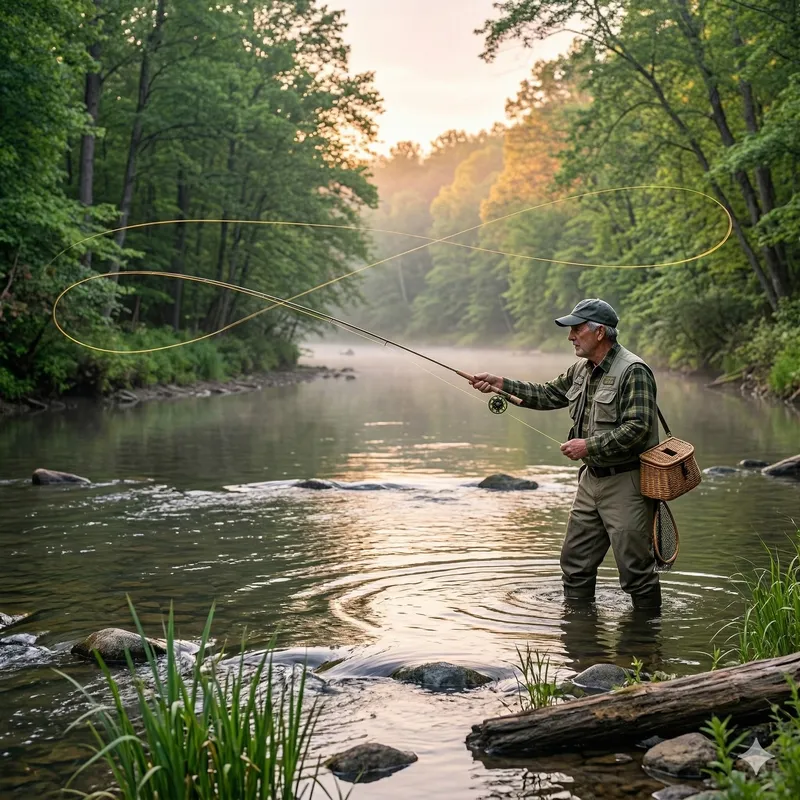
Indiana is not the first state that comes to mind when anglers think about fly fishing. That distinction belongs to Montana’s spring creeks or the Appalachian freestone streams of the East. But if you live in the Hoosier State and own a fly rod — or want to pick one up — you are sitting on more quality fly water than you probably realize.
Indiana’s strength is warm-water fly fishing. Hundreds of miles of limestone-bottomed rivers hold aggressive smallmouth bass that will crush streamers and poppers from April through October. Stocked trout programs give fly anglers a shot at rainbows and browns each spring and fall. Lake Michigan’s tributaries draw steelhead into wadeable water every winter. And if you want to introduce someone to fly fishing, the state’s abundant bluegill will eat a small popper with enthusiasm that rivals any trout.
This guide covers every angle of fly fishing in Indiana — where to go, what to throw, what gear to carry, and how to plan your year around the seasonal opportunities.
Indiana’s Fly Fishing Waters
Trout Streams
Indiana is not a trout state by nature. Summer water temperatures in most streams push well past the upper limits for salmonids. But the Indiana DNR maintains an active trout stocking program that puts catchable-size rainbow trout (and occasionally brown trout) into select waters each spring and fall.
Roaring Fork (Boone County) — This small tributary northwest of Indianapolis is the closest thing Indiana has to a traditional freestone trout stream. Cool spring-fed sections maintain lower temperatures than most Hoosier waterways, and the DNR stocks it regularly. The creek is narrow and overgrown in places, so short, accurate casts are essential. A 7.5-foot 3-weight or 4-weight rod is ideal here.
Big Walnut Creek — Another stocked trout destination with a more natural feel than urban put-and-take waters. The creek offers riffles, runs, and pools that fish like a classic small stream. Nymphing with a Pheasant Tail or Hare’s Ear under a small indicator is the most productive approach.
DNR Urban Trout Stockings — The DNR stocks several urban and suburban ponds and streams to provide easy trout access:
- Spy Run Creek (Fort Wayne) — Spring stocking draws crowds, but fish spread out within days
- Shoaff Park Pond (Fort Wayne) — Still-water trout fishing, good for beginners
- Cagles Mill Lake tailwater — Below the dam, cold releases hold trout longer than most locations
- Various city park ponds — Check the DNR stocking schedule each year for current locations
The stocking schedule changes annually, so check the Indiana DNR fish stocking page before planning a trip.
Important: An inland trout stamp is required in addition to your standard fishing license when fishing DNR-designated trout areas.
Smallmouth Bass Rivers
This is where Indiana fly fishing truly shines. The state’s warm-water rivers hold excellent smallmouth bass populations, and these fish are perfectly suited to the fly rod. Rocky riffles, undercut banks, and boulder-studded pools create the kind of structure that concentrates fish in predictable, wade-friendly locations.
Sugar Creek (Crawfordsville area) — Indiana’s premier smallmouth river and arguably the best fly fishing water in the state. The stretch between Shades State Park and Turkey Run State Park flows over sandstone ledges and boulders that create perfect smallmouth habitat. Fish average 12-15 inches with 3-4 pounders mixed in regularly. A Clouser Minnow stripped through the deeper runs is the most reliable method. Read more in our fall smallmouth guide.
Nearby: Parke County fishing | Montgomery County fishing
Tippecanoe River — A longer, gentler river than Sugar Creek with consistent current and gravel-bottom runs. The Tippecanoe holds good numbers of smallmouth throughout its length, with some of the best water in Fulton and Pulaski counties. Its moderate current makes it excellent for wading anglers who want to cover water methodically with streamers or topwater poppers.
Nearby: Fulton County fishing | Pulaski County fishing
Wildcat Creek — Flowing through Carroll and Tippecanoe counties, Wildcat Creek is a productive but less-pressured smallmouth stream. Access can be limited in places, which keeps crowds down and fish quality up. The best sections feature cobble-and-boulder substrate that holds fish in classic riffle-run-pool sequences.
Blue River — Southern Indiana’s best fly rod river. The Blue River winds through Harrison and Crawford counties over a limestone bottom that keeps water clarity exceptional. Smallmouth here tend to run slightly smaller than Sugar Creek fish, but the scenery — bluffs, caves, and forested hillsides — makes every float memorable.
Nearby: Harrison County fishing | Crawford County fishing
Eel River — Northern Indiana’s Eel River offers gentle current and easy wading through Whitley and Kosciusko counties. It is an excellent choice for anglers new to river fly fishing because the current is forgiving and the fish are cooperative. Smallmouth, rock bass, and the occasional largemouth all respond to streamers and poppers.
Warm-Water Lakes
Fly fishing on lakes gets less attention than river work, but Indiana’s reservoirs and ponds offer outstanding opportunities — particularly for bluegill and bass on topwater flies.
Eagle Creek Reservoir (Indianapolis) — The no-wake zones and protected coves at Eagle Creek are perfect for fly anglers in float tubes, kayaks, or canoes. Bluegill stack up on shallow flats during the May-June spawn and will eat small poppers aggressively. Largemouth bass patrol weed edges and downed timber where a Clouser or small streamer draws strikes.
Smaller State Park Lakes — Summit Lake, Versailles Lake, and Shakamak Lake all offer intimate fly fishing for bass and bluegill without the boat traffic of larger reservoirs. Carry a 5-weight rigged with a popper and you will have action all day during the warm months.
For more lake-based bluegill fishing, see our bluegill and panfish guide.
Lake Michigan Tributaries — Steelhead
Indiana’s short stretch of Lake Michigan shoreline produces one of the most exciting fly fishing opportunities in the Midwest: Great Lakes steelhead. These are large, ocean-run rainbow trout that enter tributaries to spawn from late October through March.
Trail Creek (Michigan City) — The most popular steelhead stream in Indiana. Trail Creek is small and wadeable with defined pools and runs that concentrate fish. Access points exist throughout Michigan City. Arrive early on weekends — this water gets crowded when fish are in.
Little Calumet River — Wider than Trail Creek with more room to spread out. The Little Calumet receives steelhead runs as well as occasional Chinook salmon in the fall. Deeper runs and less fishing pressure make this a good alternative when Trail Creek is shoulder-to-shoulder.
Salt Creek (Porter County) — A smaller tributary that receives modest steelhead runs. Less consistent than Trail Creek but far less crowded.
For a deep dive on steelhead tactics and timing, see our winter steelhead guide.
License note: Fishing Lake Michigan tributaries for steelhead requires a standard Indiana fishing license plus a Great Lakes trout and salmon stamp.
Best Species for Fly Fishing in Indiana
Smallmouth Bass — Indiana’s #1 Fly Rod Fish
If you only fly fish for one species in Indiana, make it smallmouth bass. They are the most abundant, most accessible, and most exciting fly rod target in the state.
| Why Smallmouth? | Details |
|---|---|
| Availability | Found in every major river system in the state |
| Aggression | Hit streamers, poppers, and nymphs with authority |
| Fight | Pound-for-pound among the hardest fighters in freshwater |
| Season | Fishable on flies from April through November |
| Access | Public wading and floating access on most rivers |
A 14-inch smallmouth on a 6-weight fly rod in current will test your tackle and your nerves. These fish jump, run into current, and use every rock and log to their advantage.
Learn more about smallmouth bass in Indiana.
Rainbow and Brown Trout
Stocked trout provide a legitimate fly fishing opportunity, particularly in the spring (March-April) and fall (October-November) stocking windows. Fish are typically 10-14 inches and freshly stocked, so they hit a wide range of patterns. Holdover fish that survive through mild winters are warier and more rewarding to catch.
More details in our rainbow trout species profile.
Steelhead
Great Lakes steelhead running Indiana’s tributaries typically range from 4-12 pounds, with occasional fish exceeding 15. They are strong, fast, and acrobatic — everything a fly angler could ask for. The catch is that you are often fishing in cold, sometimes miserable weather, and steelhead can be maddeningly selective.
Peak runs occur from November through February. Read our steelhead species page for run timing and regulations.
Bluegill — The Best Beginner Fly Rod Fish
If you want to teach someone to fly fish, take them to a pond full of spawning bluegill in late May. A small foam popper on a 3-weight rod will produce nonstop action, and the visual take — a bluegill sipping a popper off the surface — is addictive.
Indiana is absolutely loaded with bluegill. Every farm pond, city park lake, and reservoir in the state holds them. No complicated hatches to match, no spooky fish, no special gear. Just a light rod, a box of poppers, and a warm evening.
Carp — The Growing Niche
Fly fishing for carp has exploded in popularity nationwide, and Indiana’s warm, fertile waters grow big common carp. These fish feed in shallow water where you can sight-cast to them, and a well-presented fly triggers a take that will empty your reel.
Eagle Creek Reservoir, White River (Indianapolis), and many smaller lakes hold carp that cruise visible flats on warm days. Fly patterns include small crayfish imitations, woolly buggers in olive or brown, and specialty carp flies like the backstabber.
This is technical, challenging fly fishing — not for beginners — but the reward is a 10-20 pound fish on a fly rod in water you can reach on your lunch break.
Essential Gear for Indiana Fly Fishing
You do not need a garage full of equipment to fly fish in Indiana. Two rod setups will cover nearly every situation.
The Versatile Setup: 5-Weight, 9-Foot Rod
This is the do-everything outfit for Indiana. A 9-foot 5-weight rod handles:
- Trout in stocked streams
- Bluegill and panfish on poppers
- Small streamers for smallmouth in creeks
- Light nymphing
Reel: Any quality disc-drag reel loaded with weight-forward floating line. You do not need an expensive reel for trout and panfish — the fish will never reach your backing.
Leader: 9-foot tapered leader in 4X or 5X for trout and panfish. Go to 3X for small streamers.
The River Setup: 7-Weight, 9-Foot Rod
For serious smallmouth work on larger rivers and for carp, step up to a 7-weight. This rod throws the larger, wind-resistant flies (Clousers, crayfish patterns, poppers) that Indiana river fishing demands. It also doubles as your steelhead rod.
Reel: A reel with a solid drag system. Smallmouth and steelhead will test a cheap drag. Spend a little more here than on the 5-weight outfit.
Lines:
- Weight-forward floating line for 90% of river fishing
- Sink-tip line (150-200 grain) for deep pools and winter steelhead
Additional Gear
| Item | Why You Need It |
|---|---|
| Waders | Breathable chest waders for spring, fall, and steelhead season |
| Wading boots | Felt soles for slippery limestone; rubber soles with studs for general use |
| Wet wading shoes | For summer river fishing — old sneakers or dedicated wading sandals |
| Polarized sunglasses | Essential for reading water, spotting fish, and eye protection |
| Nippers and forceps | For cutting tippet and removing hooks |
| Fly boxes | Two or three small boxes cover all Indiana patterns |
| Landing net | Rubber mesh net protects fish for release |
| Tippet | Carry 3X through 6X in fluorocarbon and nylon |
Best Flies for Indiana
You do not need hundreds of patterns. A focused selection of proven flies will catch fish across every Indiana fly fishing situation.
Smallmouth Bass Flies
| Fly | Size | When to Use |
|---|---|---|
| Clouser Minnow (chartreuse/white) | #4-#6 | Year-round — the most important smallmouth fly in Indiana |
| Woolly Bugger (black or olive) | #4-#8 | Year-round, especially in stained water |
| Crayfish pattern (Clouser Crayfish, Near Nuff) | #4-#6 | Summer and fall, fished on the bottom |
| Deer hair popper | #4-#6 | Summer mornings and evenings — topwater strikes |
| Muddler Minnow | #4-#8 | Versatile — strips like a minnow or dead-drifts like a sculpin |
| Hellgrammite/stonefly nymph | #6-#8 | Spring and early summer, nymphed through riffles |
The Clouser Minnow in chartreuse and white is the single most important fly for Indiana rivers. If you carry nothing else, carry Clousers in sizes 4 and 6.
Trout Flies
| Fly | Size | When to Use |
|---|---|---|
| Pheasant Tail Nymph | #14-#18 | Year-round subsurface — the universal nymph |
| Hare’s Ear Nymph | #12-#16 | Suggestive nymph pattern, great in riffles |
| Elk Hair Caddis | #14-#18 | Evening dry fly fishing, spring through fall |
| Adams | #14-#18 | General-purpose dry fly — covers most hatches |
| Zebra Midge | #18-#22 | Winter and early spring, slow water |
| San Juan Worm (red) | #10-#14 | After rain, year-round — catches newly stocked fish reliably |
Bluegill and Panfish Flies
| Fly | Size | When to Use |
|---|---|---|
| Foam popper (black, chartreuse) | #8-#12 | Topwater — the classic bluegill fly |
| Foam spider | #10-#14 | Subtle topwater, calmer fish |
| Woolly Worm (black or brown) | #10-#14 | Subsurface, year-round producer |
| Bead-head nymph (any) | #12-#16 | Under indicator for deeper fish |
| Small Clouser Minnow | #8-#10 | For larger bluegill and crappie |
Steelhead Flies
| Fly | Size | When to Use |
|---|---|---|
| Egg pattern (Oregon cheese, sucker spawn) | #8-#12 | Primary pattern — steelhead key on eggs |
| Sucker Spawn (white, pink, chartreuse) | #8-#10 | Clustered egg imitation, very effective |
| Hare’s Ear Nymph | #10-#14 | Nymph under indicator, swung through runs |
| Woolly Bugger (black) | #4-#8 | Swung on a sink tip in deeper runs |
| Stonefly nymph | #8-#12 | Winter nymphing, dead-drifted |
Seasonal Calendar for Indiana Fly Fishing
Spring (March – May)
Spring is when Indiana fly fishing starts in earnest. Trout stockings begin in March, and smallmouth bass become active as water temperatures climb through the 50s.
March: DNR trout stockings begin. Hit stocked waters within the first week for the best action. Steelhead are still running in Lake Michigan tributaries. Smallmouth are sluggish — nymph deep and slow.
April: Smallmouth pre-spawn begins as water hits 55°F. Fish move to gravel flats and become aggressive toward streamers that imitate crayfish and baitfish. This is one of the best months for river fly fishing. Bluegill start moving shallow in southern Indiana.
May: Bluegill spawn begins — this is popper season. Smallmouth are on beds (consider catch-and-release during spawn). Trout holdovers become increasingly wary. Wet wading becomes comfortable by late May.
Summer (June – August)
Warm water and long evenings make summer the most pleasant time to fly fish in Indiana, even if midday fishing slows.
June: Bluegill spawn continues — prime topwater panfish action. Smallmouth are post-spawn and feeding heavily. Evening fishing with poppers on rivers is outstanding. This is peak fly fishing season.
July-August: Fish early and late — midday heat pushes fish deep. Smallmouth hold in shaded runs and feed at dawn and dusk. Wet wade in shorts and old sneakers. Night fly fishing for smallmouth with dark poppers and large streamers is productive and exciting.
Fall (September – November)
Fall is arguably the best season for experienced fly anglers in Indiana. Smallmouth feed aggressively, steelhead start arriving, and fall trout stockings provide another window.
September: Smallmouth are actively feeding as water temperatures drop. Topwater action in the morning, streamers all day. Water levels are typically low, making wading easy and fish concentrated.
October: Peak smallmouth feeding as water drops through the 55-62°F range. The single best month for river smallmouth on flies. Fall trout stockings begin. Early steelhead trickle into Lake Michigan tributaries. Read our full fall smallmouth guide.
November: Steelhead runs build in Trail Creek and the Little Calumet. Late-season smallmouth move to deeper pools and respond to slow-stripped Woolly Buggers and jig-style nymphs. Waders are mandatory.
Winter (December – February)
Winter fly fishing in Indiana is a niche pursuit, but steelhead keep dedicated anglers on the water.
December-February: Peak steelhead season in Lake Michigan tributaries. Dress for the cold — layered waders, warm gloves, and hand warmers are essential. Trout can also be caught in stocked urban waters through the winter. Smallmouth fishing is essentially over until March.
See our winter steelhead fishing guide for detailed cold-weather tactics.
Wading Tips for Indiana Rivers
Most fly fishing in Indiana happens while wading. Understanding how to read and navigate rivers safely will make you a more effective and safer angler.
Reading the Water
Indiana rivers generally follow a riffle-run-pool sequence that repeats along their length. Each section holds fish differently:
- Riffles — Shallow, fast, broken water over gravel. Food gets dislodged here and washes downstream. Fish the downstream edge of riffles where smallmouth and trout wait for an easy meal. Wade carefully — riffles hide slippery rocks.
- Runs — Deeper, moderate-current water between riffles and pools. This is where you catch the most fish. Smallmouth hold behind boulders and along current seams. Work your fly through every likely holding spot.
- Pools — Deep, slow water at the tail of a run. Fish stack up in pools during low water and in cold weather. Nymph deep with weight or swing a streamer on a sink-tip line.
Gravel Bars and Current Seams
Gravel bars create current seams where fast water meets slow water. Fish position themselves along these seams facing into the current, waiting for food. Cast your fly into the fast water and let it sweep along the seam into the slower water. These are some of the most productive spots on any Indiana river.
Wading Safety
| Hazard | How to Handle It |
|---|---|
| Slippery rock | Use felt-soled wading boots on limestone; rubber with studs on mixed substrate |
| Deep holes | Probe ahead with your wading staff or foot before committing weight |
| Fast current | Shuffle your feet, never cross them. Angle upstream. Use a wading staff on unfamiliar water |
| Undercut banks | Stay away from the edge — the bottom drops off suddenly |
| Log jams | Give them a wide berth — currents around log jams are unpredictable and dangerous |
Felt vs. Rubber Soles
Indiana’s limestone-bottomed rivers are notoriously slick. Felt soles provide the best grip on smooth rock and have been the traditional choice for decades. However, felt can transport invasive species (like didymo) between waterways.
Rubber soles with tungsten studs are increasingly popular and offer good grip without the biosecurity risk. If you fish multiple watersheds, rubber with studs is the more responsible choice. If you primarily fish one river, felt is hard to beat for pure traction.
Fly Fishing Guides in Indiana
If you are new to fly fishing or want to learn Indiana-specific techniques, hiring a guide is the fastest way to get on fish. Several Indiana guides specialize in fly fishing trips for smallmouth bass, trout, and steelhead.
A guided trip typically includes:
- All flies and terminal tackle
- Instruction on casting, fly selection, and water reading
- River access via drift boat, raft, or guided wade trips
- Local knowledge of productive water and seasonal patterns
Whether you want a full-day float on Sugar Creek for smallmouth or a winter morning chasing steelhead on Trail Creek, there is a guide who can put you on fish.
Browse Indiana fly fishing guides: Find a fishing guide
Where to Buy Fly Gear in Indiana
Indiana has a handful of dedicated fly shops and numerous general tackle shops that carry fly gear. Specialty fly shops offer the best selection of flies, tying materials, and expert advice.
When buying flies locally, tell the shop staff where you plan to fish. They will steer you toward patterns that are producing right now on local water — which is worth more than any online recommendation.
For fly rods, reels, and lines, local shops allow you to cast before you buy. This matters more with fly tackle than any other type of fishing gear, because casting feel is highly personal.
Find tackle shops near you: Indiana bait shops and tackle stores
Getting Started with Fly Fishing in Indiana
If you have never fly fished before, Indiana is a forgiving place to learn. Here is a practical path from zero to catching fish:
Step 1: Take a Casting Lesson
Fly casting is different from spin casting. You cannot teach yourself efficiently from YouTube alone. Many fly shops and guides offer introductory casting clinics for $50-$100. One two-hour lesson will save you weeks of frustration.
Step 2: Start with Bluegill
Do not start with trout or smallmouth. Start with bluegill. Find a pond with visible spawning beds in late May or early June. Tie on a small foam popper. Cast it near the beds. The rest will happen on its own.
Bluegill are aggressive, forgiving of sloppy casts, and provide constant feedback that builds your skills. You will learn to set the hook, fight fish, and manage your line — all without the pressure of matching a hatch or making a perfect presentation.
Step 3: Move to Rivers
Once you are comfortable casting and catching bluegill, take your skills to a river. Start with a wade trip on a gentle stretch of the Eel River or Tippecanoe River. Tie on a Woolly Bugger and strip it through the runs. Smallmouth are less forgiving than bluegill but more rewarding — and the skills transfer directly.
Step 4: Hire a Guide for Your Target Species
Want to catch steelhead? Trout? Big river smallmouth? Book a guide trip for your target species. One day with a guide who knows the water will teach you more than a season of figuring it out alone.
Find an Indiana fly fishing guide: Fishing guides directory
Step 5: Join the Community
Indiana has an active fly fishing community. The Hoosier Fly Fishers (Indianapolis) and other regional clubs offer monthly meetings, group outings, fly-tying sessions, and conservation projects. Connecting with experienced local anglers accelerates your learning and introduces you to water you would never find on your own.
Final Thoughts
Indiana will never compete with Montana or Colorado for fly fishing destination travel. But that is exactly what makes it special. The rivers are uncrowded. The smallmouth are plentiful and hard-fighting. The bluegill are everywhere. And the steelhead — when they are running — are world-class fish in wadeable water 90 minutes from Indianapolis.
Pick up a fly rod, tie on a Clouser, and go find out what Indiana’s rivers have to offer. You will not be disappointed.
Related guides:
- Fall Smallmouth Bass on Indiana Rivers
- Winter Steelhead Fishing in Indiana
- Best Bluegill and Panfish Lakes
- Indiana Fishing License Guide
Frequently Asked Questions
Can you fly fish in Indiana?
Absolutely. Indiana offers excellent fly fishing for smallmouth bass on rivers like Sugar Creek and the Tippecanoe, stocked trout in select streams and urban ponds, steelhead runs in Lake Michigan tributaries, and outstanding bluegill fishing on poppers across the state. It is one of the most underrated fly fishing states in the Midwest.
What are the best fly fishing rivers in Indiana?
Sugar Creek through Parke and Montgomery counties is the premier fly rod river for smallmouth bass. The Tippecanoe River, Wildcat Creek, Blue River, and Eel River are also excellent. For trout, Roaring Fork in Boone County and Big Walnut Creek are the top natural-flow options. Trail Creek and the Little Calumet River offer steelhead in the fall and winter.
Do you need a special license to fly fish in Indiana?
No special license is required. A standard Indiana fishing license covers all legal methods of take, including fly fishing. If you fish for trout in a DNR-stocked trout area, you will also need an inland trout stamp. Steelhead fishing in Lake Michigan tributaries requires a standard license plus a Great Lakes trout/salmon stamp.
What are the best flies for fishing in Indiana?
For smallmouth bass, the Clouser Minnow and Woolly Bugger are the two must-have patterns. Crayfish imitations also produce well. For trout, carry Pheasant Tail Nymphs, Elk Hair Caddis, and Adams dry flies. For bluegill, small foam poppers and woolly worms are deadly. Steelhead anglers rely on egg patterns and sucker spawn flies drifted under indicators.
Is there trout fly fishing in Indiana?
Yes, but it is limited compared to traditional trout states. The Indiana DNR stocks rainbow trout in several streams and urban ponds each spring and fall. Roaring Fork in Boone County and Big Walnut Creek offer the most natural trout-stream feel. Urban stockings at locations like Spy Run Creek in Fort Wayne and Shoaff Park Pond provide easy access. Some holdover fish survive through mild winters.