Kids Fishing Gear Guide: Rods, Reels & Tackle for Indiana
April 2, 2026
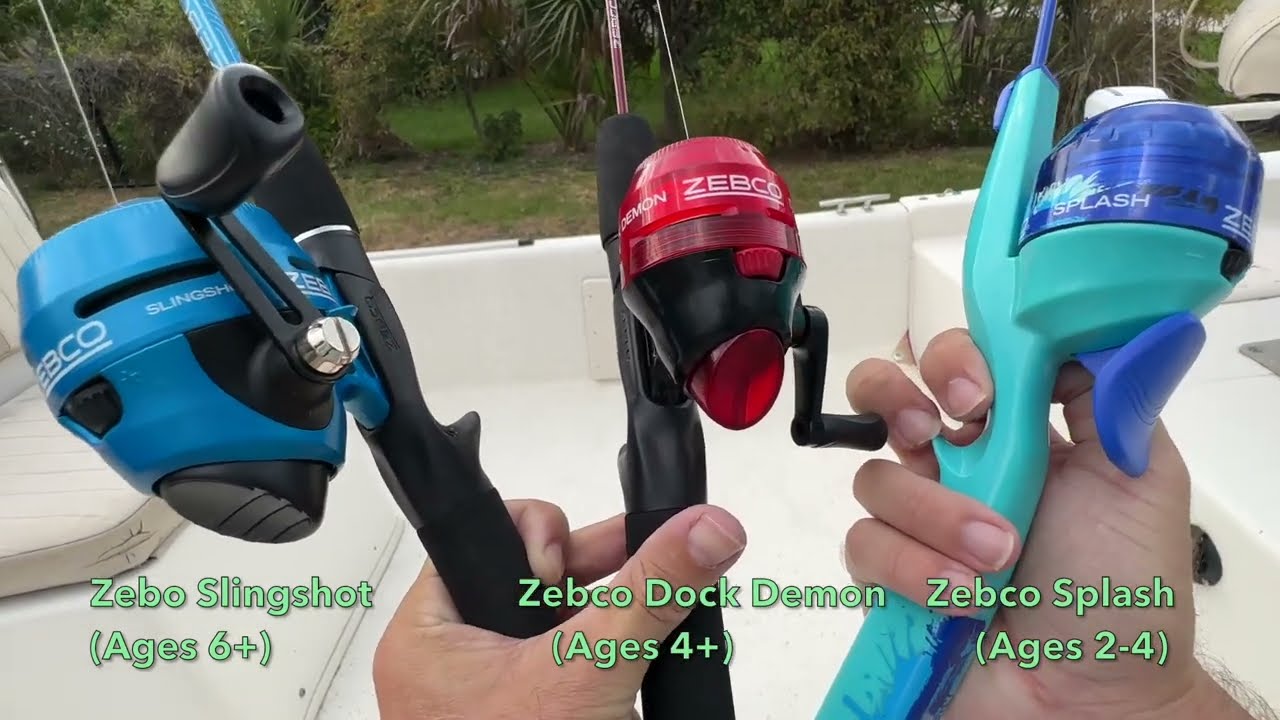

Choosing the right fishing gear for a child can feel overwhelming with the options available. The good news: kids do not need expensive or specialized equipment to catch fish in Indiana. A simple, age-appropriate setup costing under $50 will catch every kid-friendly species in the state. This guide breaks down exactly what to buy by age group, with budget recommendations and a complete tackle checklist.
Rod and Reel by Age Group
The single most important gear decision is matching the rod and reel to your child’s age and coordination level. A rod that is too long, too heavy, or too complicated kills the fun before it starts.
Ages 4-7: Push-Button Spincast
For young children, a push-button spincast combo is the only option worth considering. The closed-face reel eliminates tangles (the number one frustration killer for kids), and the single-button cast is simple enough for a 5-year-old to learn in five minutes.
What to look for:
- Rod length: 4-4.5 feet. Shorter rods give small kids better control.
- Reel: Closed-face spincast with large push button.
- Line: Pre-spooled with 6-8 lb monofilament is fine.
- Power: Ultra-light to light. Heavy rods tire small arms quickly.
Budget picks:
- Zebco Dock Demon ($12-15) — A compact 30-inch combo designed specifically for kids. Great for docks and small ponds.
- Zebco 202 Combo ($15-20) — The classic spincast combo. 5’6” length works for ages 6-7.
- Shakespeare Ugly Stik GX2 Youth ($25-30) — Higher quality rod blank in a kid-friendly 5-foot length. Durable enough to hand down to siblings.
Ages 8-12: Spinning Combo
Around age 8-10, most kids develop the hand coordination to operate a spinning reel. The bail-and-finger casting technique takes a few trips to master, but spinning reels cast farther and handle a wider range of fishing situations than spincast reels.
What to look for:
- Rod length: 5-5.5 feet. The right balance of casting distance and control.
- Reel: Size 1000-2000 spinning reel. Smaller reels are lighter and easier for kids to manage.
- Line: 6-8 lb monofilament. Braid is harder for beginners to manage.
- Power: Light to medium-light. Covers panfish through bass.
Budget picks:
- Ugly Stik GX2 Youth Spinning Combo ($30-35) — Outstanding durability, sensitive tip, kid-friendly length. The best all-around choice for this age group.
- Daiwa Crossfire Combo ($30-40) — Smooth reel action in a compact package.
- Pflueger Trion Spinning Combo ($40-50) — Step-up quality that older kids will appreciate.
Ages 13+: Match the Interest
Teenagers who have been fishing for a few years are ready for standard-length rods (6-6.5 feet) and species-specific setups. The best approach is to match the gear to their interest:
- All-around: A 6-foot medium-power spinning combo with 8 lb line covers bass, catfish, and panfish.
- Bass-focused: A 6.5-foot medium-power baitcasting combo for artificial lures. Baitcasting reels have a steeper learning curve but offer more control for lure fishing.
- Panfish specialist: An ultra-light 5.5-foot spinning combo with 4 lb line makes bluegill feel like tarpon.
Terminal Tackle Checklist
Terminal tackle is the small stuff that connects your line to the fish. You need surprisingly little to get started.
The Essentials
| Item | Size/Type | Purpose | Cost |
|---|---|---|---|
| Baitholder hooks | #6 and #8 | All-purpose panfish and catfish hooks | $2-3/pack |
| Circle hooks | #1/0 | Catfish (self-setting, reduces gut-hooking) | $3-4/pack |
| Clip-on bobbers | 1-inch round | Suspend bait at the right depth | $2-3/pack |
| Split shot sinkers | BB and 3/0 | Add weight below the bobber | $2/pack |
| Egg sinkers | 1/4 and 1/2 oz | Bottom fishing for catfish | $2-3/pack |
| Snap swivels | Size 12 | Quick hook/lure changes | $3/pack |
| Stringer or bucket | — | Keep or display fish | $3-5 |
Nice to Have (Trip 2+)
| Item | Purpose | Cost |
|---|---|---|
| 1/16 oz jig heads | Crappie and bluegill jig fishing | $3-4/pack |
| Small tube jigs | Crappie lure (white, chartreuse, pink) | $3-4/pack |
| Inline spinners (#0-#1) | Active lure fishing for panfish and bass | $4-6 each |
| Bobber stops | Slip bobber rig for deeper water | $2/pack |
| Hook disgorger | Safely remove hooks from fish | $3-5 |
Budget Starter Kits
The $35 Bare Minimum
Everything needed for a first trip. Nothing extra.
| Item | Cost |
|---|---|
| Zebco 202 spincast combo | $15-20 |
| Combo terminal tackle kit (hooks, bobbers, sinkers) | $8-12 |
| Container of nightcrawlers | $4-5 |
| Needle-nose pliers | $5-8 |
| Total | $32-45 |
The $75 Full Setup
A more complete kit that covers multiple trips and techniques.
| Item | Cost |
|---|---|
| Ugly Stik GX2 Youth spinning combo | $30-35 |
| Small tackle box | $5-8 |
| Assorted hooks (#6, #8, #1/0) | $6-9 |
| Bobbers, sinkers, snap swivels | $6-9 |
| Small jig and tube assortment | $6-8 |
| Nightcrawlers + wax worms | $8-10 |
| Needle-nose pliers | $5-8 |
| 5-gallon bucket | $3-5 |
| Total | $69-92 |
You can find all of these items at big-box sporting goods stores, and most local bait shops carry kid-sized combos and starter kits. Bait shop staff are often the best source of advice on what is working locally — do not hesitate to ask.
Line and Knots
Choosing Line
For kids, monofilament line in 6-8 lb test is the right choice. It is forgiving, stretchy (which helps absorb the shock of a fish strike), and easy to tie knots with. Avoid braided line for beginners — it is thinner and slipperier, making knots harder to tie and more likely to slip.
Most kid-sized combo reels come pre-spooled with appropriate line. Replace it once a year or when it starts looking twisted and kinked.
The Only Knot Kids Need
The improved clinch knot ties the line to the hook or swivel. It is the single most useful fishing knot and the only one a young angler needs to learn.
- Thread the line through the hook eye.
- Wrap the tag end around the main line 5 times.
- Thread the tag end back through the small loop near the hook eye.
- Thread it again through the big loop you just created.
- Wet the knot with saliva and pull tight.
- Trim the tag end.
Practice this knot at home with a hook and a piece of rope. Five minutes of practice at the kitchen table saves twenty minutes of frustration at the lake.
Accessories That Matter
Beyond the rod, reel, and tackle, a few accessories make a significant difference in comfort and success.
Needle-nose pliers — Essential for removing hooks from fish (and occasionally from fingers). A must-have in every tackle box.
Line clippers — Small scissors or nail clippers for trimming line after tying knots. Kids will not remember to bring scissors; clip a small pair to the tackle box.
Towel — A small hand towel for wiping hands, gripping slippery fish, and cleaning up. More useful than you would expect.
Sunglasses — Polarized sunglasses reduce glare and let you see fish and structure below the surface. They also protect eyes from errant hooks. Worth the investment for both parents and kids.
Bucket — A 5-gallon bucket serves triple duty: carrying gear to the water, holding caught fish for observation, and serving as a seat. The most versatile piece of equipment you can bring.
Where to Buy in Indiana
Local bait shops are the best source for terminal tackle, live bait, and local knowledge. Staff can recommend the right setup for your area and often carry pre-made starter kits. Big-box sporting goods stores (Bass Pro Shops in Clarksville, Cabela’s in Hammond) have the widest rod and reel selection. Walmart carries budget combo rods and basic tackle in every Indiana location.
For your child’s fishing license — there is none. Kids under 18 fish free in Indiana. Adults need a valid Indiana fishing license ($23 annual resident, $10 single day).
When your kids are ready for their first trip, check out our first fishing trip guide and best family fishing spots to find the perfect location.
Frequently Asked Questions
What is the best fishing rod for a 6-year-old in Indiana?
A push-button spincast combo in the 4-4.5 foot range is ideal for ages 5-7. The Zebco Dock Demon or similar compact spincast combo is affordable, durable, and easy for small hands to use. The closed-face reel eliminates tangles, and the push-button casting mechanism is intuitive for young kids.
How much does a kids fishing setup cost?
A complete starter setup costs $35-50 and covers everything a child needs for their first several trips. This includes a spincast rod and reel combo ($15-20), a terminal tackle kit with hooks, bobbers, and sinkers ($8-12), bait ($4-5), and basic accessories like pliers and a bucket ($10-15).
When should a kid switch from spincast to spinning reel?
Most kids are ready for a spinning reel around age 9-10, when they have the hand coordination to manage the bail and finger the line during casting. Some coordinated 8-year-olds can make the switch earlier. The key indicator is frustration with the spincast's limited casting distance — when they want to cast farther, they are ready for spinning.
Do I need different gear for different fish species?
Not for beginners. A single medium-light rod with 6-8 lb line handles every kid-friendly species in Indiana — bluegill, crappie, catfish, perch, and bass. You do not need species-specific gear until kids develop specific interests and want to target individual species with specialized techniques.