Monroe Lake Fishing Guide — Indiana's Largest Lake
March 19, 2026
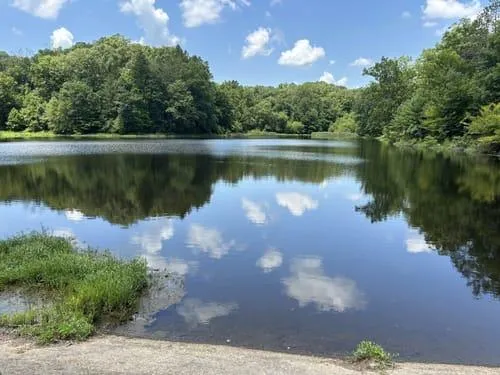
Monroe Lake is Indiana’s largest inland lake and one of the most productive bass fisheries in the state. At 10,750 acres with over 23,000 acres of surrounding Hoosier National Forest land, it offers the kind of uncrowded, timber-rich fishing that draws anglers from across the Midwest. The lake sits in Monroe and Brown counties in south-central Indiana, with the dam about 10 miles southeast of Bloomington and the reservoir extending east into Brown County; it lies roughly 80 miles south of Indianapolis.
Lake Overview
| Stat | Details |
|---|---|
| Surface area | 10,750 acres |
| Maximum depth | 54 feet |
| County | Monroe and Brown |
| Nearest town | Bloomington, IN |
| Built | 1965 (U.S. Army Corps of Engineers) |
| Dam | Salt Creek dam |
| Primary species | Largemouth bass, crappie, channel catfish, flathead catfish, bluegill |
Monroe Lake was impounded in 1965 as a flood control project on Salt Creek. The reservoir flooded miles of hardwood timber, much of which still stands beneath the surface today. That standing timber and extensive brushy cover — combined with a healthy shad population and the nutrient-rich waters of southern Indiana — create a bass and crappie fishery that ranks among the state’s best.
The lake is surrounded by the Charles C. Deam Wilderness and Hoosier National Forest, giving it a remote, wooded feel uncommon for a lake this large. Shoreline development is minimal compared to northern Indiana natural lakes, which means less boat traffic and more fishable bank.
Largemouth Bass — The Main Event
Monroe Lake is a largemouth factory. The combination of standing timber, laydown logs, stump fields, and creek arm cover produces big bass year after year. Fish over 5 pounds are caught regularly, and the lake gives up several 7-8 pounders each season.
Where to Find Bass
Monroe’s bass relate to wood cover throughout the year. The key is matching the right type of wood to the season:
- Creek arms — Salt Creek arm, Clear Creek arm, and the numerous smaller feeder arms hold bass from spring through fall. The backs of these arms warm first in spring and hold shad schools in fall.
- Standing timber — submerged hardwood trees in 8-20 feet of water along the main lake and creek channels. Bass suspend in this timber throughout summer and winter.
- Stump fields — shallow flats with scattered stumps in 3-8 feet. Prime spawning habitat in spring.
- Brushy banks — laydown logs and overhanging cover along the shoreline. Best in spring and fall.
- Main lake points — where creek arms meet the main body. Deep timber on these points holds bass in summer and winter.
Top Techniques
Jigs and creature baits — a 3/8 oz black-and-blue jig with a matching trailer is the number-one producer on Monroe Lake. Pitch it into standing timber, lay it along stumps, and swim it through brush. This is a wood lake, and a jig is the best tool for wood.
Texas-rigged soft plastics — a 10-inch worm or beaver-style bait on a 4/0 hook with a 3/8 oz tungsten weight. Fish it slow through timber and stumps. Green pumpkin, junebug, and black-and-blue are the top colors.
Spinnerbaits — a 1/2 oz willow-leaf spinnerbait in chartreuse/white, slow-rolled through standing timber. Effective in stained water conditions, which are common on Monroe.
Topwater — buzzbaits and hollow-body frogs over shallow stumps in early morning during summer. In fall, walking baits over schooling bass chasing shad in creek arms can produce nonstop action.
Crankbaits — medium-diving crankbaits (5-10 feet) deflecting off stumps and timber in creek arms. Squarebills excel in the shallow wood.
Crappie — Excellent Timber Fishing
Monroe Lake is one of southern Indiana’s top crappie destinations. The standing timber provides ideal habitat, and the lake holds strong populations of both black and white crappie.
Spring Crappie (April–May)
Spring is prime time. Crappie push out of the main lake channel into creek arms, staging around brush piles and timber in 6-12 feet before moving to 2-5 feet to spawn.
Best spots:
- Standing timber in the upper Salt Creek arm
- Brush piles along creek channels in the Fairfax and Cutright areas
- Shallow stump fields in the backs of secondary creek arms
- Around the Paynetown causeway pilings
Technique: Minnows under slip bobbers set at 4-8 feet, fished tight to timber. Small jigs (1/32 to 1/16 oz) in chartreuse, pink, or white tipped with a minnow or soft plastic body. Use a long rod (10-12 feet) to reach into timber without spooking fish.
Summer Crappie (June–August)
Crappie move to deeper timber and suspend over the main creek channels in 15-25 feet. They can be tough to locate but stack up tight once you find them.
Technique: Vertical jigging with small tubes and hair jigs over deep standing timber. Use your electronics to find suspended fish, then drop straight down to them. Spider rigging with multiple rods is effective for covering water.
Fall and Winter Crappie
Fall crappie follow shad into creek arms, providing another shot at shallow fish. Winter crappie hold in the deepest timber — 20-30 feet — and bite slowly but steadily on minnows dropped straight down.
Channel and Flathead Catfish
Monroe Lake’s catfish population is underrated. Channel catfish are abundant throughout the lake, and flatheads over 30 pounds are caught each year.
Channel Catfish
Best spots: Creek channel bends, the flats near the dam, and riprap along the causeway and dam face.
Technique: Cut shad, chicken liver, or nightcrawlers fished on the bottom with a slip sinker rig. Fish the flats at night during summer for the best numbers.
Flathead Catfish
Best spots: Deep timber along the main river channel, especially near the junction of Salt Creek and the main lake. Rocky structure near the dam.
Technique: Live bluegill (legal in Indiana) or large creek chubs on a heavy slip sinker rig fished on the bottom near timber. Night fishing during summer is peak flathead season — set up near deep timber and be patient.
Bluegill and Panfish
Monroe’s bluegill fishing peaks in late May through June when fish move onto spawning beds. Look for sandy or gravel areas in the backs of creek arms, typically in 2-5 feet of water.
Technique: Small jigs, crickets, or red worms under a bobber. Wax worms fished on tiny ice jigs also work well for bedding fish. The best bluegill fishing is often in areas too shallow or brushy for bass boats to reach — a canoe or kayak gives you an advantage.
For more panfish tactics, see our guide to the best bluegill and panfish lakes in Indiana.
Seasonal Calendar
| Season | Primary Targets | Where to Fish | Top Techniques |
|---|---|---|---|
| Spring (Mar–May) | Bass, crappie | Shallow creek arms, stump fields, timber in 5-12 ft | Jigs in timber, minnows under bobbers, spinnerbaits |
| Summer (Jun–Aug) | Bass, catfish, crappie | Deep timber (15-25 ft), creek channel bends, night flats | Texas rigs in timber, cut bait on bottom, vertical jigs |
| Fall (Sep–Nov) | Bass, crappie | Creek arms (shad chases), main lake points | Topwater, crankbaits, minnows in timber |
| Winter (Dec–Feb) | Crappie, bass | Deepest timber (20-30 ft), main river channel | Slow jigs, minnows vertical, finesse worms |
Spring (March–May)
The best overall fishing period on Monroe Lake. As water temperatures climb through the 50s and into the 60s, bass move into the backs of creek arms to feed and eventually spawn. The shallow stump fields and laydown cover in the upper lake arms are ground zero for spring bass fishing. Crappie follow a similar pattern, pushing shallow into timber and brush.
Key windows: Pre-spawn bass (water temps 52-60) are the most aggressive. Target them with spinnerbaits and jigs along the first available cover in creek arms. Once bass hit the beds (water temps 62-68), sight fishing over stump fields is productive in the clearer arms.
Summer (June–August)
Bass retreat to deeper timber and the shade of standing trees in 10-20 feet. Early morning topwater over shallow stumps remains productive through June, but by July you need to go deeper. The shad population peaks in summer, so matching the hatch with shad-colored crankbaits and swimbaits pays off.
Catfishing is at its best during summer nights. Launch at dusk, anchor near deep timber or channel bends, and fish through the night.
Fall (September–November)
Fall is topwater season on Monroe Lake. Shad push into creek arms as the water cools, and bass follow in feeding frenzies. Watch for surface activity — birds diving and baitfish spraying — and cast walking baits, buzzbaits, or lipless crankbaits into the chaos.
Crappie also follow shad into the arms, making this a second spring for crappie fishing.
Winter (December–February)
Winter fishing on Monroe is slow but not dead. Crappie stack in the deepest timber on the main river channel. Bass hold tight to vertical timber in 15-25 feet and can be caught on slow-fished jigs and finesse worms. Dress warm and bring patience.
Access Points and Boat Ramps
Monroe Lake has several well-maintained access points, all managed by the Indiana DNR or Army Corps of Engineers:
| Ramp | Location | Facilities |
|---|---|---|
| Fairfax SRA | East shore | Ramp, parking, restrooms, camping |
| Paynetown SRA | North shore (near Bloomington) | Ramp, parking, restrooms, beach, marina |
| Cutright SRA | South shore | Ramp, parking, restrooms |
| Allen’s Creek SRA | West shore | Ramp, parking, restrooms |
| Hardin Ridge | South shore (USFS) | Ramp, parking, camping, restrooms |
| Pine Grove | Upper lake | Ramp, limited parking |
Paynetown is the busiest ramp and closest to Bloomington. It offers the most facilities, including a marina where you can rent boats. For a quieter experience, launch from Cutright or Allen’s Creek to access less-pressured parts of the lake.
Fairfax provides good access to the upper lake arms where bass and crappie concentrate in spring and fall. It tends to be less crowded than Paynetown on weekends.
Bank fishing is available at all access points, with some of the best bank fishing at the Paynetown causeway (crappie in spring) and the dam area (catfish and occasional walleye).
Regulations
Monroe Lake follows standard Indiana fishing regulations:
| Species | Daily Bag | Minimum Size |
|---|---|---|
| Largemouth Bass | 5 | 14 inches |
| Crappie | 25 | None |
| Channel Catfish | 10 | None |
| Flathead Catfish | None | None |
| Bluegill | 25 | None |
Always check the current DNR regulations before your trip, as special rules may be implemented. A valid Indiana fishing license is required for all anglers age 18 and older.
Nearby Resources
Monroe Lake sits in the heart of Monroe County with Bloomington just 10 miles away, offering full amenities.
- Fishing guides — several guides operate on Monroe Lake. A guided trip is the fastest way to learn the timber patterns.
- Bait shops — stop for live bait and current conditions at shops in the Bloomington area before launching.
- Camping — Paynetown, Fairfax, and Hardin Ridge all offer campgrounds. Hardin Ridge (USFS) is particularly scenic and sits in the Hoosier National Forest.
- Boat rentals — available at Paynetown Marina for anglers without their own boat.
For more Indiana bass fishing destinations, see our guide to the best bass lakes in Indiana. Monroe Lake also appears on our best crappie lakes list.
Plan Your Trip
- Best time to visit: April through May for bass and crappie, September-October for fall topwater bass
- Start at the timber — Monroe Lake is all about standing timber and wood cover. If you are not fishing near timber, you are in the wrong spot.
- Get your license — you need an Indiana fishing license before you wet a line
- Check water levels — the Corps of Engineers manages Monroe Lake levels. High water pushes bass shallow into flooded brush; low water concentrates fish on remaining timber.
- Launch early — weekend boat traffic on Paynetown can be heavy in summer. Get on the water by sunrise, or launch from a quieter ramp like Cutright or Allen’s Creek.
- Visit a bait shop in Monroe County for up-to-date conditions and local advice
View the Monroe Lake page for more details on this fishery.
Frequently Asked Questions
What is the best time to fish Monroe Lake?
Spring (April through May) is the best overall season. Largemouth bass move into shallow pockets and creek arms to spawn, crappie stack up in brush and standing timber, and catfish become increasingly active. Fall (September-October) is the second-best window, with explosive topwater bass fishing over shad schools in creek arms.
What species of fish are in Monroe Lake?
Monroe Lake holds largemouth bass, crappie (both black and white), channel catfish, flathead catfish, bluegill, redear sunfish, and some walleye. Largemouth bass is the primary draw — the lake consistently produces fish over 5 pounds thanks to abundant cover and forage.
Are there special size limits on bass at Monroe Lake?
Monroe Lake follows standard Indiana bass regulations — a 14-inch minimum size and 5-fish daily bag limit for largemouth bass. However, the DNR occasionally implements special regulations on specific Indiana waters, so always check the current Indiana Fishing Regulations Guide before your trip for any updates.