Snakes at Indiana Fishing Spots: ID & Safety Guide
March 19, 2026
You’re working a jig along a rocky bank at Brookville Lake when something thick and brown drops off a branch into the water three feet from your boat. Your heart rate doubles. Was that a cottonmouth?
No. It wasn’t. But the reaction is understandable.
Anglers encounter more snakes than almost any other outdoor group because we spend our time exactly where snakes want to be — along shorelines, near structure, around rocks and vegetation at the water’s edge. Snakes follow the food chain: insects attract frogs, frogs attract snakes, and all of it lives where the water meets the land. If you fish Indiana’s lakes and rivers regularly, you will see snakes. The question is whether you can tell the harmless ones from the rare dangerous ones — and in Indiana, the answer is almost always “it’s harmless.”
Indiana is home to 32 native snake species. Only four are venomous. Of those four, only one — the Eastern copperhead — represents a realistic encounter risk for anglers, and only in a specific part of the state. This guide will help you identify what you’re seeing, separate fact from myth, and fish confidently alongside Indiana’s most misunderstood wildlife.
Snakes You’ll Encounter at Indiana Fishing Spots
Not all 32 Indiana snake species are associated with water. The table below covers the species you’re most likely to encounter while fishing — the ones that live near water, swim regularly, or frequent the shoreline habitats where anglers set up.
| Species | Venomous? | Range in Indiana | Likelihood at Fishing Spots | Notes |
|---|---|---|---|---|
| Northern watersnake | No | Statewide | Very high — most common encounter | Aggressive, flattens head, confused with cottonmouth |
| Diamondback watersnake | No | Southern third of state | Moderate near rivers | Large, heavy-bodied, impressive but harmless |
| Queen snake | No | Statewide near streams | Moderate | Feeds almost exclusively on crayfish |
| Eastern ribbon snake | No | Statewide | Moderate | Slender, fast, often near shorelines |
| Common garter snake | No | Statewide | High | Found everywhere, including near water |
| Eastern copperhead | Yes | Southern Indiana (Brown, Monroe, Morgan counties) | Low — prefers rocky hillsides | Only realistic venomous threat to anglers |
| Timber rattlesnake | Yes | Brown, Monroe, Morgan counties | Very low — state endangered | Avoids water, prefers ridgetops and rock outcrops |
| Eastern massasauga | Yes | Northern Indiana wetlands | Very low — federally threatened | Small rattlesnake, extremely rare |
| Cottonmouth | Yes | Historically Dubois County only | Effectively zero — none confirmed since the 1980s | Every report is a misidentified watersnake |
The pattern is clear: the snake you’re seeing at your fishing spot is almost certainly non-venomous. Let’s look at the most common encounter in detail.
The Northern Watersnake: Indiana’s Most Misidentified Snake
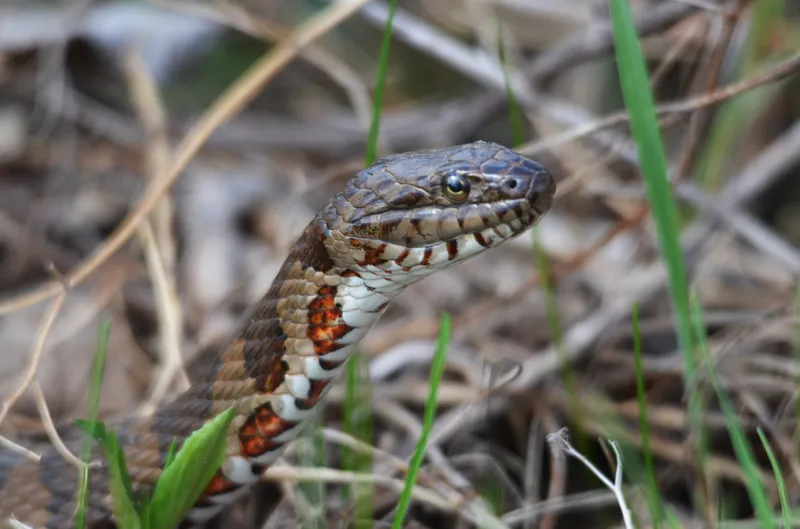
If you’ve fished Indiana for any length of time, you’ve seen a Northern watersnake (Nerodia sipedon). They are everywhere — basking on rocks, draped over fallen trees, swimming across coves, and occasionally dropping into the water from overhanging branches near your boat. They are the single most common snake encounter for Indiana anglers, and they are completely harmless.
The problem is that watersnakes look and act like they’re dangerous. Here’s what leads to the confusion:
Appearance. Northern watersnakes are heavy-bodied with dark brown or reddish-brown crossbands that darken with age. Older adults can appear almost uniformly dark. Their thick body and dark coloring make them look like the venomous cottonmouth to anyone who’s seen pictures but never compared the two side by side.
Defensive behavior. When threatened, Northern watersnakes flatten their heads into a triangular shape — mimicking the head shape of a pit viper. They also coil, strike aggressively, and release a foul-smelling musk. This defensive posture convinces many people they’re looking at something dangerous.
Swimming behavior. Watersnakes swim with confidence and are frequently seen cruising along the surface. Many anglers have heard the old rule that “venomous snakes swim with their whole body on top of the water.” This is a myth. All snakes can swim on the surface or below it depending on speed and purpose.
Bite characteristics. If you grab a watersnake (don’t), it will absolutely bite you. The bite bleeds freely because watersnake saliva contains a mild anticoagulant. The dramatic bleeding reinforces the belief that the bite is venomous. It isn’t. Clean the wound, apply a bandage, and move on.
How to Identify a Northern Watersnake
- Body: Thick and muscular, 2-4 feet long, dark brown to reddish with darker crossbands
- Head: Rounded when relaxed; flattens when defensive (this is the key — a truly triangular-headed pit viper’s head is always triangular)
- Eyes: Round pupils (venomous pit vipers have vertical, cat-eye pupils)
- Behavior: Active during the day, often basking on rocks or logs near water
- When disturbed: Will flee into water if given the chance; strikes if cornered
The Northern watersnake is a valuable part of the ecosystem. They eat invasive round gobies, small fish, frogs, and crayfish. Leave them alone and they’ll leave you alone.
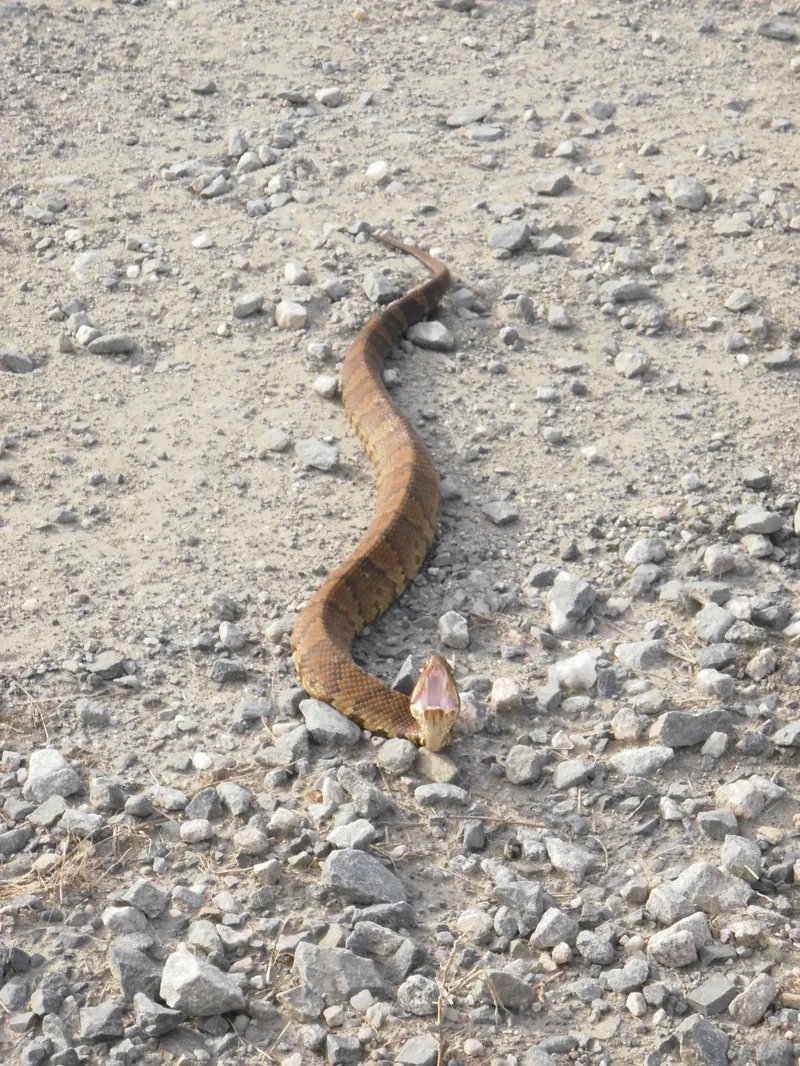
The Cottonmouth Myth: Debunking Indiana’s Most Persistent Snake Story
Ask any group of Indiana anglers if there are cottonmouths in the state and at least half will say yes — and claim they’ve seen one. They haven’t. This is the most persistent wildlife myth in Indiana fishing, and it’s time to put it to rest.
The facts: The Western cottonmouth (Agkistrodon piscivorus) was historically documented in Indiana only in Dubois County, in the far southwestern part of the state. Even there, confirmed sightings were rare. The Indiana DNR has not confirmed a cottonmouth sighting since the 1980s. The species is listed as state endangered — not because it’s being persecuted, but because there’s no evidence a breeding population still exists in the state.
Why the myth persists: The Northern watersnake does everything a cottonmouth does — swims aggressively, has a thick body, opens its mouth when threatened, and flattens its head. In a state where half the outdoor community grew up hearing about cottonmouths, any dark snake near water becomes a “water moccasin” by default.
Watersnake vs. Cottonmouth: Key Differences
If you somehow find yourself comparing the two (you won’t in Indiana, but the knowledge is still useful), here are the reliable differences:
| Feature | Northern Watersnake | Cottonmouth |
|---|---|---|
| Pupils | Round | Vertical (cat-eye) |
| Head shape (at rest) | Rounded, blends into neck | Distinctly triangular, wider than neck |
| Facial pit | None | Heat-sensing pit between eye and nostril |
| Neck | Thin, blends into body | Obvious constriction behind wide head |
| Defensive display | Flattens head, strikes, flees | Opens mouth wide showing white interior (“cottonmouth”) |
| Body posture in water | Variable | Often rides high with head elevated at 45 degrees |
| Band pattern | Crossbands narrow at spine, widen at sides | Crossbands wide at spine, narrow at sides |
| Range in Indiana | Statewide | Effectively absent |
The single most practical thing to remember: you are not going to encounter a cottonmouth at any Indiana fishing spot. The snake you’re seeing is a watersnake. Give it space and keep fishing.
Eastern Copperhead: The One to Actually Know
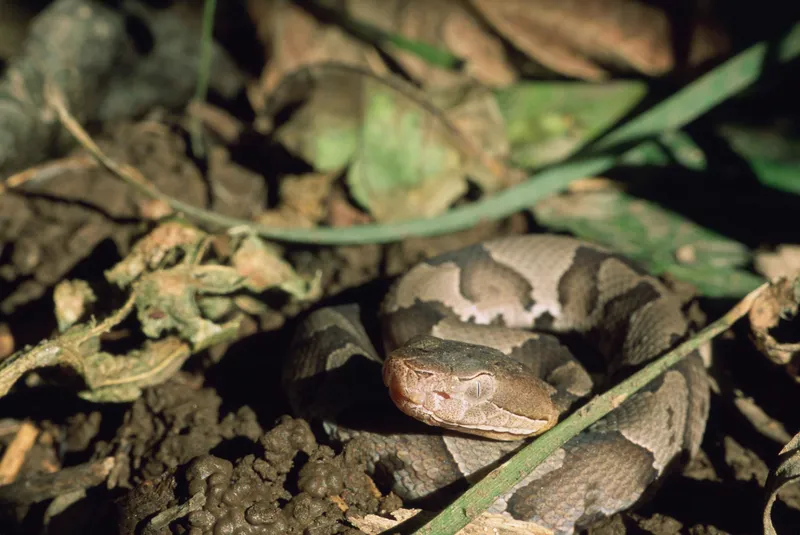
The Eastern copperhead (Agkistrodon contortrix) is the only venomous snake that represents a realistic — though still low — encounter risk for Indiana anglers. Unlike the cottonmouth, copperheads do exist in Indiana and have stable populations in specific areas.
Where Copperheads Live in Indiana
Copperheads are found primarily in southern Indiana’s hill country, concentrated in:
- Brown County — the most consistent copperhead habitat in the state
- Monroe County — especially the forested ridges around Lake Monroe
- Morgan County — eastern portions near the Brown County line
- Parts of Lawrence, Owen, and Greene counties
They prefer rocky, wooded hillsides with south-facing exposures — sandstone outcrops, talus slopes, and forest edges. They do not typically hang out at the water’s edge like watersnakes. An angler’s copperhead encounter is more likely to happen while walking a trail to a fishing spot than while standing at the shoreline.
Identifying a Copperhead
- Color: Distinctive copper-tan base with darker hourglass-shaped crossbands (wide on the sides, narrow across the spine — the opposite of a watersnake’s bands)
- Head: Truly triangular, with a visible pit between the eye and nostril
- Eyes: Vertical, cat-eye pupils
- Size: 2-3 feet, relatively slender for a pit viper
- Behavior: Extremely well-camouflaged in leaf litter; relies on staying still rather than fleeing
Copperhead Risk for Anglers
The risk is low but real if you’re fishing in Brown or Monroe counties. The most likely scenario is stepping near one while walking through leaf litter to reach a fishing spot along a creek or rocky shoreline. Copperheads are masters of camouflage and will sit motionless until you’re very close.
Copperhead bites are painful but rarely fatal. They deliver a relatively low volume of venom compared to timber rattlesnakes. However, any venomous snakebite requires immediate medical attention. Don’t count on “it’s just a copperhead” — get to a hospital.
Indiana’s Other Venomous Snakes
Two additional venomous species exist in Indiana but pose essentially zero risk to anglers:
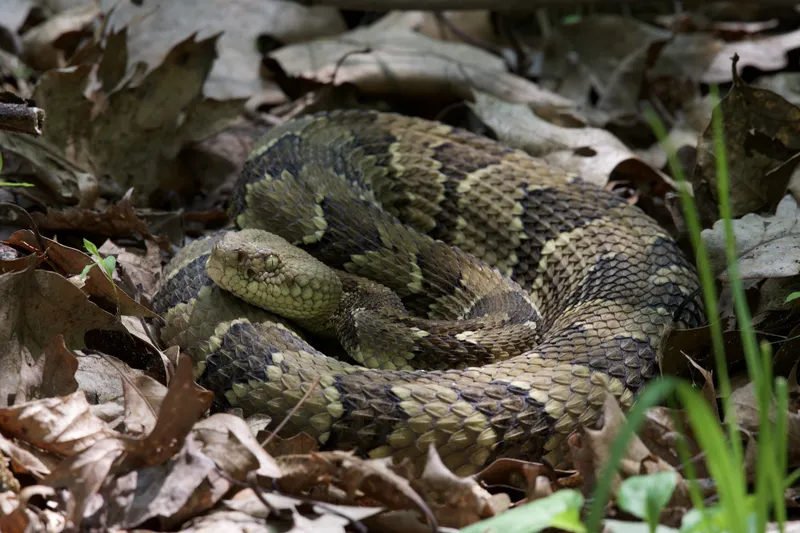
Timber rattlesnake (Crotalus horridus) — Found only in the rugged hill country of Brown, Monroe, and Morgan counties. State endangered. These large rattlesnakes prefer rocky ridgetops and south-facing bluffs far from water. You are extremely unlikely to encounter one at a fishing spot. If you do, give it wide berth — their venom is more potent than a copperhead’s.
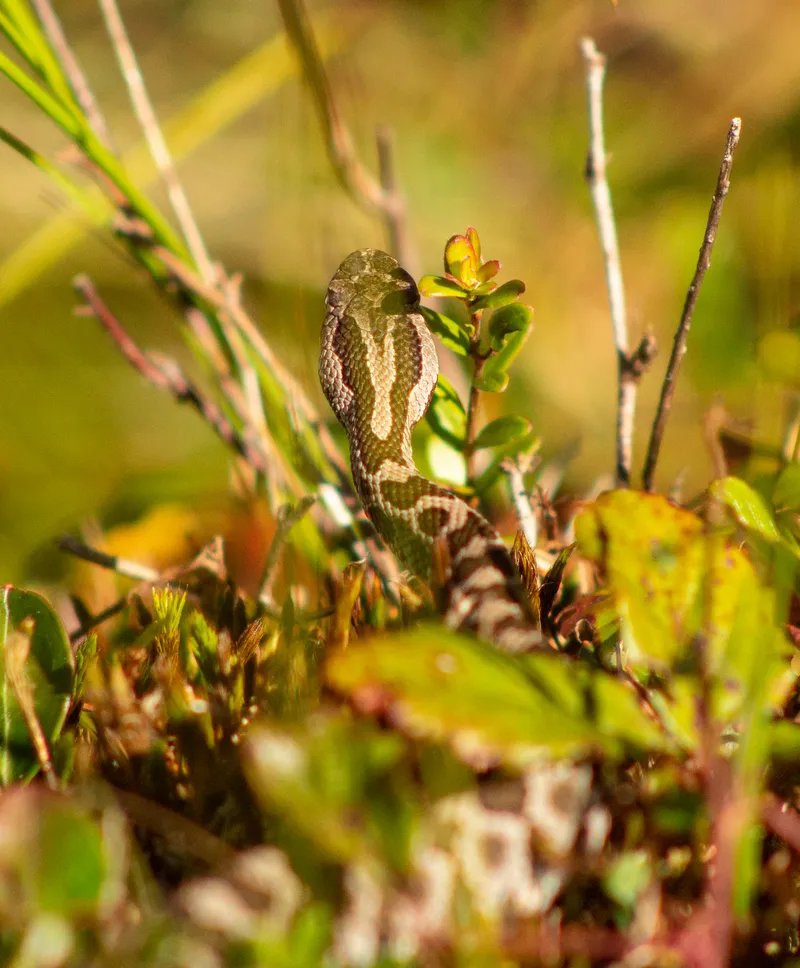
Eastern massasauga (Sistrurus catenatus) — A small rattlesnake found only in a handful of northern Indiana wetlands. Federally listed as threatened. This is one of the rarest snakes in Indiana. Even herpetologists have trouble finding them. The chances of an angler encountering one are essentially zero, but if you fish in marshy areas of northern Indiana and see a small rattlesnake (18–24 inches), report it to the DNR — it’s a significant wildlife observation.
Other Snakes You’ll See While Fishing
Diamondback Watersnake
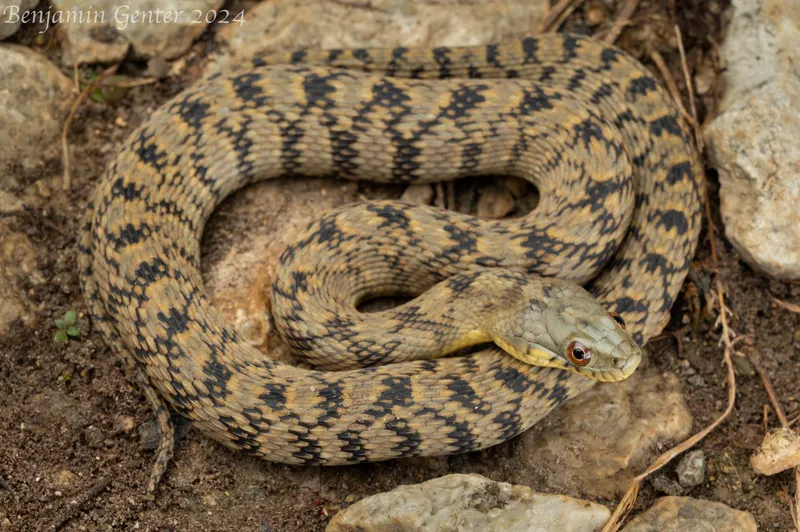
The diamondback watersnake (Nerodia rhombifer) is the Northern watersnake’s larger, southern cousin. Found primarily in the river systems of southern Indiana, this snake can reach 4-5 feet and looks intimidating. It’s named for the diamond-shaped pattern along its back. Despite its size and willingness to bite when handled, it’s completely harmless.
You’re most likely to encounter diamondback watersnakes along the Wabash River, White River, and Ohio River drainages and the reservoirs in southern Indiana like Patoka Lake.
Common Garter Snake
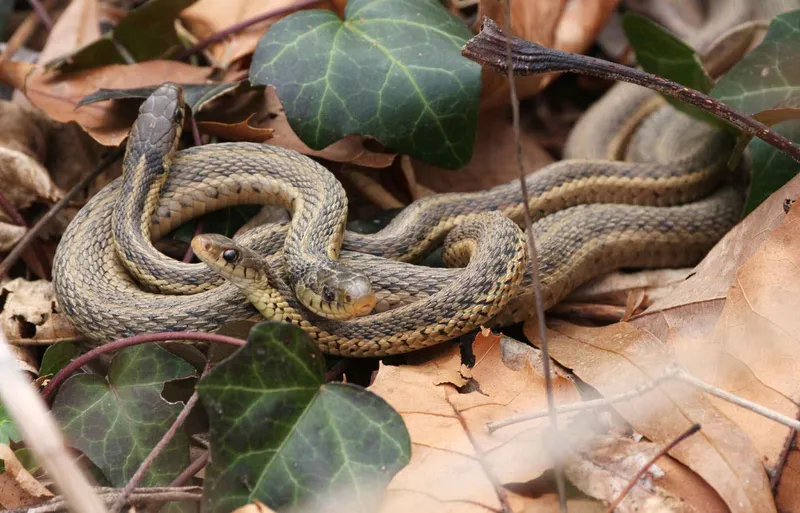
The Eastern garter snake (Thamnophis sirtalis) is Indiana’s most widespread snake and frequently found near fishing spots. It’s easily identified by three yellowish stripes running the length of its body on a dark background. Garter snakes are small (2-3 feet), slender, and completely harmless. You’ll often see them along mowed paths near lakes and in park areas around boat ramps.
Queen Snake
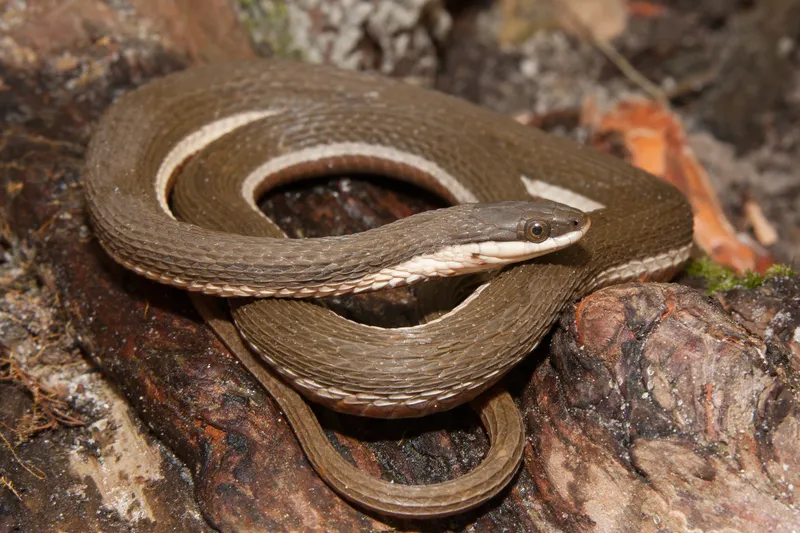
The queen snake (Regina septemvittata) is a crayfish specialist found near clear streams and rivers throughout Indiana. It’s slender, olive-brown with a yellowish belly stripe, and almost never noticed unless you’re looking closely. Queen snakes are completely harmless and spend most of their time under rocks at the water’s edge — exactly where anglers wade.
Eastern Ribbon Snake
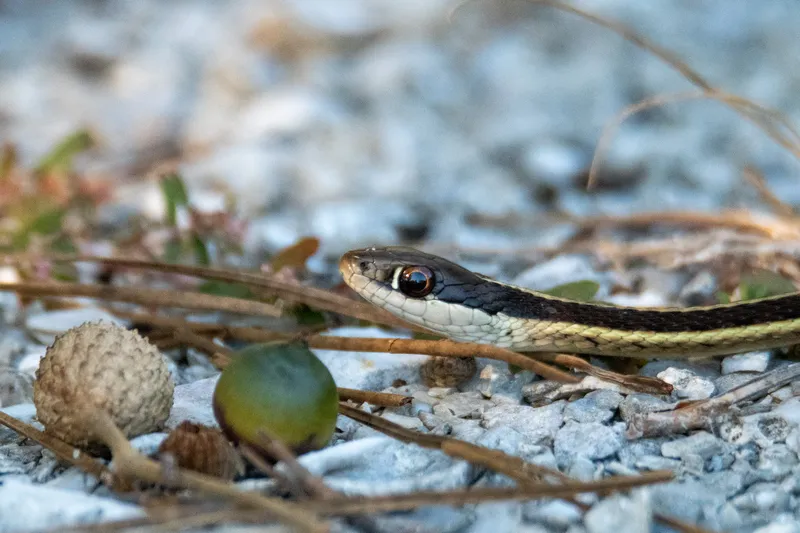
The Eastern ribbon snake (Thamnophis saurita) looks like a thinner, more elegant version of the garter snake. It has three bright yellow stripes on a dark body and is often found near wetlands, ponds, and lake shorelines. Ribbon snakes are fast, nervous, and will flee immediately when approached. They eat frogs, small fish, and insects.
Eastern Hog-nosed Snake
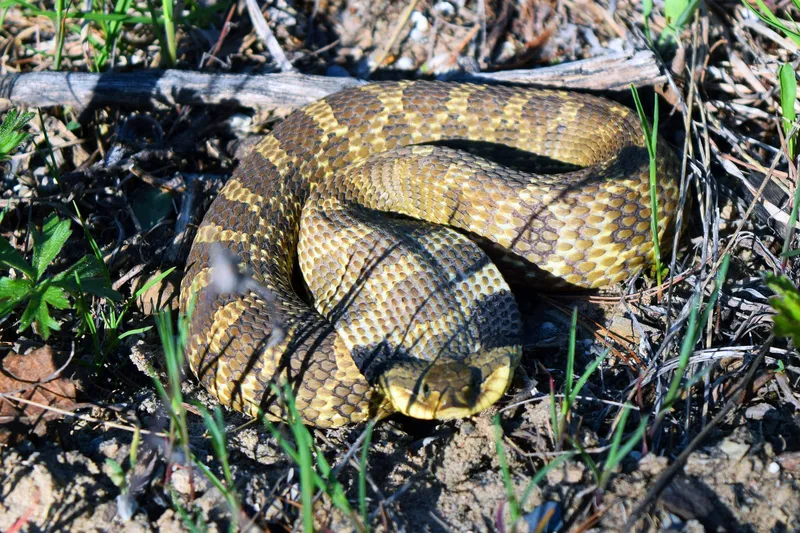
While not a water snake, the Eastern hog-nosed snake (Heterodon platirhinos) deserves mention because its defensive behavior alarms anglers who encounter it near fishing spots. When threatened, it flattens its neck like a cobra, hisses loudly, and strikes with a closed mouth. If that doesn’t work, it rolls over and plays dead — complete with tongue hanging out. It’s one of Indiana’s most dramatic harmless snakes and is occasionally found near sandy fishing areas.
Snake-Heavy Fishing Spots in Indiana
Some Indiana fishing spots have higher snake activity than others due to habitat. This isn’t a reason to avoid them — these are excellent fisheries. It’s simply good information.
Brookville Lake (Franklin/Union Counties)
Brookville Lake has extensive rocky shoreline habitat that watersnakes love. The rip-rap along the dam and causeways is prime basking habitat, and the clear water supports healthy populations of small fish and crayfish that snakes feed on. Expect to see Northern watersnakes on virtually every summer outing. The surrounding hillsides also hold occasional copperheads, though encounters at the water’s edge are rare.
Lake Monroe (Monroe County)
Lake Monroe sits in the heart of Indiana’s copperhead country. The rocky, forested shorelines and numerous creek arms provide excellent watersnake habitat, and the surrounding hills of Monroe County are home to copperheads and timber rattlesnakes. If you’re fishing Monroe’s bank-accessible spots, especially along the southern arms, watch where you step when walking to the water. Watersnakes are abundant along the entire shoreline.
Patoka Lake (Dubois/Orange/Crawford Counties)
Patoka Lake is surrounded by Hoosier National Forest and has extensive undeveloped shoreline. The rocky points and fallen timber are ideal watersnake habitat. This is also the general area where cottonmouths were historically documented (Dubois County), though none have been confirmed in years. Diamondback watersnakes are occasionally seen here in addition to the ubiquitous Northern watersnakes.
Mississinewa Lake (Miami/Wabash Counties)
Mississinewa’s extensive shallow flats and marshy areas attract watersnakes in high numbers. The reservoir’s abundant bluegill and small bass population provides a steady food supply. The surrounding agricultural landscape limits venomous snake encounters — this is not copperhead or rattlesnake country — but Northern watersnakes are extremely common along the rocky dam and point areas.
River Fishing Spots
Indiana’s rivers — the Wabash, White River, Tippecanoe, and their tributaries — have some of the highest watersnake densities in the state. Rocky shoals, logjams, and undercut banks provide ideal habitat. If you’re wading a river for smallmouth bass, expect to share the water with watersnakes. They’ll swim past you and keep moving. Give them space and neither of you will have a problem.
Seasonal Snake Activity for Anglers
Understanding when snakes are active helps you anticipate encounters and avoid surprises.
Spring (April - May)
Snakes emerge from hibernation (brumation) in April as temperatures consistently reach the 60s. Early season activity is heavily dependent on sun — snakes spend long periods basking on rocks and logs to warm up. You’ll often see them motionless in the sun at midday. Spring encounters are common along rocky south-facing shorelines. This coincides with early-season crappie and bass fishing when anglers are targeting the same warming shallows.
Summer (June - August)
Peak snake activity. June and July bring mating season for watersnakes, which means more visible snakes and sometimes pairs of snakes tangled together near the water. During the hottest part of summer, snakes shift to dawn and dusk activity — the exact same windows anglers prefer. Midday encounters drop as snakes seek shade, but any shaded structure along the shoreline may harbor a resting snake.
Night fishing for catfish means sharing the shoreline with nocturnal snake activity. Wear a headlamp and watch where you step.
Fall (September - October)
Snake activity declines as temperatures cool. September still brings regular encounters, especially on warm afternoons. By mid-October, most snakes are moving toward their hibernation sites (hibernacula). Pregnant watersnakes give birth to live young in late summer and early fall, so you may see small juvenile watersnakes along the shoreline.
Winter (November - March)
Snakes are dormant during ice fishing season and the winter months. You will not encounter snakes between November and late March in Indiana.
What to Do If Bitten by a Venomous Snake
Venomous snakebites in Indiana are rare — the state averages fewer than a handful per year, and fatalities are essentially unheard of. But if it happens, doing the right things immediately matters.
Do This
- Move away from the snake — don’t try to catch or kill it for identification. A photo from a safe distance is helpful but not worth the risk of a second bite.
- Stay as calm as possible — elevated heart rate increases venom spread. Sit down, breathe slowly.
- Call 911 immediately — or have someone drive you to the nearest hospital. Indiana hospitals stock CroFab antivenom.
- Remove jewelry, watches, and tight clothing near the bite site before swelling starts. Swelling can be severe and rapid.
- Keep the bitten limb below heart level if possible.
- Mark the edge of swelling with a pen and note the time — this helps doctors track progression.
Do NOT Do This
- Do NOT apply a tourniquet — restricting blood flow can cause tissue death and makes the bite worse.
- Do NOT cut the bite wound — this causes additional injury and does not remove venom.
- Do NOT apply ice — cold can increase tissue damage.
- Do NOT try to suck out venom — this does not work and risks infection.
- Do NOT use a commercial “venom extractor” — clinical studies show they are ineffective.
- Do NOT take aspirin or ibuprofen — these thin the blood and can increase bleeding. Acetaminophen (Tylenol) is acceptable for pain.
- Do NOT drink alcohol — it dilates blood vessels and can accelerate venom absorption.
Non-venomous bites (watersnake, garter snake, etc.) require only basic first aid: clean the wound with soap and water, apply antibiotic ointment, and bandage it. The bleeding may be impressive due to the anticoagulant in watersnake saliva, but it will stop with direct pressure. Watch for signs of infection over the next few days.
Safety Tips for Anglers
You don’t need to fear snakes to respect them. These practical steps reduce your encounter risk and keep both you and the snakes safe.
Before You Go
- Wear closed-toe shoes or boots when walking to fishing spots. Sandals and bare feet dramatically increase bite risk. If you’re fishing in Brown or Monroe County, consider ankle-high hiking boots.
- Bring a headlamp for dawn, dusk, and night fishing. Snakes are hard to see in low light.
- Know what’s in the area. If you’re fishing in southern Indiana, especially the hill country, take one minute to review what copperheads look like.
At the Fishing Spot
- Watch where you step. Most snakebites happen when someone steps on or near a snake they didn’t see. Step onto rocks and logs, not over them — look before you plant your foot on the other side.
- Don’t reach into rock crevices, brush piles, or hollow logs without looking first. This applies to grabbing firewood, retrieving snagged tackle, or setting up bank rods.
- Use a flashlight at night. When night fishing for catfish or walleye, scan the bank ahead of you before walking.
- Leave snakes alone. The vast majority of snakebites happen when someone tries to handle, kill, or relocate a snake. A snake that’s basking on a rock ten feet away is not a threat. Walk around it.
- Keep fish on stringers away from the bank. Stringers with bleeding fish can attract watersnakes. Keep your stringer in deeper water away from where you’re standing.
On the Boat
- Check your boat before launching, especially if it’s been sitting near water. Snakes occasionally shelter in boats, under seats, and in storage compartments.
- Don’t anchor tight to overhanging trees during summer. Watersnakes bask on branches and may drop into the water near your boat. This sounds dramatic, but it’s a common (and harmless) occurrence at lakes like Brookville.
- If a snake swims toward your boat, it’s not attacking — it may be trying to use your boat as a haul-out point. Simply moving the boat a few feet will redirect it.
Teaching Kids
If you’re teaching young anglers to fish — one of the best things you can do in Indiana — snake safety is part of the curriculum. Teach children to:
- Never touch any snake
- Tell an adult immediately if they see a snake
- Watch where they put their hands and feet near the water
- Understand that most snakes are helpers (they eat pests) and deserve to be left alone
Indiana Snake Law
All four venomous snake species in Indiana are protected by state law. It is illegal to kill, capture, or possess a timber rattlesnake, Eastern massasauga, cottonmouth, or Eastern copperhead. Non-venomous snakes are also protected — you cannot kill them without cause.
In practice, if a venomous snake poses an immediate threat to you at a fishing spot, the DNR is not going to cite you for defending yourself. But actively hunting snakes, killing watersnakes because you think they’re cottonmouths, or collecting snakes from the wild is illegal and harms Indiana’s ecosystems.
The Bottom Line
The overwhelming majority of snakes you’ll encounter while fishing Indiana’s lakes and rivers are Northern watersnakes. They are harmless, ecologically beneficial, and more annoyed by your presence than you are by theirs. The cottonmouth is effectively gone from Indiana — stop worrying about it. The copperhead exists in a specific part of southern Indiana and prefers rocky hillsides over water’s edge.
Wear appropriate footwear, watch where you step, don’t reach into places you can’t see, and leave snakes alone. That’s the entire safety protocol. Snakes are part of what makes Indiana’s waterways wild and healthy. The same shoreline structure that holds bass, bluegill, and catfish also supports the food chain that includes snakes. Share the bank, and keep fishing.
For help finding the best fishing spots across Indiana, explore our fishing guides directory or browse lakes by county. If you’re heading to southern Indiana, check out our guides to Brookville Lake and the best bass lakes in Indiana.
Frequently Asked Questions
Are there cottonmouths (water moccasins) in Indiana?
For all practical purposes, no. Cottonmouths were historically documented only in Dubois County in extreme southern Indiana, and none have been confirmed since the 1980s. Every 'cottonmouth' sighting at Indiana lakes and rivers is almost certainly a misidentified Northern watersnake, which is harmless.
What is the most common snake at Indiana lakes?
The Northern watersnake (Nerodia sipedon) is by far the most common snake you'll encounter while fishing in Indiana. It's found at virtually every lake, reservoir, and river in the state. It's completely harmless despite its aggressive behavior and superficial resemblance to a cottonmouth.
What should I do if bitten by a venomous snake while fishing?
Move away from the snake, stay calm, and call 911 immediately. Remove rings, watches, and tight clothing near the bite before swelling starts. Do NOT apply a tourniquet, do NOT cut the wound, do NOT apply ice, and do NOT try to suck out venom. Get to a hospital as quickly as possible — Indiana hospitals stock antivenom.
Are water snakes dangerous to anglers?
Water snakes are not dangerous. They are non-venomous and pose no serious threat. A bite from a watersnake may bleed freely because their saliva contains a mild anticoagulant, but it requires only basic first aid — clean the wound and apply a bandage. They bite only when grabbed or cornered.
When are snakes most active at Indiana fishing spots?
Snakes are most active from April through October. Peak encounters happen June through July when snakes are actively hunting and mating. During summer, snakes are most active at dawn and dusk — the same times anglers prefer to fish. On overcast days, snakes may be active throughout the day.