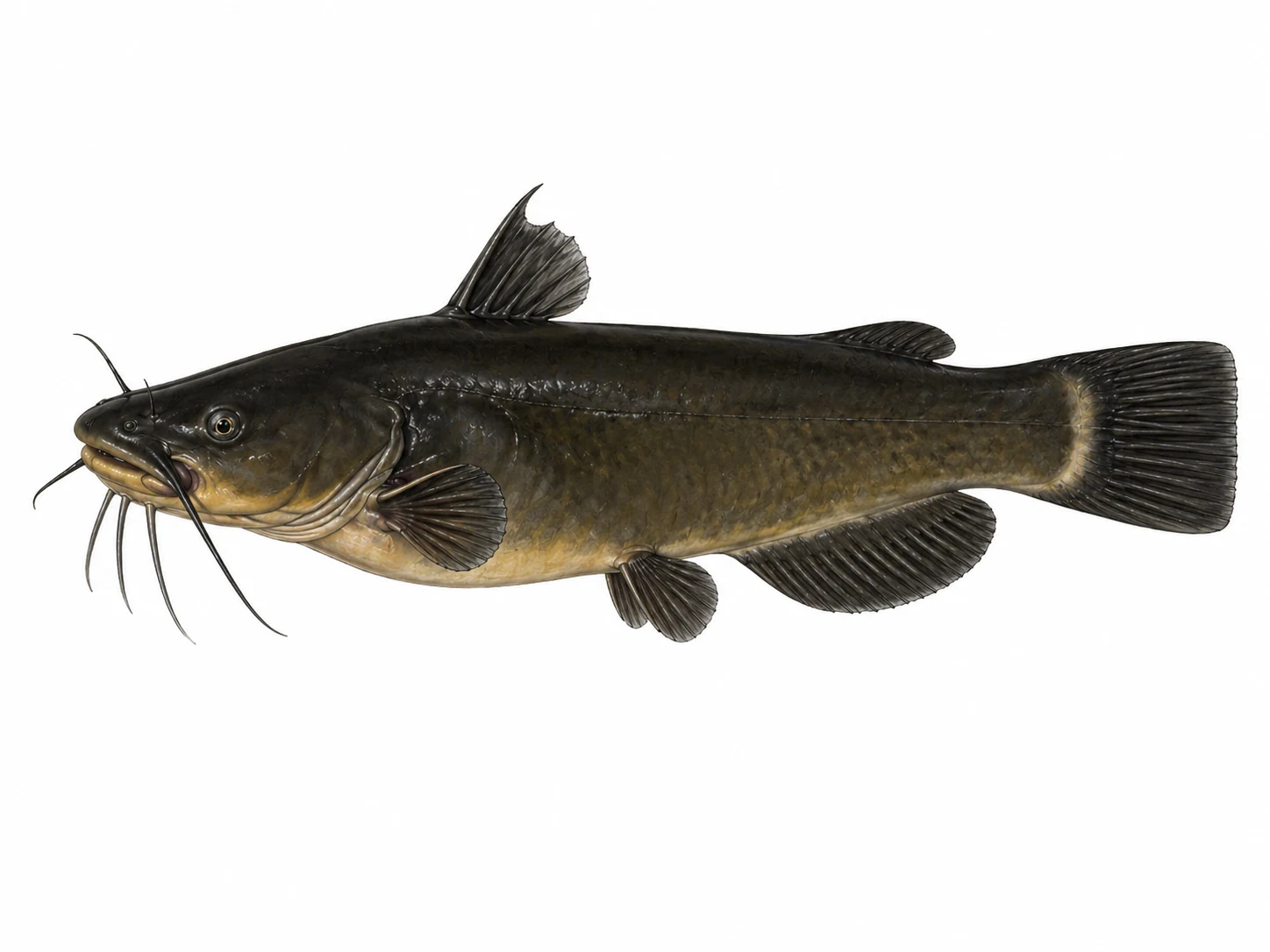
Black bullhead are Indiana’s hardiest catfish — they thrive where few other fish survive. Muddy farm ponds, oxbow lakes along the Wabash and White rivers, and turbid drainage ditches all hold strong populations. They’re rarely a target species but always a willing biter when other fish shut down.
Identification
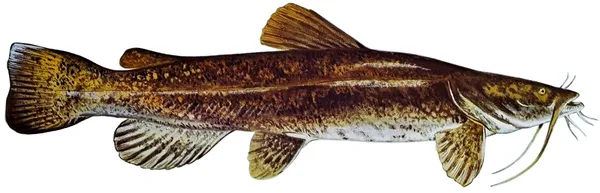
Black bullhead live up to their name — adults are typically a uniform dark olive to nearly black across the back and flanks, with a yellowish belly. The chin barbels are dark grey to black (the easy way to separate them from yellow bullhead, which have white chin barbels). Adults average 8 to 12 inches in Indiana, though pond-fed specimens can reach 16 inches.
Where to Find Them
Black bullhead tolerate water conditions that drive other species out:
Turbid farm ponds — especially where livestock have access
Wabash and White River oxbow lakes
Drainage ditches and channelized creeks in agricultural counties
Shallow reservoir mud flats late in summer
Tackle and Tactics
Black bullhead feed almost entirely by smell — strong-smelling baits dramatically outperform fresh bait. Top choices:
Chicken liver — the classic bullhead bait
Cut shad or sucker chunks
Commercial stink bait (dough or sponge)
Nightcrawlers in clearer water
A 2/0 baitholder hook, 1/4-1/2 oz egg sinker, and 8 to 10 pound mono is plenty. Fish on the bottom in 3 to 8 feet of water. Best action is from sundown into the night during summer, and on warm overcast afternoons in spring and fall.
Conservation Notes
Black bullhead are not threatened in Indiana — quite the opposite. In stunted, overcrowded farm ponds, they can dominate to the exclusion of bass and bluegill. Pond owners often try to thin populations through harvest, which makes black bullhead a great kids’ species: catch all you want, no bag limit, and they’re easy to clean.
Frequently Asked Questions
How do I tell black bullhead from yellow or brown bullhead?
Black bullhead have dark grey to black chin barbels (yellow bullhead have white). They tend toward a near-solid dark body with little mottling, where brown bullhead show mottled or marbled flanks. Black bullhead also have a faint pale band at the base of the tail. Note that the Indiana DNR does not keep separate state records by bullhead species — it logs all bullheads under a single combined record, currently 4 lbs 14 oz from Potato Creek State Park (St. Joseph County) in 1994.
Where in Indiana are black bullhead most abundant?
Black bullhead dominate the muddy, low-oxygen waters that other catfish avoid — turbid farm ponds, river oxbows, the lower Wabash River backwaters, and shallow ditches. They're especially common in southern and western Indiana.
Are black bullhead good to eat?
Black bullhead from clean ponds taste fine — sweet, firm, white flesh. From muddy backwaters, the flesh can take on an off-flavor; soaking skinned fillets in salted water or milk overnight helps. They're traditional fish-fry fare in many Indiana communities.
Regulations shown are statewide defaults. Some waters have special regulations — always check the
current Indiana DNR regulations
before fishing. An Indiana fishing license is required for ages 18+.