Bowfin Fishing in Indiana
The bowfin is one of the most ancient fish species swimming in Indiana waters. As the sole surviving member of the family Amiidae, the bowfin has remained virtually unchanged for over 150 million years — predating the dinosaurs. Known locally as dogfish, mudfish, or grinnell, the bowfin is found in weedy backwaters, marshes, and shallow lakes across Indiana. The state record is 16 pounds 8 ounces, caught from Mutton Creek in Jackson County in 2009.
Identification
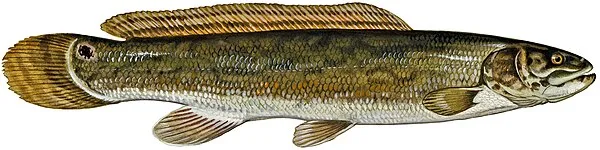
Bowfin have a long, cylindrical body with a single long dorsal fin that undulates when the fish swims — the feature that gives the species its common name. They are olive-green to dark brown with mottled, irregular markings. Males display a distinctive dark spot ringed with orange or yellow at the base of the upper tail fin; this spot is faint or absent on females. The head is broad, flat, and armored with bony plates, and the mouth is lined with sharp, conical teeth. Adults in Indiana typically range from 18 to 24 inches, though fish exceeding 28 inches are caught regularly.
Where to Find Bowfin
Bowfin inhabit sluggish, vegetated waters — the kind of habitat that most gamefish anglers tend to avoid. Shallow lakes with abundant weed growth, backwater marshes, oxbow lakes, and river sloughs are prime bowfin territory. In northern Indiana, the natural lakes of Marshall, Starke, and Kosciusko Counties hold strong populations. Lake Maxinkuckee, Bass Lake, and the Kankakee River marshlands are standout locations.
In central and southern Indiana, bowfin are found in the backwater areas along the Wabash, White, and East Fork White Rivers. Oxbow lakes — the crescent-shaped remnants of old river channels — are particularly productive. The bottomland swamps and sloughs of the lower Wabash and Ohio River floodplains harbor bowfin that rarely see fishing pressure.
Rod-and-Reel Tactics
Bowfin are aggressive predators that will strike a wide variety of baits and lures. They are among the hardest-fighting freshwater fish pound-for-pound in Indiana, making powerful runs and violent head shakes that catch many anglers off guard.
Live bait: Nightcrawlers, crayfish, and live minnows fished near weedy cover on a simple slip float rig or Carolina rig are the most consistent producers. Bowfin hunt primarily by smell and vibration, so fresh, lively bait is essential.
Artificial lures: Soft plastic swimbaits retrieved slowly through weedy shallows are deadly during the spawning period. Spinnerbaits, chatterbaits, and topwater frogs worked through emergent vegetation will also draw vicious strikes. Bass anglers fishing weedy shallows in spring and summer frequently hook into bowfin as a bycatch.
Use medium-heavy to heavy tackle. Bowfin are incredibly powerful for their size and will immediately dive into the thickest available cover when hooked. A 7-foot medium-heavy rod with 17 to 20-pound monofilament or 30 to 40-pound braid is appropriate. Expect a drag-screaming fight that rivals any bass or pike of similar weight.
Bowfishing for Bowfin
Bowfin are a popular secondary bowfishing target in Indiana. Their tendency to inhabit shallow, weedy water and their habit of surfacing to breathe air (bowfin have a primitive lung-like swim bladder) make them visible and accessible to bowfishers.
Target bowfin in the same shallow marshes and backwaters where you find carp. During the spawning period in April and May, males guard nests in very shallow water and are highly visible. The Kankakee River marshes, northern Indiana lake margins, and river oxbow lakes are productive bowfishing areas.
Seasonal Patterns
Spring (April-May): Peak season. Males construct nests in shallow, weedy areas and aggressively guard eggs and fry. Spawning males are easy to locate and will strike anything that enters their territory. This is the best period for both rod-and-reel anglers and bowfishers.
Summer (June-July): Post-spawn bowfin feed heavily in shallow cover. Early morning topwater action can be outstanding. Fish become less active during the hottest part of the day but resume feeding in the evening.
Fall (August-October): Bowfin continue feeding but gradually move from the shallowest cover to slightly deeper areas adjacent to weed beds. Live bait fishing near the edges of vegetation becomes the primary approach.
Winter (November-March): Bowfin become sluggish and retreat to deeper water with some remaining vegetation. They can be caught on slow-fished bait but are rarely targeted during winter months.