Overview
The green sunfish is arguably the most common fish in Indiana. Found in every corner of the state, this scrappy panfish occupies habitats that most other species avoid. From farm ponds and drainage ditches to headwater creeks and urban streams, the green sunfish is a survivor. It is often the first fish a young angler catches, and its aggressive strike makes it a reliable target when nothing else seems to be biting.
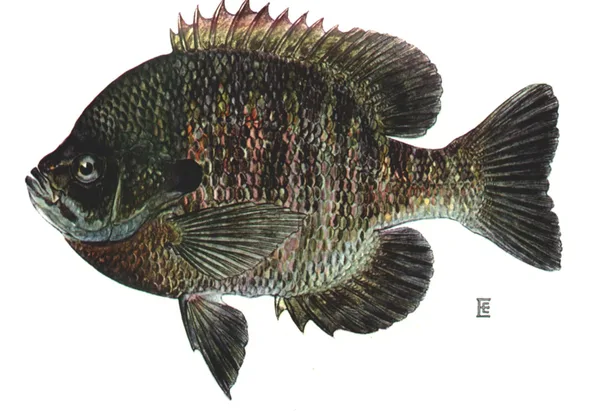
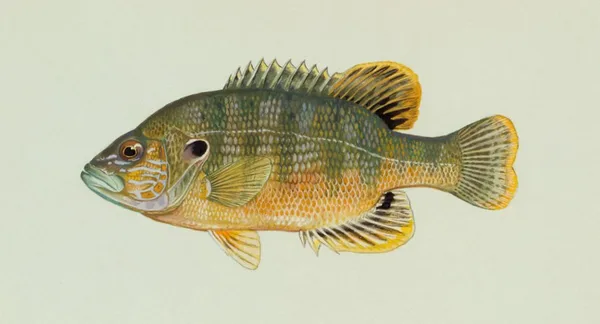
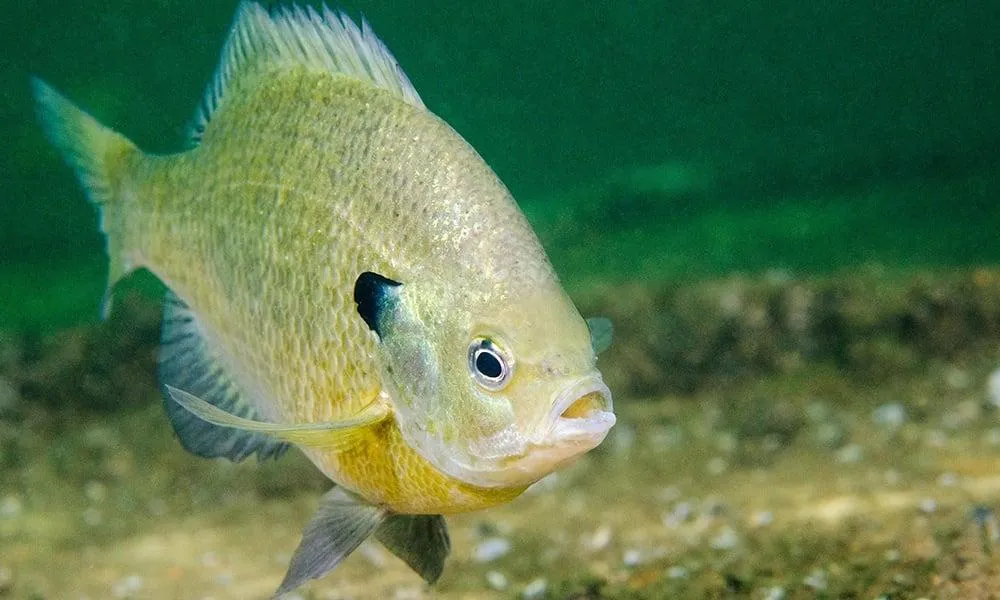
Green sunfish are identified by their thick body, large mouth, and blue-green coloring with faint vertical bars. They have a dark ear flap with a pale or orange margin and often show yellow or orange on the belly during spawning season. They are frequently confused with bluegill, but their wider mouth and stockier build set them apart.
Where to Find Them in Indiana
Green sunfish are truly statewide. They dominate small farm ponds across central Indiana’s agricultural landscape, populate rocky creeks in the southern hill country, and hold in the margins of larger reservoirs. Some of the most productive fishing is found in small streams throughout Morgan, Brown, Owen, and Monroe counties, where they share habitat with creek chubs and rock bass.
In northern Indiana, look for them in the shallow weedy edges of smaller natural lakes and in tributary creeks feeding larger systems. Urban streams in Indianapolis, Fort Wayne, and Evansville hold surprisingly large populations.
Techniques
The simplest and most effective approach is a light or ultralight rod with 4-pound monofilament, a small bobber, and a size 8 hook baited with a piece of worm or a cricket. Set the bobber 1 to 2 feet deep near any visible cover — submerged logs, overhanging banks, or rock piles.
For lure fishing, 1/32-ounce micro jigs tipped with a small soft plastic grub or tube produce well. Small inline spinners in sizes 0 or 00 retrieved slowly along shaded banks will draw reaction strikes. Fly anglers can have excellent sessions with small poppers and woolly buggers in sizes 10 through 14.
Tips
Green sunfish spawn from late May through July when water temperatures reach the mid-60s. Males build nests in shallow water near cover, and during this period they become extremely aggressive toward anything that enters their territory. This is the best window for consistent action.
Because green sunfish tolerate warm, low-oxygen water, they remain active through the hottest summer days when other species go deep. Fish early morning or late evening during July and August for the best size. In small creeks, work upstream and target every pool, undercut bank, and root wad — green sunfish hold tight to structure and rarely move far from cover.