
Tiger Muskie Fishing in Indiana
The tiger muskie is a trophy predator that brings big-fish excitement to Indiana lakes that might not otherwise support a top-tier apex predator fishery. This hybrid between a muskellunge and a northern pike is produced in DNR hatcheries and stocked into select waters, where its fast growth rate, aggressive temperament, and striking appearance make it one of the most sought-after catches in the state. The Indiana state record stands at 24 pounds, and fish over 36 inches are a realistic target for dedicated anglers willing to put in the time.
Identification
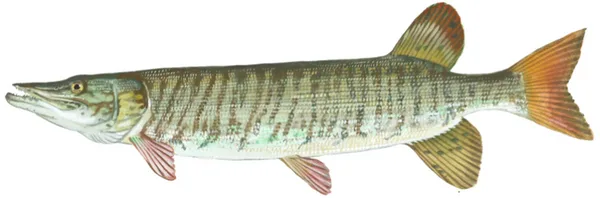
Tiger muskies are among the most visually distinctive freshwater fish in Indiana. They display bold, dark vertical bars on a lighter gold-green background — the namesake tiger stripe pattern that sets them apart from both parent species. Their body shape is elongated and powerful, built for ambush predation. The head is broad and flat with a large mouth full of sharp teeth. Tiger muskies typically have rounded tail fins, unlike the more pointed tail lobes of pure muskellunge. They can exceed 40 inches in Indiana waters, though most fish encountered by anglers fall in the 28 to 38-inch range.
Where to Find Tiger Muskies
The Indiana DNR has stocked tiger muskies in various lakes across the state as part of its broader esocid management program. Unlike pure muskellunge — which are concentrated in a handful of large, well-known lakes such as Webster Lake, Tippecanoe River, and Barbee Chain — tiger muskies have been placed in a wider variety of waters, including some smaller state-managed lakes.
Tiger muskies behave as ambush predators and relate to structure. In lakes, look for them near weed edges, submerged timber, rocky points, and drop-offs adjacent to shallow flats. They use these transition zones to stage attacks on passing baitfish, bluegill, and other prey. Unlike pure muskies, which are often associated with deep open-water structure, tiger muskies frequently hold tighter to visible cover in shallower water.
Because they are sterile hybrids, tiger muskie populations depend entirely on continued DNR stocking. If stocking is discontinued in a given lake, the population will gradually decline over several years as existing fish reach the end of their lifespan.
Seasonal Patterns
Spring (April-May): Tiger muskies become active as water temperatures climb through the 50s. They move into shallow bays and along shoreline structure to feed after the long winter. Smaller presentations — jerkbaits, medium-sized bucktails — are effective as the fish shake off winter lethargy.
Summer (June-August): Tiger muskies hold near deeper weed edges and structural transitions during warm months. They feed during low-light periods — early morning, late evening, and overcast days. Topwater lures fished over shallow weed flats during calm summer mornings can produce explosive strikes.
Fall (September-November): This is prime tiger muskie season. Cooling water temperatures trigger aggressive feeding as fish build reserves before winter. Tiger muskies patrol more aggressively, cover more water, and strike with less hesitation than at any other time of year. Large bucktails, glide baits, and jerkbaits fished along weed edges, points, and drop-offs are the standard fall approach. The biggest fish of the year are typically caught in October and November.
Winter (December-March): Tiger muskies become sluggish in cold water but do not stop feeding entirely. Slow-presented jerkbaits and live suckers fished near deep structure produce occasional catches for patient anglers. This is a low-percentage season, but trophy-caliber fish have been caught through the ice in states where ice fishing is more common.
Tactics and Rigging
Bucktail spinners are the workhorse lure for tiger muskies. Large inline spinners (3/4 to 1.5 ounces) with flashy blades and marabou or silicone skirt tails are cast along weed edges, over submerged bars, and past rocky points. Retrieve at a steady pace that keeps the blade turning, with occasional pauses and speed changes to trigger following fish.
Jerkbaits and glide baits are essential fall tactics. These lures imitate wounded baitfish and trigger the predatory instinct in tiger muskies that have followed but refused bucktails. Work them with a sharp snap-and-pause cadence — the strike often comes on the pause.
Topwater lures — large walk-the-dog style baits and prop baits — produce heart-stopping surface strikes over shallow weed flats during calm conditions. Fish these early and late in the day during summer and fall.
Live bait (large suckers, 8 to 12 inches) under a large slip float is the go-to method for anglers targeting a specific fish or working a known holding area. Set the bait at the depth where fish are marking on electronics and wait.
Use a heavy-action muskie rod (7.5 to 8.5 feet), a high-speed baitcasting reel, and 50 to 80-pound braided line with a wire or heavy fluorocarbon leader. Tiger muskies have sharp teeth and will cut through anything less than a proper leader. Always use a long-handled hook remover or pliers, and handle these fish with care to support catch-and-release survival.