Overview
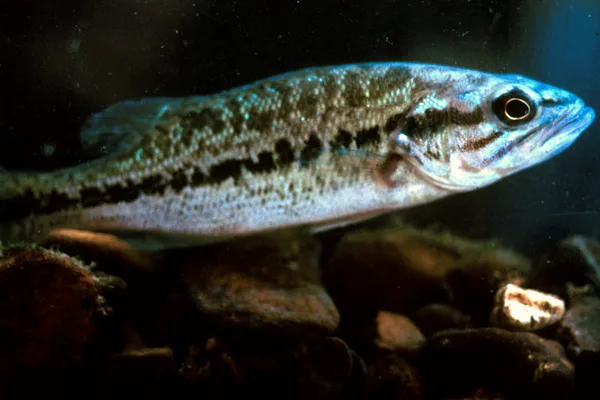
Spotted bass occupy a niche between largemouth and smallmouth in Indiana’s waters. They are smaller on average than largemouth — a 3-pounder is a good spotted bass anywhere in the state — but they fight harder relative to their size and they inhabit structure that other bass species sometimes avoid. Spotted bass are most at home in the rocky, hilly terrain of southern Indiana, where clear-water reservoirs and Ozark-influenced stream systems provide ideal habitat.
While not as widely targeted as largemouth or smallmouth, spotted bass are an important part of Indiana’s bass fishery, particularly on Monroe Reservoir where they make up a significant portion of the bass catch. The state record of 4 pounds 14 ounces came from Monroe in 2006. Anglers who learn to identify and target spotted bass specifically will find consistent action on waters where other bass species can be unpredictable.
Where to Find Them in Indiana
Spotted bass distribution in Indiana is concentrated in the southern third of the state. Monroe Reservoir is ground zero — the lake’s deep, clear water, bluff walls, and rocky points create textbook spotted bass habitat. They commonly hold on steep banks and submerged rock in 10 to 30 feet of water, often deeper than largemouth in the same lake. Tournament anglers on Monroe regularly weigh in mixed bags of largemouth and spotted bass.
Patoka Lake holds a growing spotted bass population, particularly along its rocky main-lake points and channel swings. Lake Lemon, though smaller, also supports spotted bass.
In flowing water, spotted bass inhabit the East Fork of the White River and several of its tributaries in the Crawford Upland and Mitchell Plateau regions. Salt Creek below Monroe Reservoir, Indian Creek, and Lost River all hold spotted bass populations. These streams feature the limestone bedrock, moderate gradient, and clear water that spotted bass prefer.
North of Indianapolis, spotted bass become uncommon. The species’ range in Indiana is largely limited by geology — they favor the unglaciated hill country of the south where streams have rocky substrate and moderate current rather than the flat, silty waterways of central and northern Indiana.
Seasonal Patterns
Spring (March - May): Spotted bass begin their pre-spawn movement earlier than largemouth on the same water, often staging on steep rocky banks and secondary points in March when water temperatures are still in the upper 40s to low 50s. They spawn on gravel and rock substrate, typically in slightly deeper water than largemouth — 4 to 8 feet is common. Jerkbaits and small crankbaits worked along bluff walls and rocky banks are the go-to presentations during this window.
Summer (June - August): This is when spotted bass behavior diverges most from largemouth. While largemouth may hold shallow around wood and vegetation, spotted bass push to deeper structure. On Monroe Reservoir, they commonly suspend over deep water or hold on rock ledges and bluff walls in 15 to 30 feet. Drop shot rigs and underspins fished vertically or along steep contours are the most effective approaches. Dawn and dusk can bring spotted bass shallow to feed on shad along rocky points.
Fall (September - November): Spotted bass follow shad as they move into creek arms and along wind-blown banks. They often school with largemouth during the fall transition but tend to hold slightly deeper in the water column. Small crankbaits and jerkbaits that match the size of young-of-year shad produce well.
Winter (December - February): Spotted bass remain relatively active compared to largemouth during cold-water periods. They hold on deep bluff walls, channel bends, and standing timber in 20 to 40 feet of water. A blade bait or metal spoon jigged vertically is the most reliable cold-water technique.
Techniques and Tackle
Spotted bass fishing in Indiana leans toward finesse. A 7-foot medium spinning rod with 8 pound fluorocarbon or 10 pound braid with a fluorocarbon leader handles most presentations. The drop shot rig is arguably the single most effective technique — a 4-inch finesse worm or small minnow-shaped plastic on a size 1 hook, fished 12 to 18 inches above a 3/16 ounce weight. This allows you to keep a bait in the strike zone along steep structure where spotted bass hold.
Suspending jerkbaits in natural shad colors are deadly in the pre-spawn and fall periods. Small square-bill and flat-sided crankbaits in crawfish patterns work well when fish are relating to rock. Underspins (a small swimbait on a jig with a willow-leaf blade underneath) have become a staple for targeting spotted bass suspended over deeper water on southern Indiana reservoirs.
Live bait anglers do well with small crawfish fished on a split-shot rig near rocky banks and ledges.
Tips for Beginners
The most important thing to understand about spotted bass in Indiana is that they live deeper and tighter to hard structure than largemouth. If you are fishing Monroe Reservoir or Patoka Lake and you are catching fish on steep rocky banks in 12 to 20 feet of water, there is a good chance you are catching spotted bass. Learn to identify them — check for the small spots below the lateral line and the tongue patch — so you can build a mental map of where they live versus where the largemouth hold. This knowledge will make you a more versatile angler on mixed-species fisheries.