White Bass Fishing in Indiana
Few events in Indiana fishing generate as much excitement as the spring white bass run. Each March and April, enormous schools of white bass surge upstream from reservoirs and large rivers into feeder creeks and tributaries to spawn. The runs draw crowds of anglers to bridge crossings, access points, and wading spots across the state. It is fast, furious fishing that requires minimal gear and rewards those who time it right with coolers full of fillets.
Identification
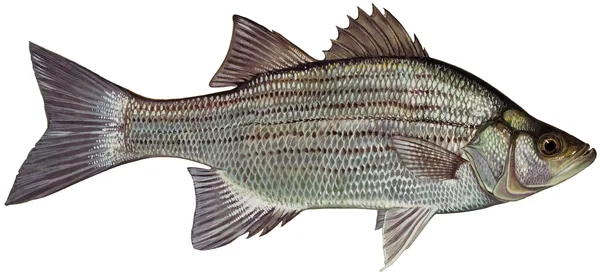
White bass are silvery fish with several dark horizontal stripes running along their sides. They have a deep, laterally compressed body, a forked tail, and two dorsal fins (the front one spiny). They closely resemble striped bass hybrids (wipers), but white bass are smaller, with stripes that are often broken or faint above the lateral line. Adults in Indiana typically range from 10 to 15 inches, with fish over 2 pounds considered above average.
The Spring Spawning Run
The white bass run is the defining event. It begins when water temperatures in the main river or reservoir reach the low to mid-50s, usually in mid-March in southern Indiana and late March to early April in the central and northern parts of the state. Fish travel upstream — sometimes many miles — into tributary streams and creeks to broadcast their eggs over gravel and rock substrate in moving water.
The run timing depends heavily on water temperature and flow. A warm rain that bumps creek levels and raises temperatures a few degrees can trigger a massive push of fish overnight. Conversely, a cold front or high muddy water can stall the migration. Experienced Indiana white bass anglers monitor stream gauges and water temperature data from the USGS to time their trips.
During peak run conditions, the fishing is remarkable. Schools of white bass stack up below riffles, low-head dams, and any natural or man-made obstruction that concentrates fish. Multiple hook-ups on a single cast are not unusual. The frenzy typically lasts two to four weeks at any given location, though fish continue trickling through for a longer period.
Top Tactics
Spring run (March through May): A 1/8-oz to 1/4-oz jig head with a white or chartreuse curly-tail grub is the most popular lure. Cast upstream or across current, let the grub tumble naturally with the flow, and retrieve with a slow, steady retrieve or short rod-tip twitches. Inline spinners (Rooster Tails, Mepps) in 1/8-oz to 1/4-oz sizes produce well in moderate current. Small crankbaits that imitate shad or minnows are effective when fish are aggressive. For live bait, a minnow or small shad on a jig head or split-shot rig drifted through holding areas works consistently.
Summer and fall: After the spawn, white bass return to reservoirs and the main stems of large rivers. They become open-water predators, chasing schools of shad. Watch for surface-feeding activity — white bass push shad to the surface in violent feeding frenzies called “jumps.” When you spot breaking fish, motor within casting range and throw anything that resembles a shad: small white spinnerbaits, crankbaits, or jig-and-grub combos. Vertical jigging with spoons over deep schools located on electronics is also productive.
Top Indiana Waters
The White River system is ground zero for Indiana white bass runs. Both the West Fork and East Fork produce tremendous runs, with popular access points near Indianapolis, Anderson, Muncie, and downstream communities. The Wabash River from Lafayette downstream through Terre Haute hosts massive runs, particularly in tributaries like Wildcat Creek and the Tippecanoe River. Tailwaters below Brookville Lake, Monroe Lake, Mansfield Dam, and other major impoundments concentrate running fish and provide excellent bank-fishing access.
Reservoir fishing for white bass during summer and fall is productive at Monroe Lake, Brookville Lake, Patoka Lake, and Lake Shafer (where the state record was caught). The Tippecanoe River chain — Lake Shafer and Lake Freeman — are historic white bass producers.
Regulations and Limits
There is no minimum size limit for white bass in Indiana. The daily bag limit is 25 fish. Note that striped bass hybrids (wipers), which look similar, have separate and more restrictive regulations — know how to tell them apart before keeping fish. A valid Indiana fishing license is required for all anglers 18 and older. Check the current Indiana Fishing Regulations Guide for any special rules at your destination.