What Is a Bullet Weight?
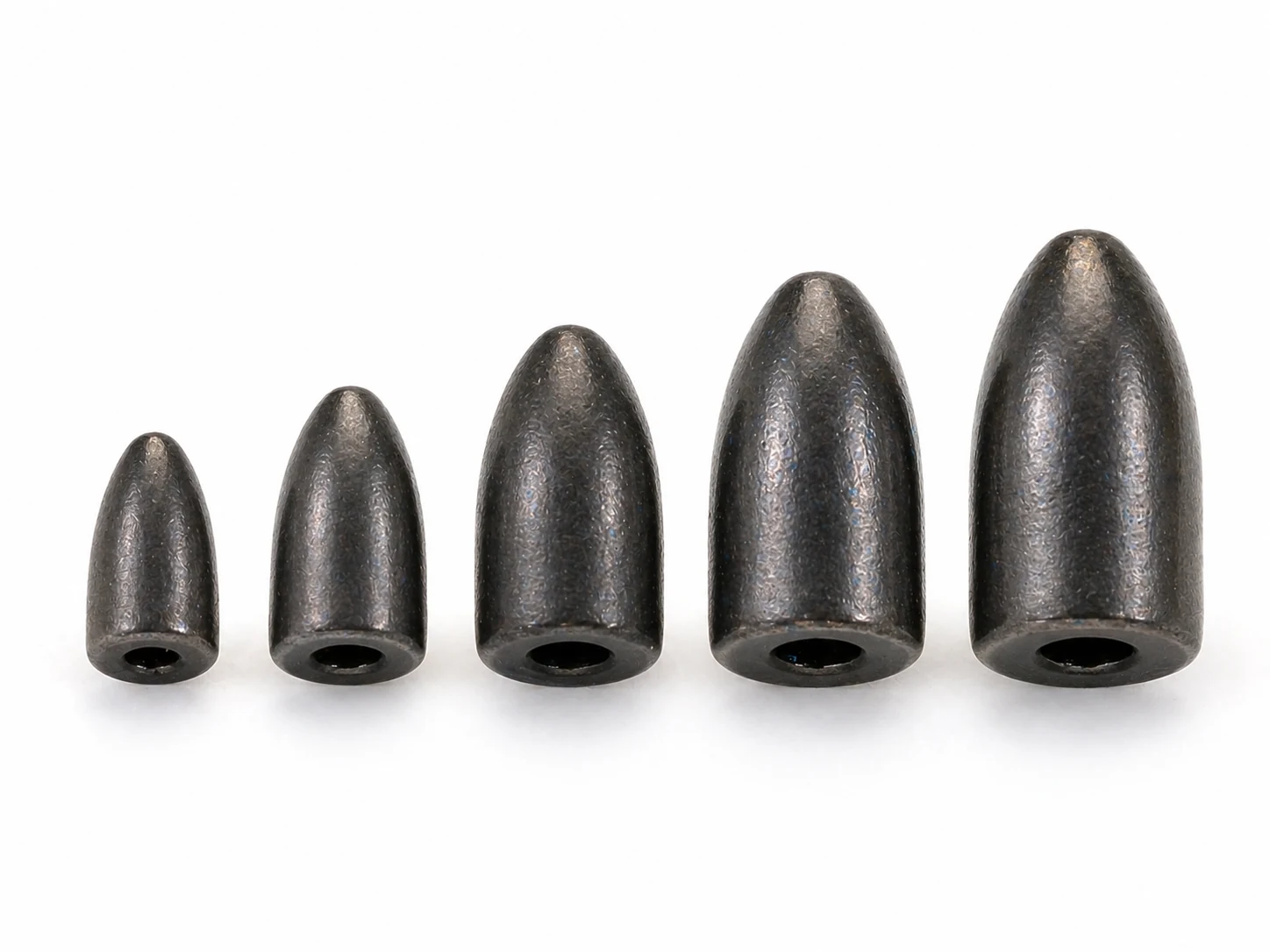
A bullet weight is a tapered, bullet-shaped sliding sinker designed to thread onto fishing line above an offset worm hook in a Texas rig. The pointed nose slides through cover cleanly, and the tapered profile makes the weight track straight when pitched or flipped into vertical structure.
It’s the most-used freshwater terminal-tackle item in bass fishing — every Texas-rigged worm, creature bait, or craw uses one.
When and Where to Use a Bullet Weight
Texas-rigged soft plastics — the original and primary use. Threaded above an offset hook with the bait rigged texas-style for a weedless presentation in cover.
Punch rigs. Pegged 1 to 1 1/2 oz tungsten bullet weights are used to punch through matted grass canopies. The heavy weight is what pulls the rig through the surface mat and down to where the bass are positioned.
Carolina rig variations. While carolina rigs traditionally use egg sinkers, some anglers prefer a long bullet weight on the main line — especially in current.
Specialty presentations. Wacky-rigged worms with a small bullet weight pegged to the head become a sinking-wacky variation; light bullet weights on shaky-head-style worm presentations add depth in current.
Tungsten vs Lead
Tungsten is denser than lead by 1.7x, meaning a 3/8 oz tungsten weight is about half the size of a 3/8 oz lead weight. That smaller profile slides through cover more efficiently. Tungsten is also harder, which produces a louder click on rocks and gives better tactile feedback through the rod tip. The downside is cost — tungsten is roughly 4-5x the price of lead.
Lead is the legacy material — cheap, soft (so it deforms slightly on impact and grips knots), and adequate for most non-finesse situations. For grass-flipping and general bass fishing, lead is fine. For finesse, rock fishing, or any situation where bottom feel matters, tungsten earns the premium.
Most regulations have not banned lead in freshwater bass fishing (though lead jigs under 1 oz are banned in some northeastern states for loon protection). Check local regulations.
Pegging the Weight
In heavy cover, the weight should stay at the bait nose so the rig punches through the canopy as one unit. Peg the weight in one of two ways:
- Bobber stop. Slide a small rubber bobber stop onto the line above the weight. Cinch it down against the weight to lock it in place.
- Rubber peg. Insert a small rubber peg through the weight cavity. The peg pinches the line and holds the weight in place.
For open-water dragging, leave the weight unpegged — let it slide on the line so the bait can rise off bottom on slack.