What Is a Craw?
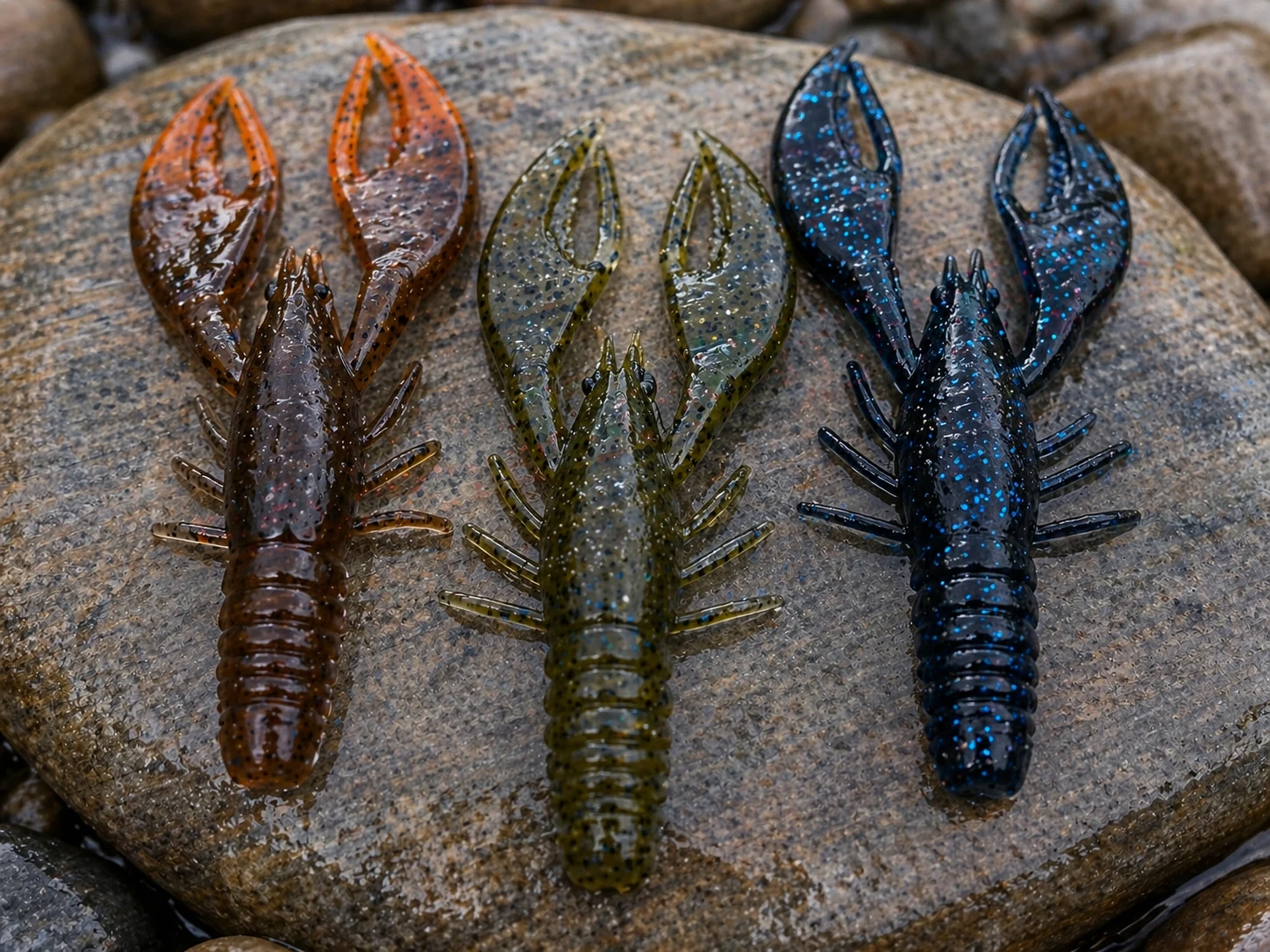
A craw is a soft plastic crayfish imitation — typically 3 to 4 inches long with two flapping claws on the front end, a segmented body, and small antennae. They look like crayfish, fall like crayfish, and on rocky lakes and rivers, they catch bass like nothing else does.
Craws differ from creature baits in being more anatomically accurate. They’re bass-specific where creature baits are more abstract.
When and Where to Throw a Craw
Craws are at their best on rocky bottoms — riprap, gravel transitions, chunk-rock points, smallmouth flats. Anywhere crayfish are part of the forage base, a craw outproduces almost everything else.
Spring is prime craw season. As water warms past 50°F, crayfish molt and become abundant on shallow rock. Both pre-spawn and post-spawn bass key on them heavily.
Summer craws shine when slow-rolled along main-lake structure or pitched to deep brush piles.
Fall brings another craw push as bass fatten before winter.
Three Ways to Rig a Craw
Texas rig. Standard 3/0 EWG hook, 1/4 oz to 3/8 oz tungsten bullet weight pegged or unpegged depending on cover. Drag and hop slowly across rock.
Football jig trailer. Thread a craw onto the back of a football jig as a high-action trailer. The classic smallmouth combination.
Carolina rig. Use the craw as the trailing bait behind a 1/2 oz egg sinker and 3-foot leader. Drag across deep gravel flats and main-lake humps.
Color Selection
Match the local crayfish — observe what color the rocks themselves stain. Reddish-brown rocks: brown with orange claws. Black rocks: black-blue or junebug. Green-stained rocks (algae): green pumpkin and watermelon. After a heavy rain or in muddy water: black-and-blue or chartreuse-pepper.
Tackle
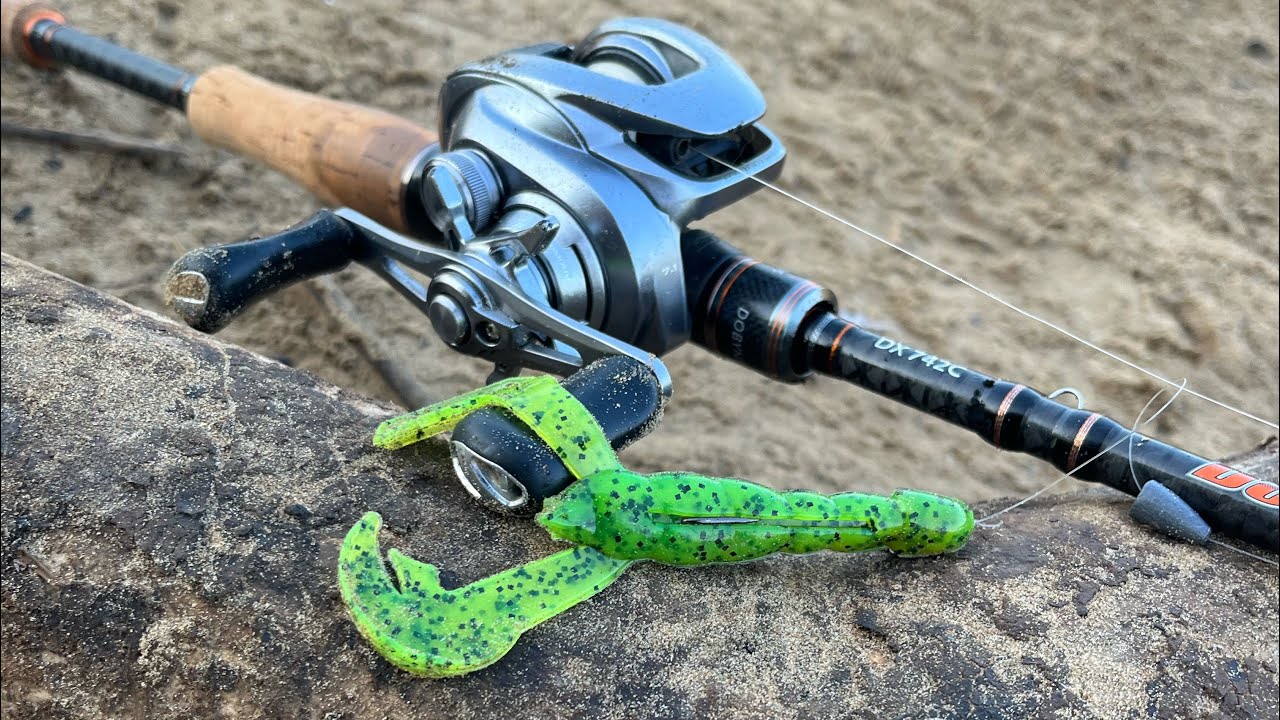
A 7’ to 7’4” medium-heavy fast-action baitcasting rod, 12-17 lb fluorocarbon, and a 7:1 reel handles most craw presentations. For deep carolina rigs, scale up to a 7’6” rod and 17-20 lb fluorocarbon main line.