
What Is a Texas Rig?
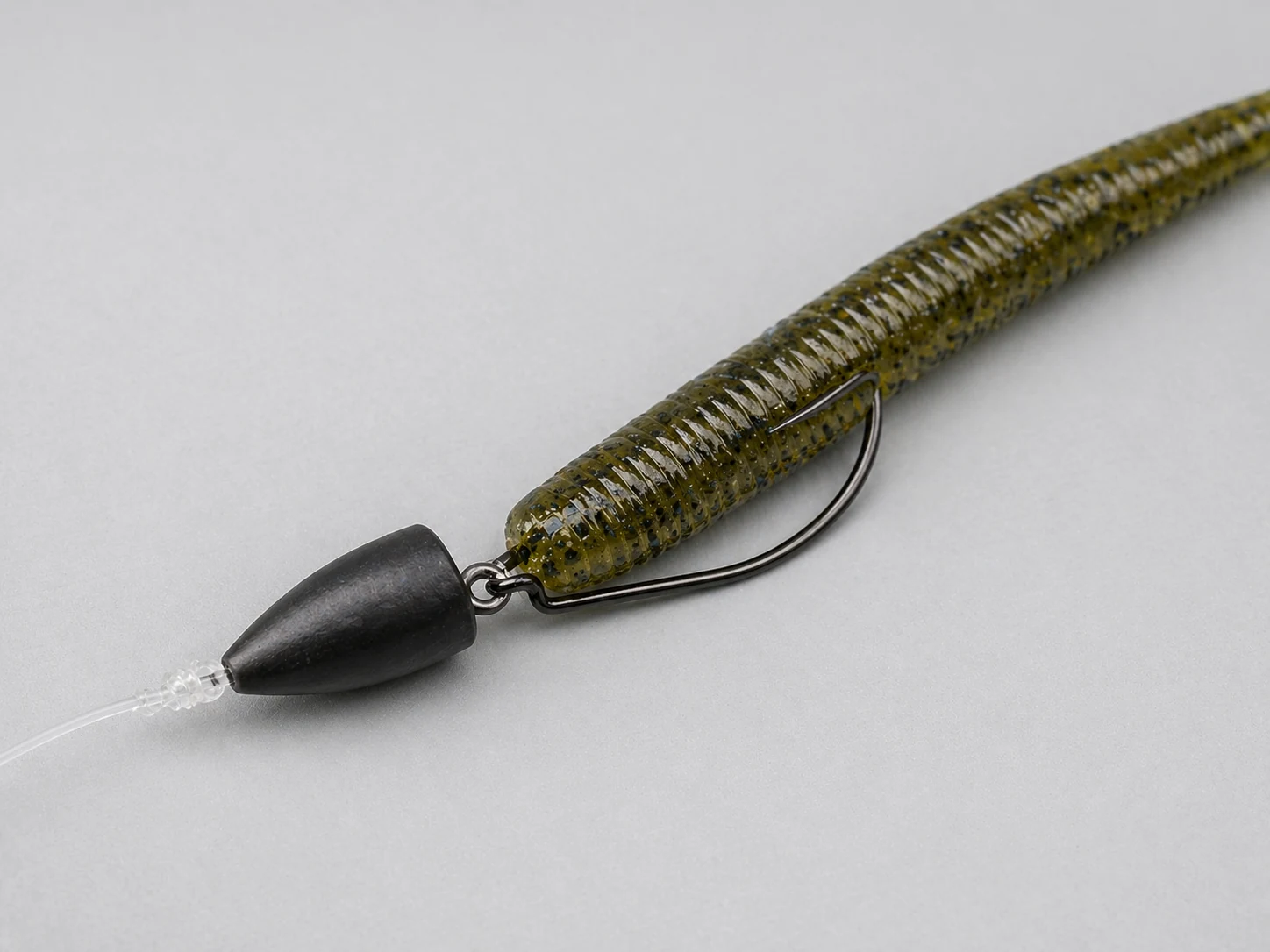
A texas rig is the single most important bass rigging method ever invented. It’s a bullet-shaped sinker (weighted lead or tungsten) sliding free on the line above an offset worm hook, with a soft plastic worm or creature bait threaded onto the hook so the point buries back into the bait body. The result: a weighted, weedless presentation that can be dragged, hopped, or pitched into the heaviest cover without snagging.
Every bass-fishing technique that involves a weight and a soft plastic descends from this fundamental rig.
How to Tie a Texas Rig
- Slide the bullet weight onto your line, point facing toward the rod tip.
- Tie a 3/0 or 4/0 offset wide-gap hook to the line with a Palomar knot.
- Insert the hook point into the head of the worm, run it down 1/4 inch, and exit.
- Pull the hook through and slide the worm up over the eye of the hook.
- Rotate the hook 180° and lay it back across the worm body.
- Push the hook point back into the worm so it just emerges, then bury it 1/16 inch back into the body — that makes it weedless without losing hookset reliability.
Pegged vs Unpegged
The bullet weight can slide free on the line or be pegged at the bait nose with a bobber stop or rubber peg. Pegged for heavy cover where you need the weight to stay with the bait through the canopy. Unpegged for open water where letting the bait drift up off bottom on slack line creates a more natural presentation.
Best Baits for a Texas Rig
6-7 inch ribbon-tail worms — the original texas-rig bait, still one of the most consistent. Fall through brush piles and laydowns.
Creature baits and beavers — the modern flipping standard. Bulky, multi-appendage baits punched into matted grass.
Stickbaits (weightless texas rig) — a senko-class bait texas-rigged with no weight at all is one of the deadliest pressured-bass presentations.
Craws — texas-rigged with a 3/16 to 3/8 oz weight and dragged across rocky bottoms.
Tackle
A 7’ to 7’4” medium-heavy fast-action baitcasting rod, 15-20 lb fluorocarbon for open water or 50-65 lb braid for matted grass, and a 7:1+ baitcasting reel. Hookset is a hard, sweeping motion — the offset hook needs the angler to drive the point through the bait body and into the bass.