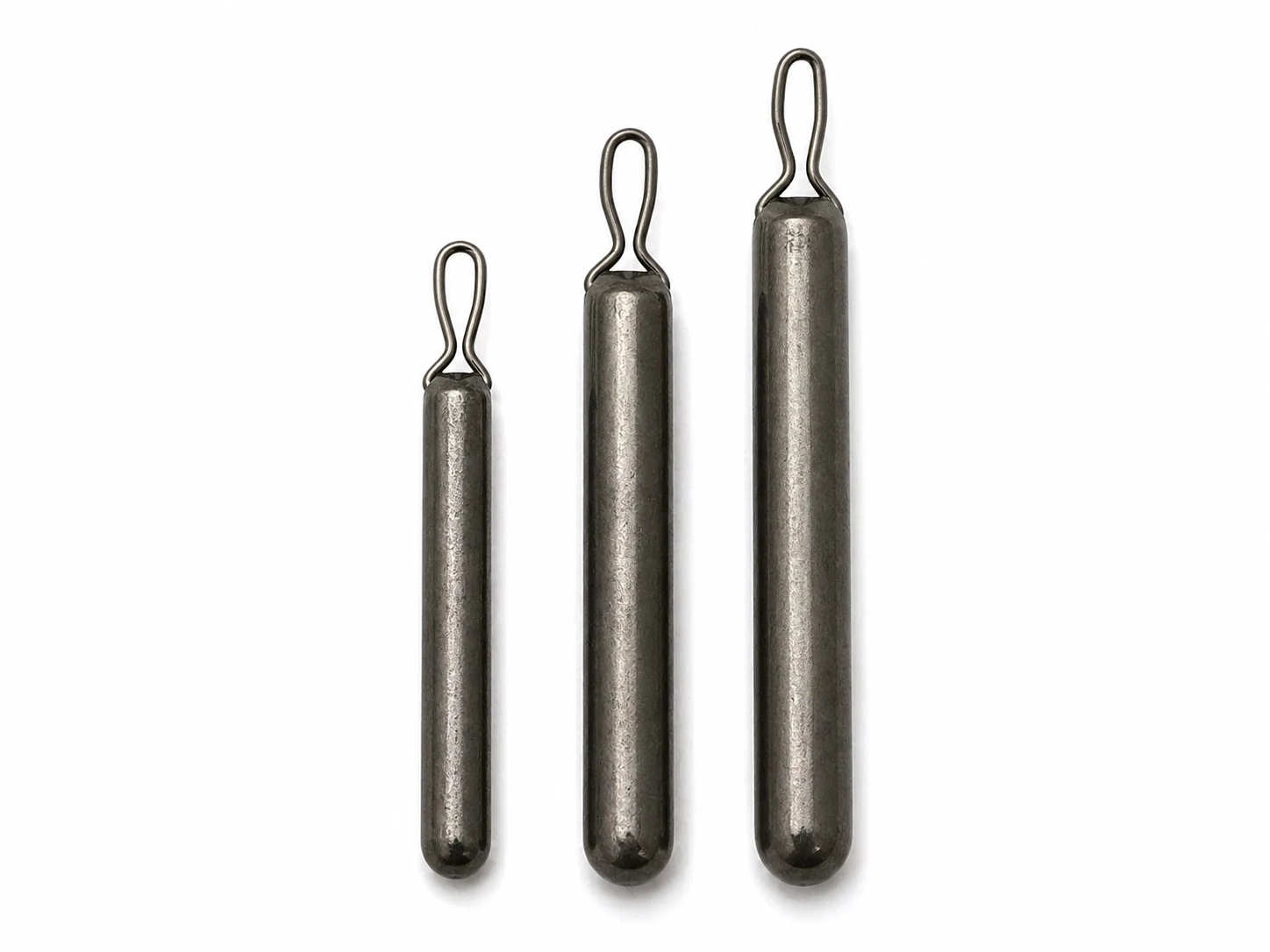
What Is a Drop Shot Weight?
A drop shot weight is a specialty sinker designed for drop-shot rigs — long, narrow, and pencil-shaped, typically with a built-in line clip or pinch-loop at the top so it can be attached to the tag end of the line without tying a knot. They come in tungsten (premium) and lead (budget) versions, with weights typically ranging from 1/8 oz to 1/2 oz for bass fishing.
When to Use Each Weight Size
1/8 oz: Shallow water (4-10 ft), light current, ultra-clear conditions. The lightest weight that maintains bottom contact in calm water.
3/16 to 1/4 oz: The universal default for most drop shot situations — clear water, 8-20 feet, moderate cover. Handles light wind and small current.
3/8 to 1/2 oz: Deeper water (20-40 ft), windy days, current, and any situation where you need to maintain better bottom contact and feel. Also the choice when fishing fast — the heavier weight gets the bait down quicker between casts.
Tungsten vs Lead
Tungsten is the premium material:
- 1.7x denser than lead, so the same weight is physically smaller
- Better bottom feel through the rod tip
- Slides through rock crevices without wedging as easily as lead
- Produces a sharper, more distinct “tap” signal on rocks
Lead is the budget option:
- Adequate for most situations
- Significantly cheaper
- Slightly larger profile for the same weight
For drop-shot smallmouth fishing on rocky structure — the most common application — tungsten is worth the premium. For panfish and largemouth in open water, lead works fine.
Shape Matters
Pencil/cylinder-shaped weights are the rock-fishing standard. The long narrow profile slips through gravel transitions and chunk-rock without wedging.
Round/teardrop-shaped weights work better in open water and on sandy or muddy bottoms — they produce a different bottom signal and don’t track straight in current the way pencil weights do.
Inline weights (cylindrical with a hole through the center) are sometimes used on the main line above the hook — a less common configuration but useful for specialized current presentations.
Line Clips and Pinch Loops
Most modern drop shot weights have a built-in clip or pinch-loop at the top that grips the line without a knot. Two advantages:
- Quick weight changes. Slide the line out, slide a new weight on. No re-tying.
- Snag protection. When the weight wedges in rocks, the line pulls free of the clip rather than breaking off — you lose only the weight, not the rig.
Tackle Pairing
Drop shot weights pair with the standard finesse spinning setup: 7’ to 7’2” medium-power rod, 2500-3000 size reel, 10-15 lb braid main, 6-10 lb fluorocarbon leader. The weight choice is more about depth and current than rod or line.