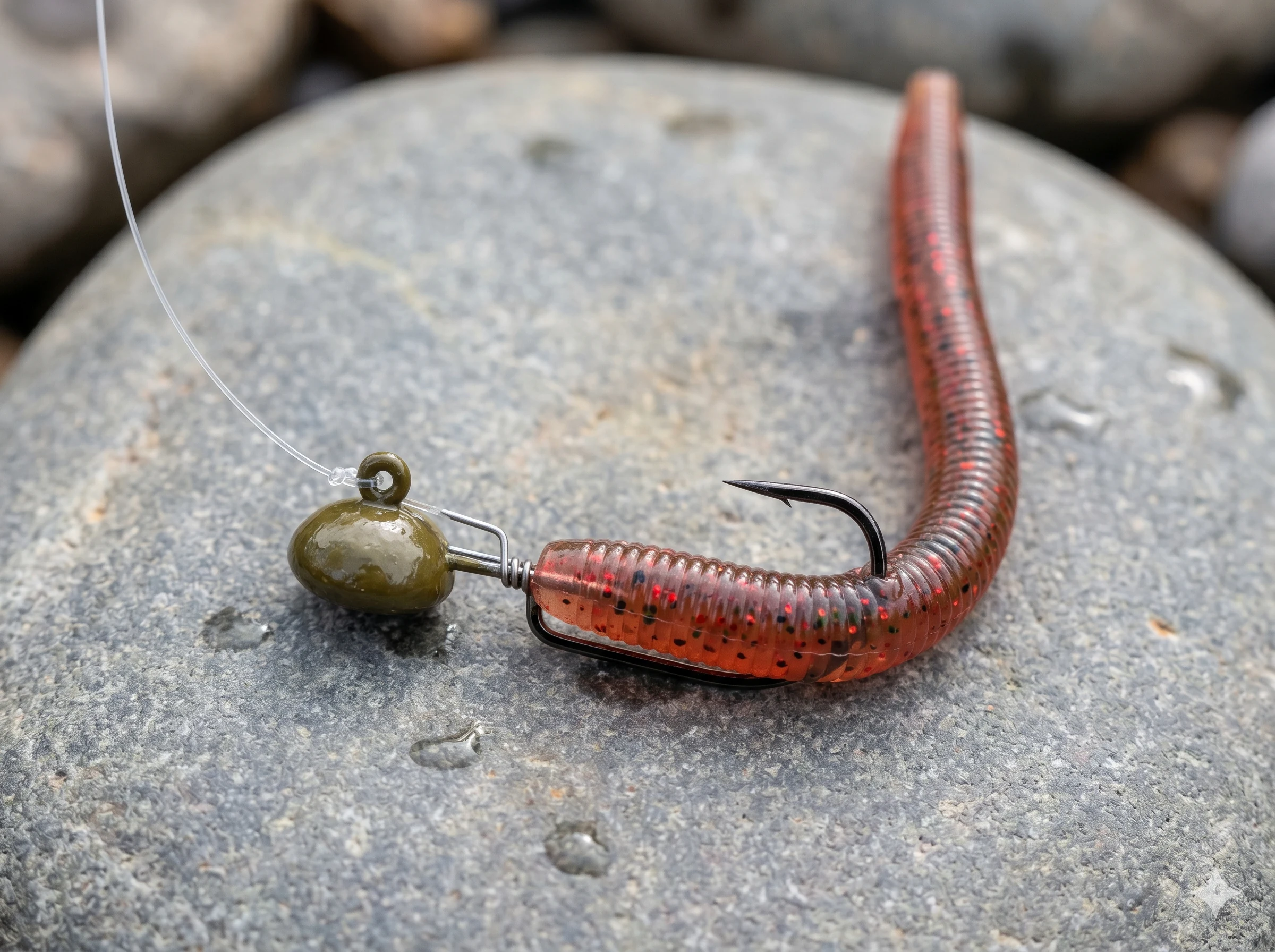

What Is a Shaky Head Rig?
A shaky head is a small jighead with a stand-up mushroom or wedge-shaped head and a wire bait keeper, designed to hold a soft plastic finesse worm so the bait stands upright (tail pointed at the surface) when it sits on bottom. The stand-up posture gives the worm tail-shaking action even when the bait is sitting still.
It’s the deadliest bottom-contact bass presentation for clear water, pressured fish, and post-frontal conditions.
When and Where to Throw a Shaky Head
Pressured ponds and tournament lakes where bass have seen every spinnerbait, crankbait, and standard worm. The downsized profile and natural bottom presentation pulls bites when nothing else does.
Rocky shorelines and gravel transitions — the bait stands up between rocks and tracks cleanly through gravel where a horizontal worm would constantly snag.
Cold-front conditions when bass push tight to bottom and slow down. A shaky head dragged slowly across the strike zone forces the issue.
Smallmouth on flats and points in 6-15 feet. The vertical presentation matches how smallmouth see the bottom and how they feed on crayfish and gobies.
Rigging
Thread the worm onto the wire keeper of the shaky head jighead, then texas-rig the hook back into the body so the point is just buried under the surface — keeps the rig weedless without sacrificing hookups. The wire keeper holds the worm in place through repeated casts.
Best Worms for a Shaky Head
4-7 inch straight-tail finesse worms — Roboworm, Yum Dinger Trick Worm, Zoom Trick Worm. The straight tail shakes naturally when the rod tip is moved.
Curl-tail worms in the 4-6 inch range. The curl tail adds extra movement on the drag.
Stickbaits (4-inch). Same baits used for a wacky rig, rigged on a shaky head for a different presentation.
Color Selection
Aaron’s magic, oxblood-red flake, and morning dawn are smallmouth standards. Green pumpkin and watermelon red flake handle largemouth in most conditions. Bubble gum pink for stained water and white bass mixed in.
Tackle
A 7’ to 7’2” medium-power spinning rod with a fast tip, 2500-3000 size reel, 10-15 lb braid main, 6-10 lb fluorocarbon leader. Sensitivity matters more than power — most shaky-head strikes feel like a mushy weight rather than a thump.