Best Walleye Lakes in Indiana: Top 10 Ranked
April 2, 2026 · Updated April 2026
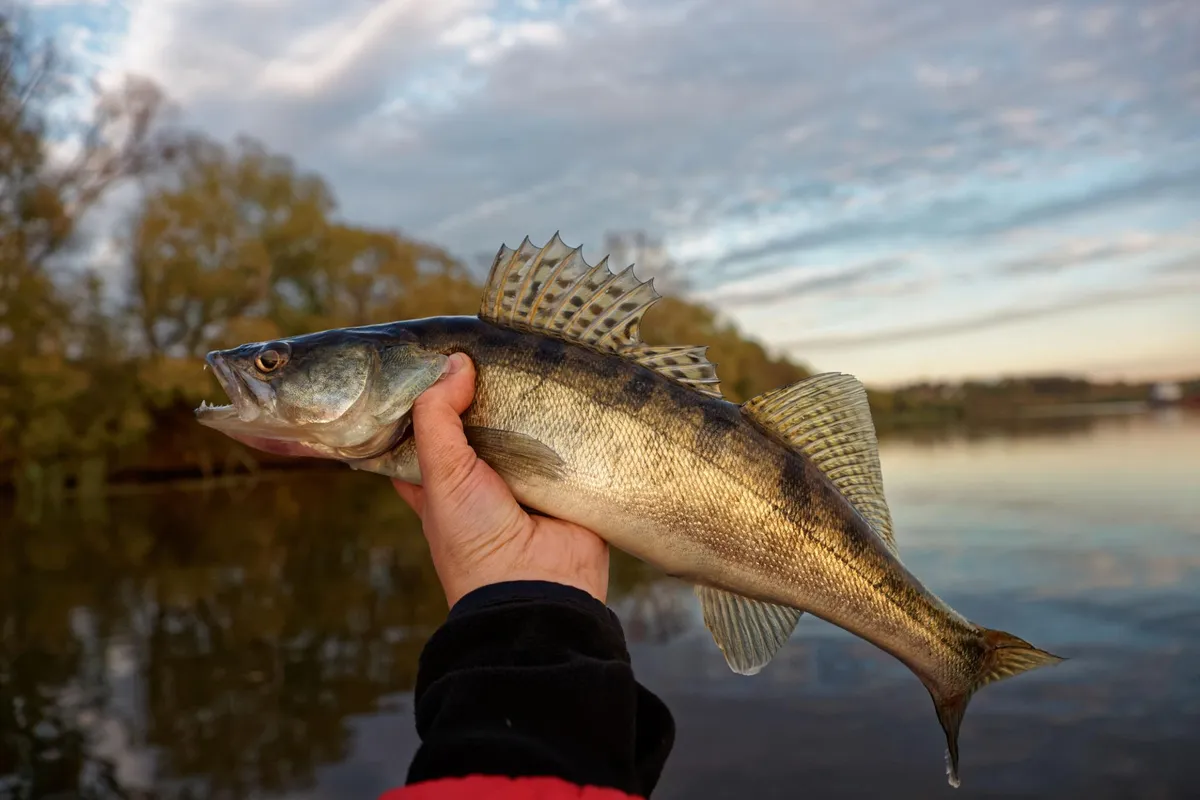
Walleye are one of Indiana’s most prized game fish — hard-fighting, challenging to catch, and widely considered the best-eating freshwater fish in the Midwest. While Indiana is not traditionally thought of as a walleye state, the DNR’s stocking programs have built several excellent walleye fisheries. Here are Indiana’s 10 best walleye lakes, ranked by quality and consistency.
1. Brookville Lake — Franklin County
Acreage: 5,260 | Max depth: 110 feet
Brookville Lake is Indiana’s walleye crown jewel, and it is not particularly close. The combination of aggressive DNR stocking, excellent forage (shad and crayfish), and deep, clear water has produced a walleye fishery that rivals anything in the Midwest outside of the Great Lakes.
What makes it special: Heavy DNR stocking paired with deep, cold water and abundant forage lets walleye grow fast and reach trophy size. Fish over 10 pounds are caught every year, and the average walleye caught at Brookville is significantly larger than at any other Indiana lake.
Best techniques: Jig and minnow along rocky points and the main dam in March-April. Trolling crawler harnesses along the creek channel edges in summer (15-25 feet). Casting blade baits and jigging spoons on main lake structure in fall and winter.
Best spots: The main dam area, Fairfield Causeway, rocky points along the east shore, and the mouths of the Whitewater River and Dunlap Creek arms.
Stocking: The DNR stocks walleye fingerlings annually. Brookville’s deep, cold water and abundant forage produce excellent survival and growth rates from stocked fish.
Access: Mounds State Recreation Area on the west side and Quakertown State Recreation Area on the east side both provide boat ramps. See Franklin County for more details.
2. Mississinewa Reservoir — Miami and Grant Counties
Acreage: 3,180 | Max depth: 95 feet
Mississinewa Reservoir is Indiana’s second-best walleye lake, consistently producing good numbers of fish in the 14-20 inch range with occasional fish over 6 pounds.
Best techniques: Jig and minnow in March-April along rocky points near the dam. Trolling crawler harnesses along the main creek channel in summer. Casting jerkbaits along rocky shorelines at dawn and dusk in fall.
Best spots: The dam area, main lake points on both the north and south shores, and the upper end where the Mississinewa River enters the lake.
Stocking: Regular DNR walleye fingerling stocking supports the fishery.
Access: Red Bridge State Recreation Area and multiple public ramps. See Miami County for access details.
3. Salamonie Reservoir — Huntington and Wabash Counties
Acreage: 2,665 | Max depth: 72 feet
Salamonie Reservoir rounds out the trio of east-central Indiana reservoirs with strong walleye programs. Similar in character to Mississinewa, Salamonie produces consistent walleye fishing supported by DNR stocking.
Best techniques: Jig and minnow along gravel transitions in spring. Trolling in summer along the creek channel. Vertical jigging with blade baits on main lake structure in fall.
Best spots: The dam area, Hanging Rock area, and main lake points where the old river channel swings near the bank.
Stocking: Annual DNR walleye fingerling stocking.
Access: Lost Bridge West State Recreation Area. See Huntington County for details.
4. Monroe Lake — Monroe County
Acreage: 10,750 | Max depth: 55 feet
Monroe Lake is Indiana’s largest lake and a sleeping giant for walleye. The DNR has increased walleye stocking in recent years, and the fishery is growing. While not yet in the same class as Brookville, Monroe’s walleye fishing improves each year.
Best techniques: Trolling crawler harnesses and crankbaits along the main creek channels in 12-20 feet. Jig and minnow along the dam and rocky points in spring.
Best spots: The dam area, Cutright State Recreation Area shoreline, and the main lake points between Allen’s Creek and Salt Creek arms.
Stocking: Increasing annual walleye fingerling stockings by the DNR.
5. Patoka Lake — Dubois and Orange Counties
Acreage: 8,800 | Max depth: 65 feet
Patoka Lake is Indiana’s second-largest reservoir and receives periodic walleye stockings. The fishery is not as established as Brookville or Mississinewa but produces walleye regularly, especially in spring near the dam.
Best techniques: Trolling and jigging near the dam and main lake points. Spring and fall produce the best walleye action.
Best spots: The dam area, the main lake near Newton Stewart State Recreation Area, and the deeper creek channel areas.
6. Freeman Lake (Lake Freeman) — Carroll and White Counties
Acreage: 1,548 | Max depth: 42 feet
Lake Freeman is the downstream impoundment of the Tippecanoe River chain (paired with Lake Shafer). The river-fed lake holds walleye that move through the system, with spring providing the best action near the dam and current areas.
Best techniques: Jig and minnow fished in current near the dam. Trolling crankbaits along the channel edges. Night fishing with live bait near rocky shorelines.
Best spots: The dam tailrace area, main channel edges, and points where current accelerates.
7. Lake Shafer — Carroll and White Counties
Acreage: 1,298 | Max depth: 32 feet
The upstream companion to Freeman Lake, Lake Shafer holds walleye from the Tippecanoe River system. The annual walleye spawn run up the Tippecanoe River from both lakes creates a concentrated spring fishery.
Best techniques: Similar to Freeman Lake. Jig and minnow near current areas. Trolling the main channel. Night fishing along rip-rap and rocky banks.
Best spots: The area near Norway Dam, main channel points, and the Tippecanoe River confluence.
8. Tippecanoe River — Various Counties
The Tippecanoe River itself — separate from the lakes it feeds — holds a self-sustaining walleye population. River walleye fishing requires different tactics than lake fishing and rewards anglers who learn to read current.
Best techniques: Jig and minnow or jig and soft plastic drifted through deeper pools and tailouts. Casting crankbaits across current seams. Wading or using a small boat.
Best spots: The stretch from Lake Tippecanoe downstream to Lake Shafer. Access points vary by county — check local bait shops for current reports.
9. Cagles Mill Lake (Cataract Lake) — Owen and Putnam Counties
Acreage: 1,400 | Max depth: 42 feet
Cagles Mill receives periodic walleye stocking and produces fish for anglers who know where to look. Not a destination walleye lake, but a viable option for anglers in west-central Indiana.
Best techniques: Trolling and jigging near the dam and along the main creek channel.
Best spots: The dam area and the deeper sections of the main lake.
10. J. Edward Roush Lake (Huntington Lake) — Huntington County
Acreage: 900 | Max depth: 30 feet
Roush Lake is a flood-control reservoir that receives occasional walleye stockings. The fishery is variable depending on water levels and stocking success, but spring walleye fishing near the dam can be productive.
Best techniques: Jig and minnow near the dam in early spring. Trolling the main channel when water levels are stable.
Walleye Techniques for Indiana
Spring (March-April)
Spring is the prime window for Indiana walleye. Fish are spawning or just finishing the spawn and concentrated near rocky shorelines, dam areas, and tributary mouths. A 1/4 oz jig head with a live minnow, dragged slowly along the bottom near these areas, is the most productive technique. Fish slowly — walleye in cold water want a slow-moving presentation right in front of their face.
Summer (June-August)
Walleye move to deeper structure in summer — main lake points, creek channel edges, and humps in 15-30 feet of water. Trolling crawler harnesses at 1.0-1.5 mph along these contours is the standard approach. Early morning and late evening produce the best action.
Fall (September-November)
Fall walleye fishing can rival spring. Cooling water temperatures push walleye onto feeding binges. Blade baits, jigging spoons, and crankbaits worked along main lake structure produce aggressive strikes. Focus on areas where shad schools concentrate — walleye follow the food.
Winter (December-February)
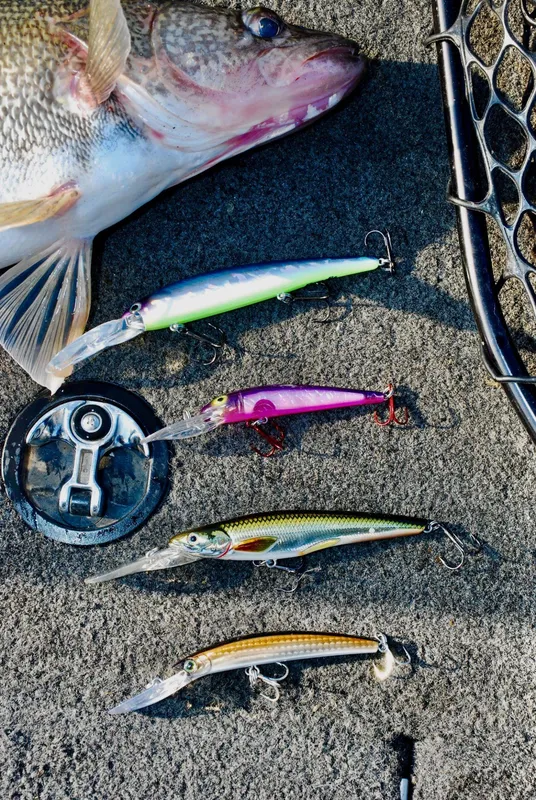
Walleye remain catchable in winter but slow down significantly. Vertical presentations — blade baits, jigging spoons, and jigging Rapalas worked directly below the boat on deep structure — are most effective. Fish the warmest part of the day (noon to 3 PM).
Indiana Walleye Regulations
| Regulation | South of SR 26 | North of SR 26 |
|---|---|---|
| Minimum size | 14 inches | 16 inches |
| Daily bag limit | 6 fish (in combination) | 6 fish (in combination) |
| Season | Year-round | Year-round |
Brookville Lake sits south of State Road 26 and follows the standard 14-inch minimum — it has no special size regulation. A few lakes carry special exceptions topping out at 16 inches.
For complete regulations, see the Indiana DNR. Consider hiring a local fishing guide for your first walleye trip — guides know the seasonal patterns and specific spots that produce on each lake.
Related Guides
- Indiana Fishing Regulations 2026 — Bag limits, size limits, and season dates
- Indiana Fish Stocking Schedule — Where DNR stocks trout, catfish, walleye, and muskie
- Find a Licensed Fishing Guide — DNR-licensed guides and Lake Michigan charters
- Bait & Tackle Shops — 280+ bait shops across Indiana
- Explore All Lakes — 250+ lakes with depth maps and species lists
- Browse All Species — Detailed guides for 39 Indiana game fish
Frequently Asked Questions
What is the best walleye lake in Indiana?
Brookville Lake in Franklin County is Indiana's best walleye fishery by a significant margin. The DNR stocks walleye fingerlings annually, and the lake's deep, clear water and abundant forage have produced a trophy-caliber population. Walleye over 10 pounds are caught regularly at Brookville.
When is the best time to catch walleye in Indiana?
March through April is the best time for walleye in Indiana. The spring spawn (March) concentrates walleye near rocky shorelines and tributary mouths. Post-spawn walleye (April) feed aggressively to recover weight. Fall (October-November) is the second-best window as walleye feed heavily before winter.
Does Indiana stock walleye?
Yes. The Indiana DNR stocks walleye fingerlings into several reservoirs annually. Brookville Lake, Mississinewa Reservoir, Salamonie Reservoir, and Monroe Lake all receive regular walleye stockings. Check the Indiana fish stocking schedule for current stocking dates and quantities.
What is the walleye size limit in Indiana?
The statewide walleye minimum size limit is 14 inches south of State Road 26 and 16 inches north of SR 26, with a daily bag limit of 6 fish (in combination with sauger and saugeye). Brookville Lake sits south of SR 26 and follows the standard 14-inch minimum — there is no special Brookville size regulation. A few lakes have special exceptions topping out at 16 inches.