Smallmouth Bass Behavior on Indiana Rivers — 5 Things You Need to Know
April 27, 2026
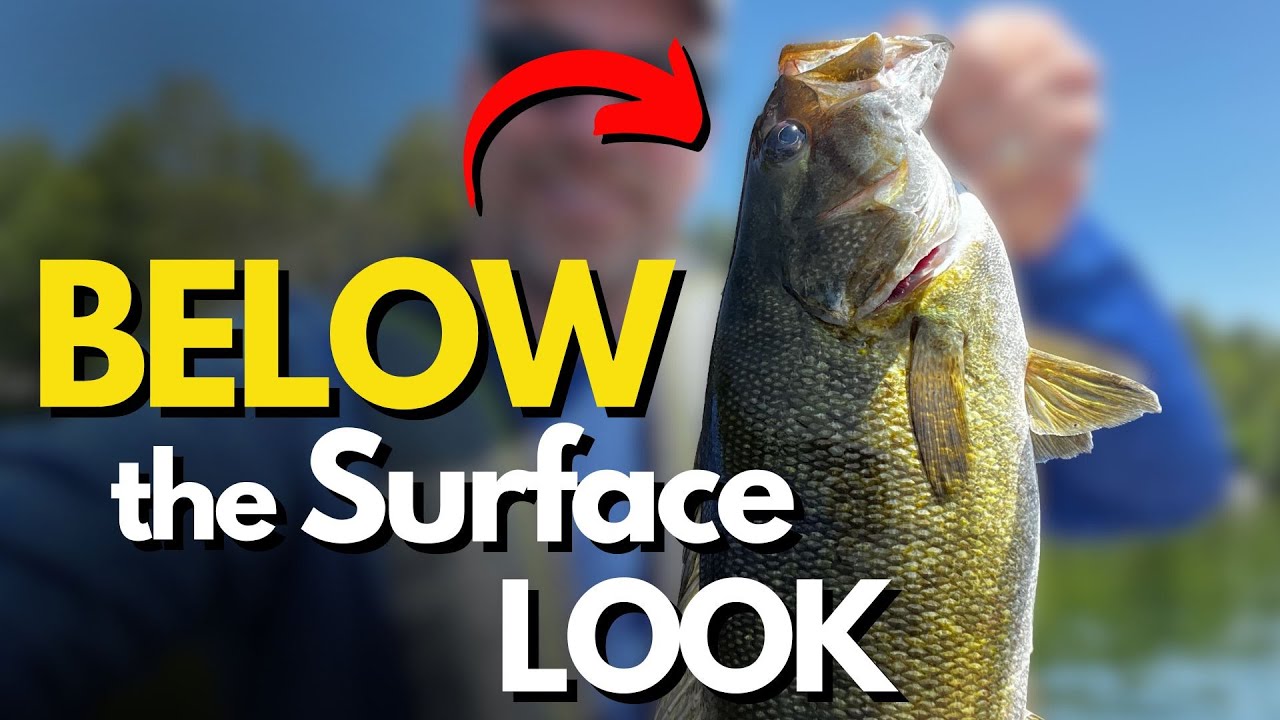
Smallmouth bass on an Indiana river are not just largemouth that happen to live in moving water. They behave differently, position differently, and respond to lures differently. If you fish a smallmouth river the way you fish a reservoir for largemouth, you’ll catch some — but you’ll miss most of what’s there.
Underwater footage of smallmouth has changed how serious anglers think about these fish. They’re more current-oriented, more aggressive in some windows and more cautious in others, and they read structure with a precision that largemouth don’t share. Here are five smallmouth behaviors that translate directly to how you fish the White River, the Wabash, the Tippecanoe, Sugar Creek, and the Eel River.
1. Smallmouth Position Tight to Current Breaks — Tighter Than You Think
A largemouth on a river will sit in a 30-foot zone of slack water behind a laydown. A smallmouth will sit within 18 inches of the actual current break, often facing into the seam, ready to dart out and grab anything that drifts past.
What this means for fishing:
- Cast with precision. A cast that lands six feet downstream of the seam might as well be in another county. Get the bait right at the edge of the current break.
- Work the seam, not the slack. The strike zone is often a 2-foot-wide band where fast water meets slow water — not the entire slack-water pocket.
- Re-cast every break individually. Don’t expect one cast to draw fish from 20 feet away. Cover each rock, each laydown, each current break with multiple, precise presentations.
Best lures for current-break fishing:
- Tube jigs in 3.5-inch with a 1/4 to 3/8 oz internal head, dragged tight to the break.
- Hair jigs in brown, olive, or smoke — slow-rolled across the seam.
- Small swimbaits on a 1/4 oz jighead, swimming through the current edge.
2. Smallmouth Hunt by Vibration as Much as by Sight
Indiana river water is rarely gin-clear. Even on the Tippecanoe and Sugar Creek — two of the clearer smallmouth rivers in the state — there’s always some color in the water. Smallmouth compensate by relying heavily on their lateral line.
What this means:
- Vibration baits punch above their weight on smallmouth rivers. Small chatterbaits, small spinnerbaits with willow blades, lipless cranks, and bladed jigs all produce more than their reputation in clear-water bass-fishing media suggests.
- A jig with a craw trailer that kicks outperforms a jig with a passive trailer — even when bottom-fishing.
- Subtle vibration matters in cold water. A hair jig with a slow, breathing fall outproduces a static plastic in 50-degree water.
This is why hair jigs have a cult following among Indiana river smallmouth specialists. The slight pulsation of marabou in current is a vibration signal smallmouth respond to even when they ignore everything else.
3. Smallmouth Move Vertically More Than Anglers Realize
A common mental model is “smallmouth are bottom-oriented; largemouth are cover-oriented.” Half-true. Smallmouth absolutely use bottom structure, but they also suspend, chase baitfish in the upper water column, and ride the surface during topwater windows.
In Indiana rivers, you’ll see smallmouth:
- Bottom-feeding on crawfish in 4-12 feet of water, often in pools below riffles.
- Suspending in pool eddies at 3-6 feet, watching for baitfish.
- Chasing on the surface during the morning topwater window in summer.
- Cruising along seawalls and bluffs at 2-4 feet, looking for shad or shiners.
What this means:
- Don’t get locked into one depth. If bottom presentations aren’t producing, work mid-column with a soft jerkbait or a small swimbait.
- Try topwater early. A walking bait or popper at first light can produce trophy smallmouth on the White or Wabash.
- Watch for surface activity. Smallmouth busting baitfish on the surface will hammer a fluke or popper cast into the chaos.
4. Smallmouth Are Pack-Oriented
This isn’t true of largemouth, which tend to be solitary or loosely territorial. Smallmouth — especially on river systems — often hold in small groups of 3-8 fish on the same piece of structure.
What this means:
- One bite means more bites are nearby. When you catch a smallmouth, slow down and work the same spot thoroughly. There are usually more.
- The biggest fish often bites first. Smallmouth packs tend to have a clear hierarchy, and the dominant fish will hit your bait before subordinates get a chance. Stay on a spot after a small fish to see if a giant is hiding.
- Spot rotation works. Indiana river smallmouth heavily fish a half-mile of productive river by working 8-10 spots in rotation, returning to each one as fresh fish move into key positions.
5. Smallmouth Respond Strongly to Shadow and Cover Edges
Smallmouth use shadow as cover the way largemouth use vegetation. The shadow line of a bridge, a tall bluff, an overhanging tree, or a docked boat is a literal ambush zone for them.
What this means:
- Fish the shadow side. When a bridge crosses an Indiana river, the upcurrent or downcurrent shadow line — depending on the time of day — holds smallmouth.
- Bluff walls are highways. The deep, shaded edge of a bluff on the White or Wabash is one of the most productive smallmouth zones on the river. Run a tube, swimbait, or hair jig along the wall, varying depth.
- Don’t ignore docks on smallmouth rivers. Boat docks on the Tippecanoe and Lake Michigan tributaries produce smallmouth that use the shaded underside as a hunting blind.
Putting It All Together — A Day on the White River
Here’s how these five behaviors translate to a real day on the White River:
Morning (low light, topwater window):
- Walk the bank or wade into the first pool. Cast a small walking bait or popper across the head of the pool where current enters.
- Work the shadow line of overhanging trees on the upcurrent side of bends.
- Smallmouth are riding higher in the water column and chasing.
Mid-morning (clearing skies):
- Switch to a 3.5-inch tube on 1/4 oz head. Work every current break tight — laydowns, mid-river boulders, the inside of every bend.
- Smallmouth tighten up to structure and the bottom-contact bite turns on.
Afternoon (bright sun):
- Move to bluff walls and shaded structure. Hair jigs, small swimbaits, and Ned rigs all produce.
- Look for pack fish on the deeper, shaded side of the river.
Evening (low light returns):
- Topwater again on the pool tailouts and across riffle drops.
- Smallmouth come back up and feed.
Indiana Rivers and Their Smallmouth Personalities
| River | Smallmouth Character | Best Approach |
|---|---|---|
| White River (East Fork) | Trophy potential, rocky pools | Tubes, hair jigs, swimbaits |
| White River (West Fork) | Numbers river, abundant cover | Crankbaits, soft plastics, chatterbaits |
| Wabash River | Big-water smallmouth, current-oriented | Heavy tubes, swimbaits, jerkbaits |
| Tippecanoe River | Clear water, technical fishing | Finesse — Ned rigs, drop shots, flukes |
| Sugar Creek | Wadeable, scenic, healthy population | Small lures — tubes, in-line spinners, flies |
| Eel River | Underrated, cover-heavy | Spinnerbaits, soft plastics, chatterbaits |
For a deeper look at fall Indiana river smallmouth, see Fall Smallmouth Bass on Indiana Rivers.
Tackle for Indiana Smallmouth
A standard Indiana river smallmouth setup:
- Rod: 6’10” to 7’ medium-power spinning rod with a fast tip.
- Reel: 2500-3000 size spinning reel.
- Line: 10-15 lb braid main with 8-10 lb fluorocarbon leader. Sensitive enough for tubes and Ned rigs, strong enough for big fish in current.
- Lures (essential): 3.5-inch tubes, hair jigs (1/4 oz), small swimbaits, Ned rigs, small crankbaits, soft jerkbaits.
A baitcasting setup for hair jigs and bigger swimbaits — 7’ medium-heavy with a 6.4:1 reel and 12-15 lb fluorocarbon — rounds out the kit for serious smallmouth specialists.
Where to Start
If you’ve never fished Indiana smallmouth water, start at a wadeable section of Sugar Creek or the upper White River near Indianapolis. These rivers are accessible, productive, and forgiving for anglers learning to read current.
For trophy potential and a serious river day, hire a licensed Indiana fishing guide for a float trip on the East Fork of the White or the lower Tippecanoe. A guide will put you on fish on day one and teach you how to read the water for years to come.
Frequently Asked Questions
Where do smallmouth bass live in Indiana rivers?
Indiana smallmouth concentrate in moderate-current rivers with rock and gravel substrate — the White River (East and West Forks), the upper Wabash, the Tippecanoe, Sugar Creek, the Eel River, and parts of the Ohio River system. They hold on rocky shoals, current breaks, deep pools below riffles, and woody cover along stable banks.
What time of year is best for Indiana river smallmouth?
April through June for the pre-spawn and spawn period, and September through early November for the fall feed. Summer fishing is good but requires early morning or late evening timing to beat the heat. Winter smallmouth fishing on Indiana rivers is excellent for those willing to slow down — fish hold in deep wintering pools.
Do Indiana river smallmouth eat crawfish?
Yes — crawfish are the dominant forage for smallmouth in Indiana rivers, especially on rocky-substrate systems like the White River, Tippecanoe, and Sugar Creek. Crawfish-imitating tubes, craws, and jigs in brown, green-pumpkin, and orange patterns excel almost year-round.
What's the best lure for Indiana river smallmouth?
A 3.5-inch tube on a 1/4 to 3/8 oz internal jighead is the most consistent producer. Other top picks: small swimbaits, hair jigs, [soft jerkbaits](/gear/soft-jerkbaits/), [Ned rigs](/gear/ned-rigs/), and small crankbaits. Match the hatch — most Indiana river smallmouth eat crawfish, gobies, and small baitfish.