Trolling Guide for Indiana Lakes
March 19, 2026

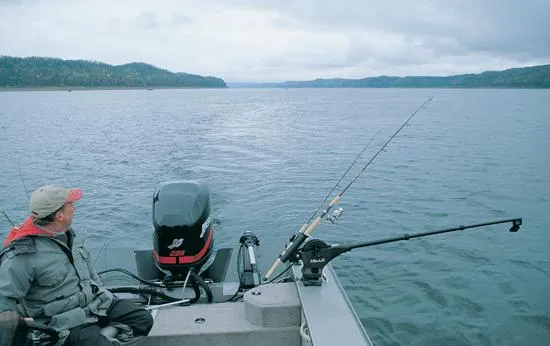
Casting from a single spot and hoping fish swim by works fine on a small pond. But on Indiana’s big reservoirs — lakes like Monroe, Brookville, Patoka, and Salamonie that cover thousands of acres — you need a way to cover water and find scattered fish. That’s where trolling comes in.
Trolling is simply dragging lures behind a moving boat. It sounds basic, but done right, it’s one of the most effective techniques on Indiana water. Trolling lets you cover miles of structure in a single trip, precisely control the depth and speed of your presentation, and put lures in front of fish that would never see a cast from shore.
Whether you’re chasing walleye at Brookville, crappie at Monroe, or salmon on Lake Michigan, this guide covers the gear, techniques, and seasonal strategies you need to troll effectively on Indiana lakes.
Trolling Basics: When and Why It Works
Trolling isn’t always the best approach. Here’s when to use it and when to stick with casting:
Troll when:
- Fish are spread across a large area and you need to locate them
- You’re targeting suspended fish (walleye, white bass) that aren’t holding on specific structure
- Water conditions are clear and fish are spooky — the boat passes well ahead of the lures
- You’re fishing deep structure (15+ feet) where casting is inefficient
- You’re covering a new lake and don’t know where the fish are
Cast when:
- Fish are concentrated on visible structure (docks, weed beds, brush piles)
- You’re fishing shallow water (under 6 feet) where boat noise spooks fish
- Current or wind makes boat control for trolling difficult
- You’ve located a school and want to stay on them
On most Indiana reservoirs, the best anglers do both. They troll to find fish, then switch to casting or vertical jigging once they’ve dialed in a location.
Species-Specific Trolling Strategies
Walleye: 1.5-2.5 MPH
Walleye are the bread-and-butter trolling species in Indiana. Trolling is far and away the most effective technique for catching walleye on Hoosier reservoirs, where these fish roam open water and relate to subtle bottom contours that are nearly impossible to fish effectively by casting.
Speed: 1.5-2.5 mph. Start at 1.8 mph and adjust based on what draws strikes. In cold water (spring, water temps below 55 degrees), drop to 1.0-1.5 mph. In warm water above 70 degrees, push to 2.0-2.5 mph or even slightly faster.
Lures:
- Diving crankbaits — The go-to. Rapala Shad Raps (#5, #7, #9), Reef Runner 800 series, Berkley Flicker Shads, and Bandit Walleye Deep lures all produce on Indiana lakes. Match color to the primary forage: shad patterns (silver/black, chrome/blue) in most reservoirs, perch patterns in lakes with strong perch populations.
- Bottom bouncers with crawler harnesses — A Midwest trolling classic. A 1-2 oz bottom bouncer keeps your bait ticking along the bottom while a spinner harness tipped with a nightcrawler trails 3-4 feet behind. Extremely effective on Brookville and Salamonie.
- Worm harnesses behind in-line weights — Similar concept to bottom bouncers but with a fixed sinker. Good for maintaining consistent depth on flat bottoms.
Depth: In spring (April-May), walleye are often in 8-15 feet near spawning areas. Summer walleye move to 15-30 feet on main lake points, humps, and the old river channel. Fall walleye follow baitfish and can be anywhere from 10-25 feet.
Spread: Use planer boards to spread your lures out to the sides of the boat. This covers more water, reduces spooking fish directly under the boat, and lets you troll along contour lines that don’t follow a straight path. Running 4-6 lines with boards is standard for serious walleye trolling.
Best Indiana lakes for trolling walleye:
- Brookville Lake — The best walleye lake in Indiana, period. Trolling the main lake points and the old Whitewater River channel produces walleye from 2-10 pounds.
- Salamonie Lake — Excellent walleye population, less fishing pressure than Brookville. Troll the dam end and main channel breaks.
- Mississinewa Lake — Good walleye numbers with less boat traffic. The upper lake near the river inlet is productive.
- Tippecanoe Lake — A natural lake in Kosciusko County with a healthy walleye population. Troll the deep basins and rock reefs.
Crappie: 0.5-1.0 MPH
Trolling for crappie — often called “spider rigging” or “long-lining” — is devastatingly effective on Indiana reservoirs. This technique covers water and finds suspended crappie schools that bank anglers and even jig fishermen miss entirely.
Speed: 0.5-1.0 mph. Crappie are delicate biters with soft mouths. Too fast and you’ll either rip hooks free or blow past fish before they can commit. Crawling speed is the key.
Lures:
- Small jigs (1/16-1/8 oz) — Tube jigs, curly tail grubs, and hair jigs in white, chartreuse, pink, or black/chartreuse. Tip with a small minnow for extra attraction.
- Small crankbaits — Bandit 100 and 200 series, Strike King Bitsy Minnows, and Bobby Garland Baby Shad swimbaits trolled behind a long line.
- Live minnows — A plain hook and split shot with a fathead minnow trolled slowly behind the boat catches crappie everywhere.
Technique: Spider rigging uses multiple long rods (10-14 feet) fanned out from the bow of the boat, each at a slightly different depth. The boat moves slowly forward while the angler watches rod tips for the subtle dip that signals a crappie bite. You can cover an entire creek arm in an hour and pinpoint exactly where the fish are stacked.
For simpler setups, long-lining just two rods out the back of the boat at 50-80 feet behind the transom also works well. The key is keeping speed low and consistent.
Best Indiana lakes for trolling crappie:
- Monroe Lake — Indiana’s largest lake has enormous crappie schools that roam the standing timber in the upper lake. Spider rigging the creek arms from April through June is a Hoosier tradition.
- Patoka Lake — The timber-filled upper lake is crappie central. Troll slowly through the flooded timber and brush.
- Mississinewa Lake — Good crappie population, especially in the upper lake. Troll the edges of creek channels.
- Cecil M. Harden Lake (Raccoon Lake) — Underrated crappie trolling. The brushpile program and standing timber create perfect trolling lanes.
White Bass and Hybrid Striped Bass: 2.0-3.0 MPH
White bass and hybrid stripers are open-water schooling fish that move constantly. Trolling is often the only effective way to find them when they’re not visibly chasing bait on the surface.
Speed: 2.0-3.0 mph — significantly faster than walleye trolling. White bass and hybrids are aggressive and willing to chase fast-moving baits.
Lures:
- Inline spinners (Rooster Tails, Blue Fox Vibrax) in white or chartreuse
- Small crankbaits (Rapala Shad Rap #5, Bandit 200) in shad patterns
- Blade baits and spoons trolled on a tight line
Technique: Troll along main lake points, over humps, and across flats where baitfish schools show on your electronics. White bass school by the hundreds, so when you catch one, mark the spot and make repeated passes. They’re often suspended at a specific depth — pay attention to where in the water column your fish hit.
Best Indiana lakes for trolling white bass:
- Monroe Lake — Big white bass population, especially in the main lake basin
- Brookville Lake — White bass and hybrid stripers. Troll the dam end and the mid-lake points.
- Cecil M. Harden Lake — Strong white bass fishery. Troll the open water from May through September.
Largemouth Bass: 2.0-3.5 MPH
Trolling for largemouth bass isn’t as common as casting, but it’s a powerful technique for locating bass on unfamiliar water or finding deep summer schools scattered across a big reservoir.
Speed: 2.0-3.5 mph. Largemouth respond to faster presentations than walleye, especially in warm water.
Lures:
- Deep-diving crankbaits — Strike King 6XD, Rapala DT-16, Norman DD-22 in crawfish, shad, or chartreuse patterns
- Medium-diving crankbaits along channel swings and secondary points
- Lipless crankbaits (Rat-L-Trap) ripped over submerged grass beds
Technique: Troll along creek channel breaks, points, and the transition zones where shallow flats drop into deeper water. Focus on depth changes — bass position where the bottom contour shifts. Mark every fish you catch on GPS and look for the pattern (depth, bottom type, structure type). Once you’ve caught 2-3 fish in similar conditions, switch to casting and work that pattern more thoroughly.
Best Indiana lakes for trolling bass:
- Monroe Lake — The best bass lake in Indiana is also the best for trolling crankbaits. The extensive creek channel system and stumpy flats are tailor-made for trolling.
- Patoka Lake — Deep channel breaks and timber-lined points. Troll medium-divers along the creek arms.
- Geist Reservoir — Good for trolling crankbaits along the dam face and the channel in the main lake body.
Essential Trolling Gear
You don’t need a $50,000 walleye boat to start trolling, but certain gear makes a significant difference in your results.
Rod Holders
Minimum two, ideally four to six. Rod holders are the foundation of a trolling setup. They free your hands and let you run multiple lines at controlled angles. Scotty, Ram, and Berkley all make clamp-on rod holders that fit any boat. Budget $20-40 each.
Trolling Rods
Trolling rods are longer (7-9 feet) and have a softer, more parabolic action than casting rods. The flex absorbs the constant pull of the lure and acts as a shock absorber when a fish strikes at trolling speed. A stiff casting rod will rip hooks out of fish at speed. Look for medium or medium-light power trolling rods from Okuma, Shakespeare, or Daiwa.
Line Counter Reels
This is the single most important trolling upgrade. Line counter reels track exactly how much line you have out, which directly controls how deep your lure runs. Without a line counter, you’re guessing at depth every time you re-deploy. Okuma Convector and Daiwa Accudepth are popular choices in the $40-80 range.
Planer Boards
Planer boards clip onto your line and pull it out to the side of the boat, spreading your trolling spread laterally. This covers more water, keeps lures away from your boat wake, and lets you troll along irregular contours. In-line boards (Church Tackle TX-6, Off Shore Tackle OR-12) are the most practical for Indiana lake fishing.
Downriggers
Downriggers use a heavy weight on a cable to pull your lure to a precise depth. They’re essential for Lake Michigan salmon and trout trolling where fish may be 40-100+ feet down, but on most Indiana inland lakes, you rarely need them. Diving crankbaits, lead core line, or snap weights can reach every depth you’ll encounter on Brookville, Monroe, or Salamonie. If you fish Lake Michigan, invest in downriggers. If you fish only inland lakes, spend that money on planer boards instead.
Trolling Motor with Speed Control
A bow-mount trolling motor with GPS spot-lock and speed control (Minn Kota Terrova, Lowrance Ghost) makes low-speed crappie trolling much easier. For walleye and bass trolling at 1.5-3.5 mph, most anglers use their outboard at low RPM or a kicker motor.
Depth Control: Getting Your Lure to the Fish
The most critical variable in trolling is depth. If your lure isn’t running at the same depth the fish are holding, nothing else matters. Here are the four main methods for controlling depth:
Diving Lip Charts
Every crankbait dives to a specific depth based on its lip design and the amount of line you let out. Manufacturers publish dive curves showing depth at various line lengths. For example, a Rapala Shad Rap #7 on 10 lb monofilament reaches approximately:
| Line Out (feet) | Running Depth (feet) |
|---|---|
| 50 | 5-6 |
| 75 | 7-8 |
| 100 | 9-10 |
| 125 | 10-11 |
| 150 | 11-12 |
These numbers vary with line diameter, speed, and lure condition. Experiment and mark what works.
Lead Core Line
Lead core line sinks at a rate of approximately 5 feet per color (each color is 10 yards). Running 3 colors of lead core with a crankbait behind it adds roughly 15 feet to the lure’s natural diving depth. Lead core is popular at Brookville for getting walleye crankbaits down to 20-25 feet without a downrigger.
Snap Weights
Snap weights are clip-on sinkers (1-3 oz) that attach to your line at a measured distance from the lure. They pull the lure deeper without requiring a complete line change. The Offshore Tackle OR-20 snap weight system is the standard. Deploy 50 feet of line, clip on a 2 oz snap weight, then let out another 50 feet. Simple and effective.
Downriggers
For precise depth control beyond 25 feet, downriggers are unmatched. A 10 lb cannonball on a cable takes your lure to exactly the depth you set. When a fish strikes, the line releases from the clip and you fight the fish on a free line. Primarily used on Lake Michigan for chinook salmon, coho, lake trout, and steelhead.
Seasonal Trolling Calendar
Spring (April-May)
Water temperatures are rising from the low 50s into the 60s. Fish are shallow.
- Depth: 5-15 feet
- Target species: Walleye (pre-spawn and post-spawn), crappie (moving to spawning flats), white bass (spawning runs up tributaries)
- Strategy: Troll slowly (1.0-1.8 mph) along shallow points, spawning flats, and the upper ends of creek arms where warmer tributary water enters the lake. Shallow-running crankbaits and slow-trolled jigs are most effective.
- Key lakes: Brookville (walleye), Monroe (crappie), Salamonie (walleye)
Summer (June-August)
Water temperatures peak in the upper 70s to low 80s. Fish move deeper to find comfortable water and forage.
- Depth: 15-30 feet (deeper in clear lakes)
- Target species: Walleye (deep structure), bass (channel breaks), crappie (brush piles and suspended over basins), white bass (open water)
- Strategy: Troll early morning (5-9 AM) and late evening for best results. Midday fishing can still produce in deep water. Increase speed slightly as water warms. Use planer boards to spread your presentation. This is peak trolling season.
- Key lakes: Brookville (walleye), Monroe (bass and crappie), Patoka (crappie), Mississinewa (multi-species)
Fall (September-November)
Water cools and fish follow baitfish. Depths become variable as thermoclines break down.
- Depth: 10-25 feet, highly variable
- Target species: Walleye (aggressive fall feeding), bass (following shad schools), white bass (schooling on shad)
- Strategy: Follow the baitfish. Use your electronics to locate shad schools, then troll through and around them. Fall walleye trolling at Brookville and Salamonie can produce some of the biggest fish of the year. Speeds of 2.0-2.5 mph trigger reaction strikes from aggressive fall walleye.
- Key lakes: Brookville (walleye), Salamonie (walleye), Monroe (bass)
Winter (December-March)
Trolling slows down on most Indiana inland lakes. Water temperatures below 45 degrees make fish lethargic. Ice may cover some lakes.
- Strategy: If open water exists, ultra-slow trolling (0.8-1.2 mph) with small cranks can pick off walleye on Brookville and Salamonie. Most anglers switch to vertical jigging or wait for spring.
Best Trolling Lakes in Indiana
Here’s a summary of the state’s top trolling waters:
| Lake | Acres | Primary Trolling Species | Best Season |
|---|---|---|---|
| Brookville Lake | 5,260 | Walleye, white bass, hybrid striper | April-November |
| Monroe Lake | 10,750 | Bass, crappie, white bass | May-October |
| Salamonie Lake | 2,665 | Walleye | April-June, Sept-Nov |
| Mississinewa Lake | 3,180 | Walleye, crappie | April-October |
| Patoka Lake | 8,880 | Crappie, bass | April-June |
| Cecil M. Harden Lake | 2,060 | White bass, crappie | May-September |
| Tippecanoe Lake | 772 | Walleye | April-June, Sept-Oct |
| Lake Michigan | — | Salmon, steelhead, lake trout | April-October |
Lake Michigan: A Different Trolling Game
Trolling on Lake Michigan from Indiana ports — primarily Michigan City and Portage/Burns Harbor — is a completely different experience from inland lake trolling. You’re targeting chinook salmon, coho salmon, steelhead, lake trout, and brown trout in deep, cold water that may be 50-300 feet deep.
Lake Michigan trolling typically requires:
- Downriggers (2-4 per boat)
- Dipsy divers and lead core for spread
- Spoons (Stinger, Moonshine, Dreamweaver) and plugs (J-Plugs, Rapalas)
- Trolling speeds of 2.0-3.2 mph
- Electronics capable of marking fish in deep water
Charter boats out of Michigan City are the best way to experience Lake Michigan trolling if you don’t have the equipment. Check our fishing guides directory for Lake Michigan charter captains.
Trolling Tips That Catch More Fish
Use GPS for consistent speed. Your boat’s speedometer measures speed through the water, but GPS measures speed over ground. Wind and current can create a significant difference. Fish respond to a specific lure speed, and GPS keeps you honest.
Mark waypoints when you catch fish. Every catch is data. After several fish, you’ll see a pattern — depth, structure type, distance from shore. Make repeated passes through productive zones.
Make S-turns. Periodically turning the boat in wide S-curves changes the speed of your lures. Inside lures slow down and sink; outside lures speed up and rise. This speed change often triggers strikes from following fish that won’t commit to a steady retrieve.
Match bait size to forage. Indiana reservoirs are primarily shad-based fisheries. In spring, the shad are small (1-2 inches), so use smaller crankbaits. By fall, shad are 3-5 inches, and larger lures produce better.
Check your lures frequently. Weeds, debris, or a fouled hook kills your lure’s action. Reel in and check every 15-20 minutes, or immediately if your rod tip action changes.
Troll with the wind. Trolling into a headwind reduces your actual lure speed (good for walleye in cold water). Trolling downwind increases effective speed. Use wind direction as another speed control tool.
Stagger your line lengths. When running multiple rods, vary the amount of line out so your lures run at slightly different depths. This helps you find the exact depth fish are holding. When one rod keeps producing, adjust the others to match its line length.
Keep a trolling log. Record the lake, date, water temperature, lure, color, line out, speed, depth, and catch for every productive pass. Over a season, this log becomes the most valuable fishing tool you own.
Getting Started
You don’t need a fully rigged trolling boat to start. A basic setup — one line counter reel, one trolling rod, a handful of crankbaits, and a single rod holder — lets you learn the fundamentals. Put a Rapala Shad Rap behind the boat at Brookville Lake in May, troll along a main lake point at 1.8 mph, and wait for a walleye to load up the rod. That first fish will hook you on trolling.
For species-specific tips, see our guides on walleye fishing, crappie lakes, and bass lakes in Indiana. Need local lures and advice? Visit a bait shop near the lake you plan to fish — they’ll know exactly what’s running and at what depth.
Frequently Asked Questions
What are the best trolling lakes in Indiana?
Brookville Lake is Indiana's premier trolling lake for walleye. Monroe Lake is outstanding for trolling crankbaits for bass and long-lining for crappie. Salamonie Lake and Mississinewa Lake both produce excellent walleye trolling. For Lake Michigan salmon and steelhead trolling from Indiana ports, Michigan City and Portage are the main launch points.
What speed should I troll for walleye?
Walleye trolling speed in Indiana typically ranges from 1.5 to 2.5 mph. In cold water (spring), slow down to 1.0-1.5 mph. In warm water (summer), speeds of 2.0-2.5 mph often trigger more strikes. Use a GPS for precise speed control rather than relying on your speedometer, which can be affected by wind and current.
Do I need a downrigger to troll in Indiana?
No. Most Indiana lakes are shallow enough (under 30 feet) that diving crankbaits, lead core line, or snap weights can reach the fish without a downrigger. Downriggers are most useful on Lake Michigan for salmon and trout trolling at 40-100+ feet. On inland lakes, planer boards are a more versatile investment.
Can you troll for bass in Indiana?
Yes. Trolling deep-diving crankbaits along channel breaks and points at 2.0-3.5 mph is a proven method for locating largemouth bass on Indiana reservoirs. It's especially effective in summer when bass are scattered on deep structure. Many tournament anglers use trolling to locate schools, then switch to casting once they find fish.