Wind and Bass Fishing in Indiana — How to Use It Instead of Fighting It
April 27, 2026
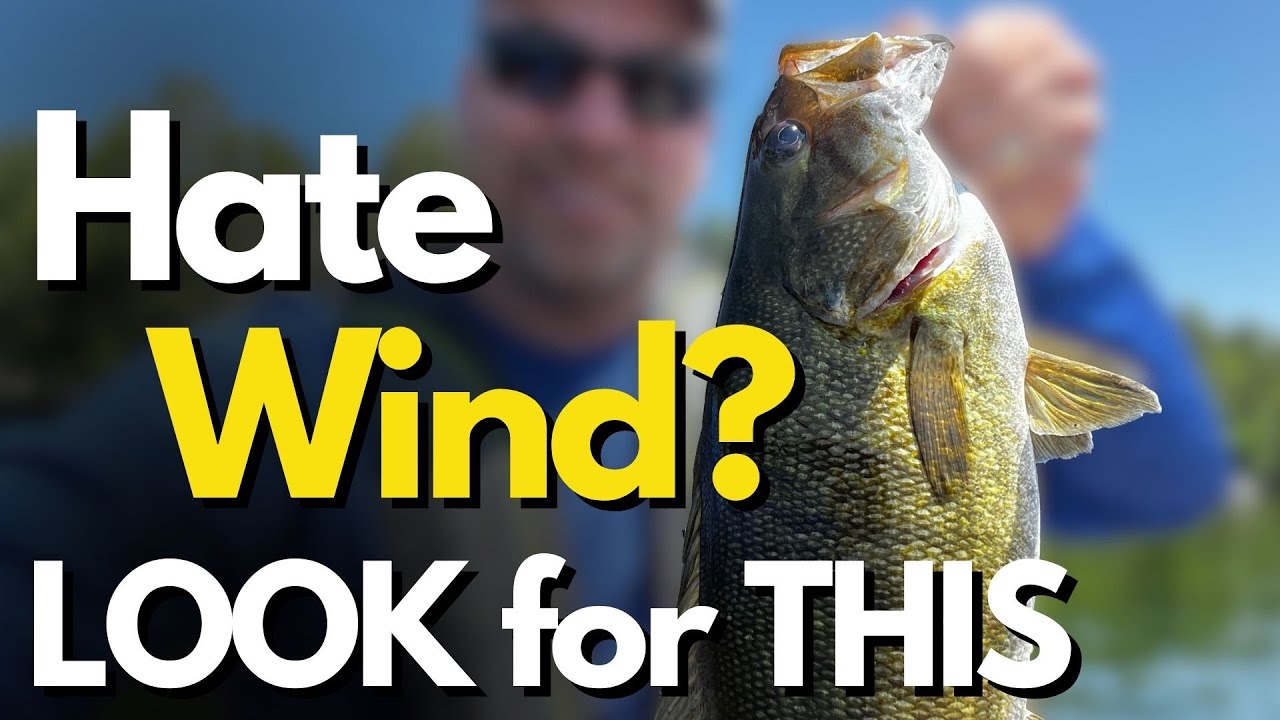
Most anglers treat wind as an obstacle. They look at the forecast, see 15-20 mph sustained, and decide to stay home or fish a sheltered cove. They miss the point. Wind is one of the most reliable triggers for aggressive bass behavior on Indiana lakes — and the anglers who learn to fish it productively catch more fish than the ones who hide from it.
The mistake isn’t fishing in the wind. The mistake is fishing the calm side of the lake when the bass are on the wind-blown side.
What Wind Actually Does to a Lake
Three physical effects of wind change bass behavior:
Wind pushes water across the surface. This creates a slow, steady current that drifts baitfish, plankton, and surface-oriented forage to the windward shore. Where the food goes, the bass follow.
Wind oxygenates the water. Wave action mixes air into the surface layer, raising dissolved oxygen along the windward shoreline. In the heat of summer when oxygen drops elsewhere, the wind-blown side is the most-oxygenated zone of the lake.
Wind breaks up surface light. A choppy surface scatters light, reducing visibility into the water from above and below. Bass become bolder and feed more aggressively. They lose the cautious posture they hold under flat, glassy conditions.
The combined effect: the windward shoreline becomes a feeding zone. Baitfish are stacked there. Oxygen is high. Bass feel covered by the chop. They move shallow and they eat.
The Cardinal Mistake — Fishing the Calm Side
Anglers fish the calm side of the lake for one reason: it’s easier to fish there. Boat control is simple, casts are accurate, and conversations are quieter. But on a windy day, the calm side is empty water. The bass that were on those banks the day before have followed the baitfish across the lake.
On a windy day, fish the windy side. Yes, it’s harder. Yes, you’ll fight the boat. The fish are there, and they’re feeding.
How to Fish Wind-Blown Banks
A few principles:
1. Position the Boat Off the Wind
Don’t beach yourself on the windward shore. Position your boat 30-50 feet off the bank, parallel to the shoreline, with the wind pushing you toward the shore. Use Spot-Lock to hold position, or drift slowly along the bank with a drift sock to control speed.
Cast at a 45-degree angle into the wind, retrieving the bait back across the breakers and into the rocky or weedy strike zone.
2. Pick Moving Baits That Match the Energy
In 15+ mph wind, finesse fishing is impractical for two reasons: you can’t control the boat well enough to fish slowly, and the fish don’t want a slow bait anyway. They want a target that matches the high-energy environment.
Best wind-blown lures:
- Spinnerbaits with double willow blades for fast retrieves. White-and-chartreuse in stained water; pearl in clear.
- Chatterbaits with a swimbait trailer. The vibration cuts through wave action and triggers reaction strikes.
- Lipless crankbaits ripped through grass or over rocky points. Red, chrome-and-blue, and firetiger are top wind-day colors.
- Squarebill crankbaits burned along riprap and gravel banks.
- Topwater walking baits when bass are surface-busting in the wind. The chop hides the lure’s shortcomings.
Skip:
- Drop shots, Ned rigs, shaky heads, and other finesse presentations. They work in calmer conditions.
- Slow, deep presentations — you can’t maintain feel in the wind.
- Anything that requires precise casting accuracy. The wind will mess with your accuracy and you’ll fight it all day.
3. Cover Water Fast
Wind-blown banks are productive but the strike zone is narrow — usually a 5-15 foot band along the windward shore. Cover water fast and let the active fish find you. If you’re not getting bites in the first 200 yards of a wind-blown bank, move to the next one.
This is a power-fishing day, not a soak-and-wait day.
Indiana Lakes and Wind Patterns
Different Indiana lakes have different “wind behavior” based on their orientation:
Monroe Lake
Monroe is roughly oriented southwest-to-northeast, with most of the long arms running in those directions. A southwest wind creates miles of productive windward shore on the northeast banks of the major arms. Wind from the northwest hits the south-facing banks of the lower lake.
Best wind days at Monroe: sustained 10-15 mph from the southwest in the spring; northwest in the fall.
Patoka Lake
Patoka is east-to-west oriented in the main basin. A west wind creates wind-blown bass fishing on the eastern shorelines and points. Patoka’s many creek arms run in different directions, so there’s almost always a wind-blown shore somewhere.
Brookville Lake
Brookville runs roughly north-to-south in the main lake, with creek arms east and west. A south or north wind creates strong axial current up or down the lake, while east-west winds produce localized wind-blown banks in the creek arms.
Geist Reservoir
Geist’s main arm runs roughly southwest-to-northeast. Strong southwest winds produce excellent fishing on the northeast banks. The lake’s narrow profile and developed shoreline mean wind-blown riprap and seawalls are gold on breezy days.
Eagle Creek Reservoir
Eagle Creek is north-south oriented and very wind-affected. North winds in the fall and south winds in the spring set up dramatic wind-blown bites on the opposite ends of the lake.
Lake Wawasee and Northern Natural Lakes
Wawasee, Webster, Tippecanoe, and Maxinkuckee are all roundish natural lakes that produce wind-blown bites on whichever shoreline the wind is currently hitting. Watch the wind direction the morning of and adjust accordingly.
Wind Direction Matters
Not every wind direction produces equally:
- Southwest wind is the classic Indiana spring producer. It brings warmer air, drives baitfish to the northeast side of most lakes, and triggers aggressive feeding.
- South wind is similar — productive in spring and fall, less so in summer when it brings hot air and stable high pressure.
- North wind typically brings cold fronts. The day a north wind sets up is often slow; the day after, when the wind moderates and water clears, can be excellent.
- East wind is the most-debated direction. Old salt-water adage “wind from the east, fish bite least” has some truth on Indiana lakes too, especially in summer. But moderate east winds in spring can produce well.
- West wind is generally productive, especially when sustained for several hours.
Wind Strength — The Goldilocks Zone
Wind has a useful range:
- Under 5 mph: Not enough to push bait or oxygenate. Fishing-as-usual.
- 5-15 mph: The productive range for most Indiana lakes. Bass are on the windward side and feeding.
- 15-25 mph: Still productive if you can handle the boat. Fish are concentrated and aggressive.
- 25+ mph: Boat control becomes dangerous. Reservoirs build big chop. Hike to a sheltered point or call it a day.
Most Indiana fishing days fall in the 5-15 mph range, which is exactly where wind helps you the most.
Boat Control Tools
Wind days demand boat-control gear:
- Spot-Lock or anchor mode trolling motor — by far the best investment for wind-day fishing. Hold position on a productive spot and fish it thoroughly.
- Drift sock / sea anchor — slows wind-driven drift to a fishable pace. A 36” drift sock is the standard for most Indiana fishing boats.
- Power Pole or shallow-water anchor — for fishing shallow flats in wind. Stick the pole down and stay put.
- Heavy traditional anchor — the old-school option. Works but requires manual setting and resetting.
If you don’t have any of these, fish from shore on a wind-blown bank. Many of the best wind-day fishing spots on Indiana reservoirs are accessible from shore, and you eliminate the boat-control problem entirely.
When to Skip the Wind
Some days, wind isn’t your friend:
- Bluebird, post-front days with hard north or northwest wind. Bass are recovering from the front and the wind isn’t helping. Wait a day.
- Sustained 25+ mph. Safety matters more than fishing.
- Cold rain with 30-degree-drop air temperatures. The combination shuts everything down.
But on most days when wind is in the 5-20 mph range, you should be fishing — and you should be on the windy side.
Putting It Together
Next time you check the forecast and see “wind 15 mph SW,” don’t sigh and pick a sheltered cove. Look at the lake map and figure out where the bait is going to pile up. Get there. Fish moving baits. Cover water fast. Let the chop hide your mistakes.
That’s how you turn an “unfishable” day into one of the best days of the year.
For more on bass behavior and Indiana fishing conditions, see How Barometric Pressure Affects Fishing in Indiana, Reservoir Current and Bass, and Bass Fishing After Heavy Rain.
Frequently Asked Questions
Should I fish on a windy day?
Yes — wind days often produce the best bass fishing of the week, especially in the spring and fall. Wind pushes baitfish, oxygenates the water, breaks up surface light, and puts bass in predictable feeding positions on wind-blown structure. The catch is that boat control is harder. Plan accordingly.
Where do bass go when it's windy?
Bass move to the windward side — the shoreline and structure that the wind is blowing into. Wind pushes baitfish and plankton against this side, and the bass follow. Wind-blown points, riprap, gravel banks, and the upwind end of bays are all prime targets on windy days.
What lures work best in the wind?
Moving baits that match the higher energy level — spinnerbaits, chatterbaits, swim jigs, lipless cranks, and squarebill crankbaits. Bass in wind-blown areas are usually in feeding mode and want a target that mimics disoriented baitfish. Slow finesse presentations are harder to control and less effective in 15+ mph wind.
How do I control my boat in the wind?
Three options: a Spot-Lock-equipped trolling motor (best for fishing in place), a drift sock or sea anchor (slows your drift to a fishable speed), or anchoring (for shoreline fishing on shallow flats). Without these tools, fishing 15+ mph wind from a boat is exhausting and ineffective.