Overview
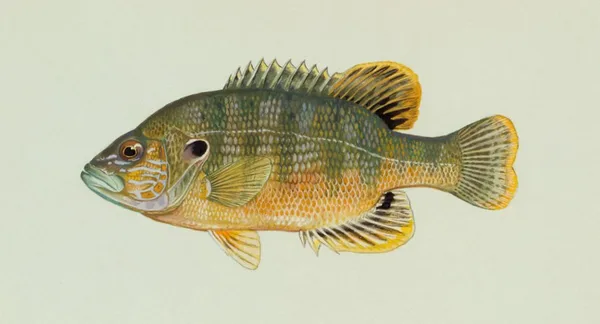
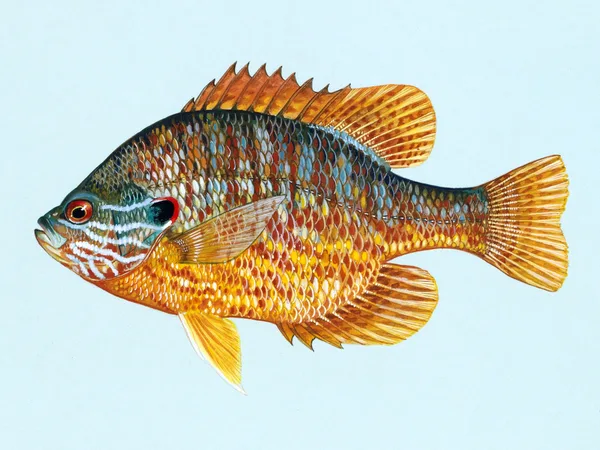
Hybrid sunfish are an intentional cross between female bluegill and male green sunfish, bred to combine the best traits of both parent species. They inherit the bluegill’s deep body and willingness to bite with the green sunfish’s aggressive temperament and larger mouth. The result is a panfish that grows faster, fights harder, and reaches harvestable size more quickly than either parent. Indiana DNR uses hybrid sunfish in its pond management and community fishing programs to provide quality panfish opportunities across the state.
Hybrid sunfish typically show characteristics of both parents. They often have a body shape intermediate between bluegill and green sunfish, with olive to blue-green coloring, faint vertical bars, and a slightly larger mouth than a pure bluegill. Coloring can vary significantly since the cross produces a range of intermediate traits. They are sometimes called “hybrid bluegill” in stocking catalogs.
Where to Find Them in Indiana
Hybrid sunfish are not naturally occurring — they exist only where they have been stocked. Indiana DNR regularly stocks them in community fishing ponds, state property ponds, and urban fishing sites throughout the state. The DNR publishes annual stocking reports that list specific locations and quantities.
Some of the more consistently stocked areas include community fishing ponds in the Indianapolis metropolitan area, Fort Wayne city park ponds, and ponds on state fish and wildlife areas such as Atterbury FWA in Bartholomew County, Willow Slough FWA in Newton County, and Glendale FWA in Daviess County.
Many Indiana county parks maintain small fishing ponds that receive hybrid sunfish stockings. These ponds often have easy access, paved paths, and nearby parking — making them ideal for families and beginning anglers. Contact your local DNR district biologist or check the fish stocking database on the Indiana DNR website for the most current information.
Private pond owners in Indiana also stock hybrid sunfish extensively. Many commercial fish hatcheries in the state sell hybrid sunfish fingerlings for pond stocking, and they are one of the most popular choices for new pond development alongside largemouth bass and channel catfish.
Techniques
Hybrid sunfish are aggressive feeders that respond well to simple presentations. A light or ultralight rod with 4-pound monofilament, a small bobber, and a size 8 hook baited with a wax worm, cricket, or piece of nightcrawler is the most productive approach. Set the bobber 2 to 4 feet deep and fish near any available cover — docks, weed edges, brush piles, or shoreline structure.
For lure fishing, 1/32- to 1/16-ounce beetle spins and small inline spinners retrieved slowly along the edges of cover are effective search tools. Micro jigs tipped with small soft plastics or live bait work well when fish are holding deeper or in specific structure.
Fly anglers can target hybrid sunfish with small poppers and wet flies on a 3- or 4-weight rod. Their aggressive nature and willingness to hit surface presentations make them excellent fly rod fish.
Techniques for Ponds
Since most hybrid sunfish are found in ponds and small lakes, bank fishing is the norm. Focus on these areas: the deep end of a pond near the dam, around any installed fish habitat structures, near dock pilings, and along shorelines with overhanging vegetation. Most stocked ponds in Indiana have some form of installed structure — brush piles, stake beds, or PVC habitat — and hybrid sunfish concentrate around these features.
Tips
The best fishing for hybrid sunfish typically comes one to two years after stocking, when the fish have reached 7 to 9 inches. Newly stocked ponds may take a season before the fish are big enough to provide quality fishing. Check stocking dates for your target pond and plan accordingly.
Because hybrid sunfish have low reproductive capacity, harvest management matters. In heavily fished ponds, catch-and-release or reduced harvest helps maintain the fishery between stocking cycles. If you notice declining size and catch rates at a favorite pond, the population may need restocking — report it to the managing agency.
Hybrid sunfish remain active through the warmest summer conditions. They feed well in water temperatures from the mid-60s through the low 80s, making them reliable targets from May through August. Fish early and late in the day during the peak of summer. In spring, look for them in the shallowest available water as temperatures climb into the 60s — they move shallow quickly once conditions warm.