Overview
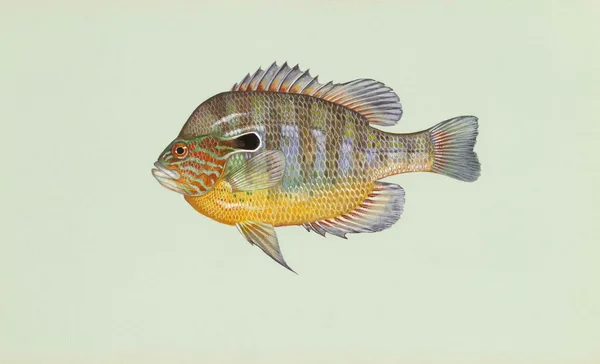
The longear sunfish is widely considered one of the most beautiful freshwater fish in North America, and Indiana’s clear streams hold healthy populations of this striking panfish. With vivid turquoise facial markings, orange and red body coloring, and their signature elongated ear flap, longear sunfish are unmistakable once you know what to look for. They are smaller than bluegill on average but make up for it with aggressive feeding behavior and a willingness to hit surface presentations.
Longear sunfish occupy a specific niche in Indiana’s aquatic ecosystems. They prefer clear, flowing water over rock and gravel substrate — conditions that are most common in the unglaciated hill country of southern Indiana. While they overlap with bluegill and green sunfish in some waters, longear sunfish are the dominant sunfish species in many of the state’s best-quality streams.
Where to Find Them in Indiana
Southern Indiana is the stronghold for longear sunfish. The Blue River in Crawford and Harrison counties supports one of the best populations in the state. Indian Creek in Lawrence and Martin counties, along with its tributaries, is another top destination. Clear Fork of Salt Creek near Bloomington holds good numbers, and the rocky stretches of the East Fork of the White River produce longear sunfish regularly.
In central Indiana, look for them in the cleaner tributaries of the Wabash River system. Sugar Creek in Montgomery and Parke counties, Big Walnut Creek, and portions of the upper Eel River all hold longear populations. They are generally absent from the flat, silted agricultural streams of northern Indiana, though scattered populations exist in some of the cleaner glacial-fed streams.
Focus your effort on stream sections with exposed bedrock, gravel riffles, and overhanging sycamore trees. Longear sunfish hold in the pools immediately downstream of riffles and along rocky banks with moderate current.
Techniques
Ultralight spinning gear with 2- to 4-pound line is ideal. A 1/32-ounce jig head with a small cricket or wax worm, drifted through pools and along rocky banks, is the most productive approach. Cast upstream and let the current carry the bait naturally through holding water.
Fly fishing for longear sunfish is outstanding. A 3- or 4-weight rod with small poppers, foam spiders, or dry flies in sizes 10 through 14 provides some of the most entertaining fishing available in Indiana. Woolly buggers and small nymphs also work well when fish are holding deeper.
Small inline spinners in sizes 0 and 00 — particularly in gold or copper finishes — are effective when retrieved across current seams and along shaded banks.
Tips
Longear sunfish spawn from late May through June, building nests in gravel shallows. Males guard nests aggressively and will hit nearly anything that passes close. Outside of spawning season, they feed primarily on aquatic insects and small invertebrates, so matching the hatch with small presentations is key.
Wade fishing is the best way to access longear habitat. Move slowly upstream, keeping a low profile, and target every pool, eddy, and undercut bank. Polarized sunglasses are essential — you can often sight-fish for longear sunfish in the clear water they inhabit. Early morning and late afternoon produce the best topwater action, but longear sunfish will feed throughout the day in shaded stream sections.