Bigmouth Buffalo Fishing in Indiana
The bigmouth buffalo is one of the largest and most overlooked freshwater fish in Indiana. Capable of exceeding 50 pounds and living well over a century, these massive members of the sucker family inhabit the state’s biggest river systems and their connected backwaters. The Indiana state record stands at an impressive 53 pounds 14 ounces, caught from Oak Hill Pond in Gibson County in 2002. Indiana DNR logs all buffalo species under a single combined “Buffalo” record category rather than keeping separate records for bigmouth, smallmouth, and black buffalo. Despite their size and abundance, bigmouth buffalo receive relatively little attention from rod-and-reel anglers, making them a primary target for Indiana’s growing bowfishing community.
Identification
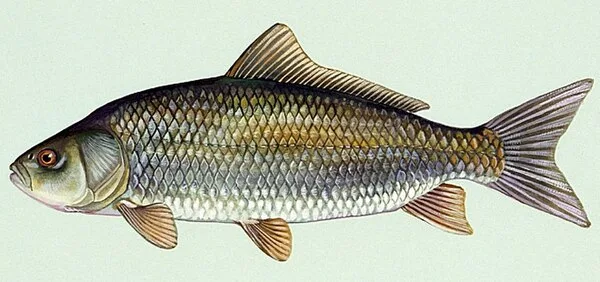
Bigmouth buffalo have deep, laterally compressed bodies with a distinctive humped back profile. They are dark olive to gray-brown on the back, fading to yellowish or cream on the belly. The mouth is large, oblique, and terminal (facing forward and slightly upward), which distinguishes them from smallmouth buffalo and other sucker species whose mouths are positioned on the underside of the head. The scales are large and cycloid. Adults in Indiana commonly range from 20 to 35 inches, with fish exceeding 40 inches present in the Ohio and Wabash River systems.
Where to Find Bigmouth Buffalo
Bigmouth buffalo are creatures of large, slow-moving rivers and their associated floodplain habitats. In Indiana, the Ohio River along the state’s southern border holds the densest populations. The Wabash River from Terre Haute downstream, the lower White River, and the East Fork White River also support significant numbers. Oxbow lakes, backwater sloughs, and floodplain lakes connected to these river systems are critical habitat.
Buffalo prefer areas with moderate to heavy turbidity, soft muddy bottoms, and low current velocity. During spring, large schools move into shallow floodplain areas to spawn, often concentrating in remarkably shallow water. In summer and fall, they hold in deeper pools and channels within the main river system.
Rod-and-Reel Tactics
Catching bigmouth buffalo on rod and reel is a genuine challenge because they are primarily filter feeders. Unlike carp, which root along the bottom for food, bigmouth buffalo strain plankton, algae, and tiny invertebrates from the water column using their gill rakers. This feeding strategy makes them largely indifferent to conventional hook-and-line presentations.
Anglers who specifically target buffalo have found success with a few approaches. Doughbait made from flour, cornmeal, and a binding agent, formed into small balls and fished on the bottom, will occasionally attract feeding buffalo. Method feeder rigs loaded with a sweet corn and breadcrumb mixture — a technique borrowed from European coarse fishing — place a concentrated scent trail on the bottom that can draw buffalo into a feeding area.
Small hair jigs tipped with a piece of nightcrawler and fished vertically in areas where buffalo are visibly feeding have also produced results. Patience is the defining requirement — sessions targeting buffalo on rod and reel often involve long waits between bites.
Use medium-heavy to heavy tackle. A hooked buffalo of 20 pounds or more is a formidable opponent that makes long, dogged runs. Spool a quality reel with 15 to 20-pound monofilament or 30-pound braid and ensure your drag is properly set.
Bowfishing for Bigmouth Buffalo
Bowfishing is the most common method of harvesting bigmouth buffalo in Indiana. Their large size, shallow-water habits during spawning season, and predictable surface behavior make them ideal bowfishing targets. During April and May, schools of buffalo move into flooded backwaters and shallow flats to spawn, creating the best bowfishing opportunities of the year.
Prime bowfishing locations include the Ohio River backwaters in Posey, Vanderburgh, and Harrison Counties, the Wabash River floodplain below Vincennes, and the oxbow lakes along the lower White River. Buffalo are often found in the same shallow areas as carp, and many bowfishers take both species in a single outing.
The large body and relatively thin scales of bigmouth buffalo make them easier to penetrate with a bowfishing arrow than gar, but their size means a secure arrow rest and a strong retriever reel are essential. Fish exceeding 30 pounds require careful shot placement to avoid pull-outs.
Seasonal Patterns
Spring (April-May): Spawning season brings the best action. Large schools gather in flooded backwaters, oxbow lakes, and shallow flats along major rivers. This is the prime window for bowfishing and the best chance for rod-and-reel encounters.
Summer (June-August): Post-spawn buffalo disperse into deeper pools and channels but continue feeding actively. Look for schools dimpling the surface in slack-water areas during calm mornings and evenings.
Fall (September-November): Buffalo begin congregating in deeper holes for winter. Schools become more concentrated, and bowfishers working deeper backwater areas can still find productive fishing.
Winter (December-March): Buffalo hold in the deepest available pools in main river channels and become largely inactive. They are not targeted during winter.