
What Is a Football Jig?
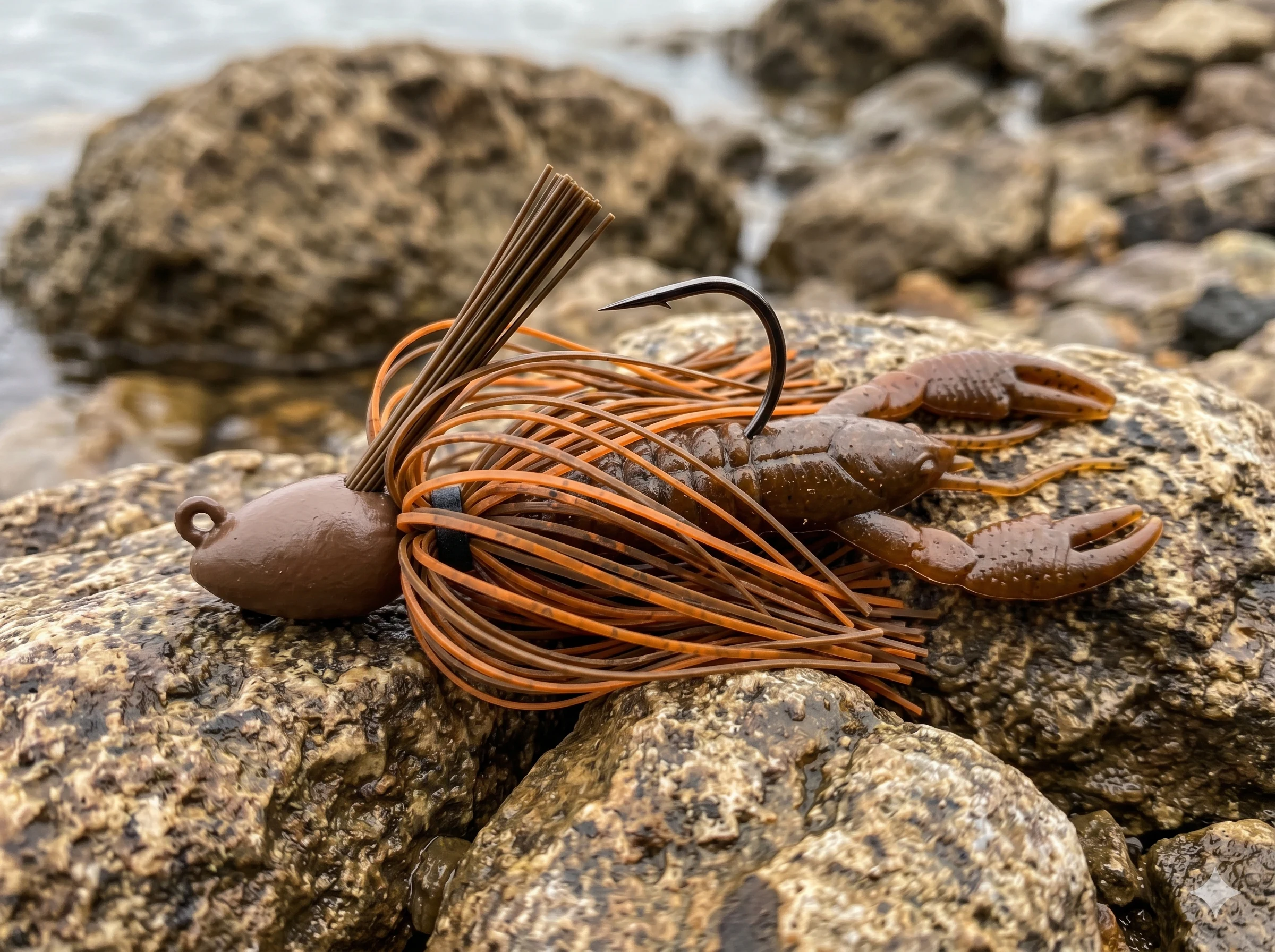
A football jig is a bass jig with a head shaped like an American football — wide and oblong. The shape prevents the jig from tipping sideways and from getting wedged into rock crevices when worked across rocky bottoms. They’re the dedicated jig style for crayfish-imitation presentations on rock, gravel, and chunk-rock structure.
If a swim jig is for grass, a flipping jig is for laydowns, and a finesse jig is for pressured shallow water, a football jig is for rocks.
When and Where to Throw a Football Jig
Smallmouth on rocky structure in 8-20 feet — the universal football-jig water type. Smallmouth eat crayfish almost exclusively in many of these systems, and a football jig with a craw trailer is the most direct imitation.
Deep main-lake points and humps in 12-25 feet. Football jigs slow-rolled along these structures produce both largemouth and smallmouth in summer.
Riprap banks along causeways and dam faces. The wide head keeps the jig upright as it bounces down the rocks.
Pre-spawn staging areas where bass gather on transitions before moving shallow. Drag the jig along the deeper edge of secondary points.
How to Work a Football Jig
The standard presentation is a slow drag with intermittent hops. Pull the rod tip from 9 to 12 o’clock — the jig moves 18 inches across the bottom. Pause for 3-5 seconds. Repeat. Most strikes come on the pause or on the first hop after a long pause.
In current, hold the rod still and let the current sweep the jig along bottom while you maintain bottom contact with subtle rod-tip lifts.
Color Selection
Brown with orange-tipped trailer is the universal default — matches a molting crayfish. Green pumpkin and watermelon work in clearer water. Black-blue handles stained water and post-rain conditions. Match the rocks: tan rocks = light brown jig; dark rocks = brown-black or black-blue jig.
Tackle
A 7’ to 7’4” medium-heavy fast-action baitcasting rod, 12-17 lb fluorocarbon, and a 7:1 baitcasting reel. The fluorocarbon’s invisibility matters in clear smallmouth water; the medium-heavy power gives you hooksets at distance with the fluoro stretch.