
What Is a Flipping Jig?
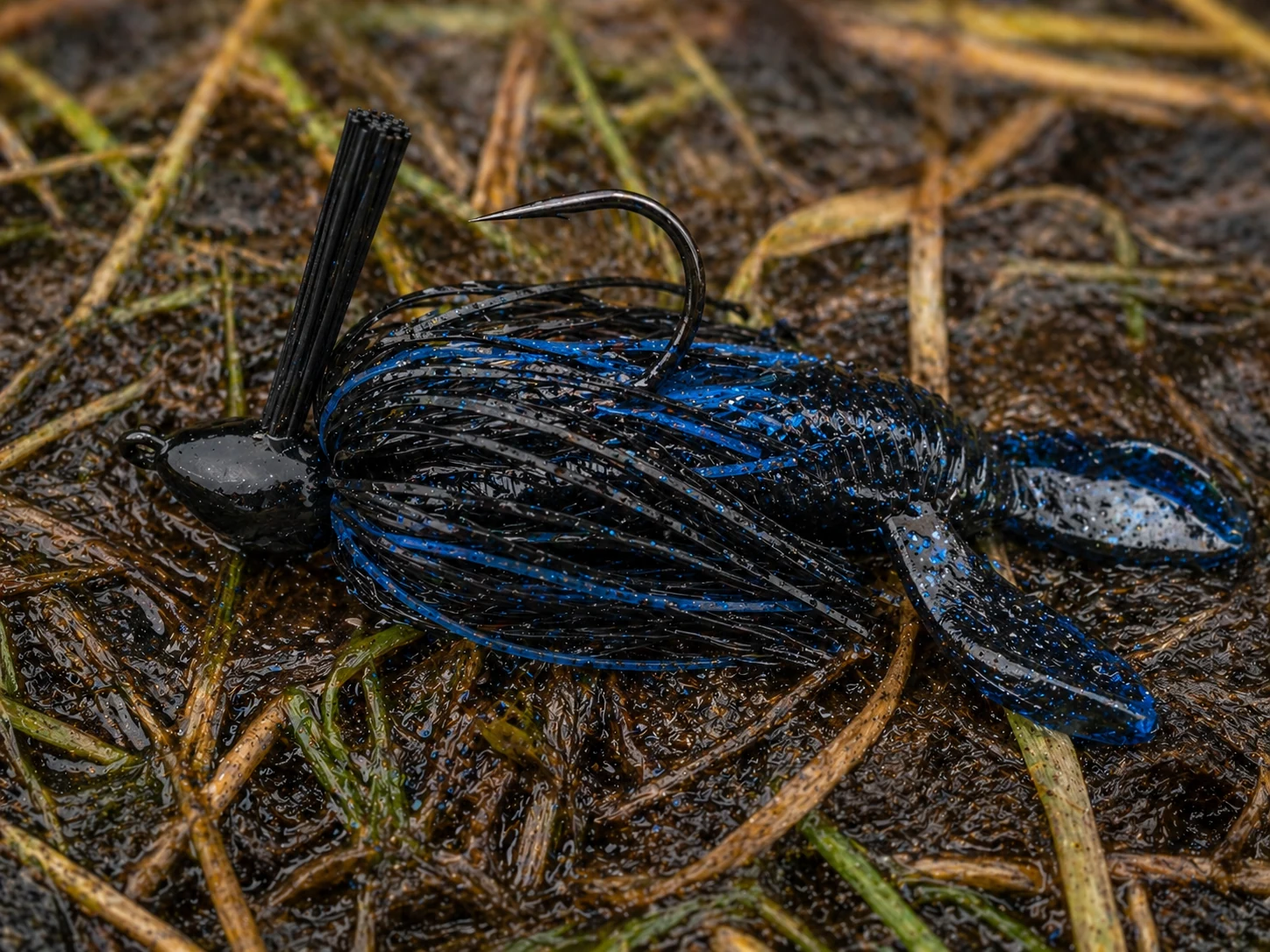
A flipping jig is a bass jig built for one purpose: pitching short distances into the heaviest cover and getting big bass out. The head is compact and bullet-shaped to slide through cover. The hook is a stout 4/0 or 5/0 wire-frame hook with a strong gauge that won’t bend on a hard hookset. A weed guard sits in front of the hook point to keep it weedless. A full silicone skirt provides the bulk and profile.
It’s the big-bass bait. Flipping a jig in the right cover catches fewer fish than a finesse worm — but the average size is much larger.
When and Where to Throw a Flipping Jig
Matted grass and lily pad fields in 1-4 feet. Pitch into holes in the canopy and let the heavy jig punch through to the bottom.
Brush piles and laydowns in 2-12 feet. Pitch the jig parallel to the cover and let it fall through the limbs.
Bushes and flooded timber in spring and post-spawn. Bass hold tight to vertical cover; pitching directly to the cover with a jig draws strikes the moment the bait enters the water.
Dock posts and undercut banks. The compact jig profile slides under structure where larger baits won’t fit.
Color Selection
Black-blue is the universal default for stained and dark water. Green pumpkin and watermelon work in clear water. Brown-orange (pumpkin/orange or peanut-butter-and-jelly) imitates molting crayfish in spring. Match the trailer to the jig color — same family palette.
How to Work a Flipping Jig
Pitch the jig on slack line so it enters the water with minimal splash. Watch the line — most strikes happen on the initial fall, signaled by line movement before the jig reaches bottom. If no strike, hop the jig once or twice and reel in. Don’t stay in the same spot — flipping is about covering many targets quickly.
Tackle
A 7’4” to 7’6” heavy-power, fast-action flipping rod is non-negotiable. 50-65 lb braid for matted grass and thick cover; 17-20 lb fluorocarbon for laydowns and open cover. 7:1+ high-speed baitcasting reel — the high speed lets you take up slack quickly when a fish swims toward you on the strike.