
What Is a Popping Bait?
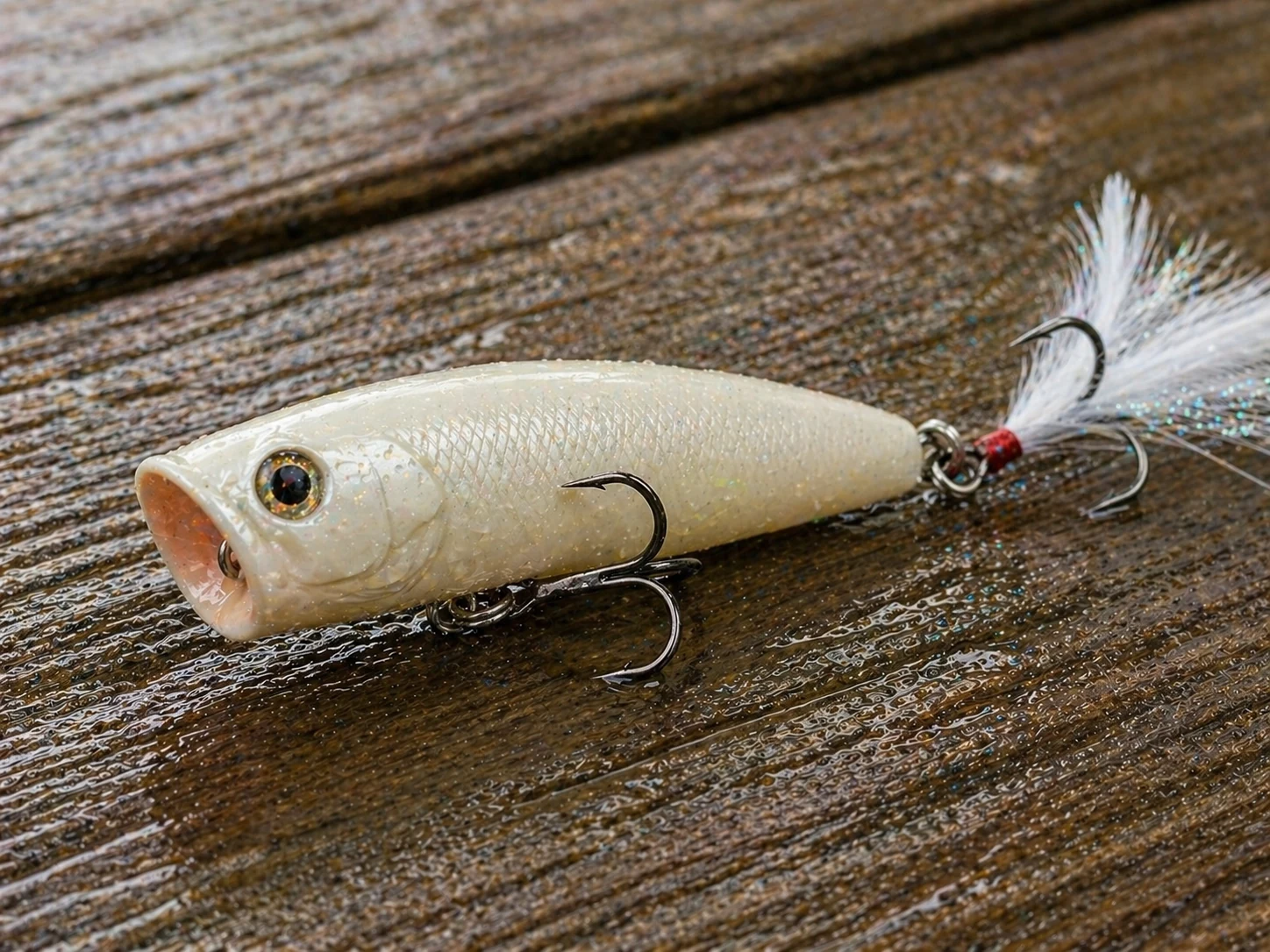
A popper is a short, blocky topwater hard bait with a concave cupped face. When the rod tip is twitched down, the cupped face plows into the water and creates a popping or chugging sound, plus a small spray of water. Then it sits motionless until twitched again.
Where a walking bait covers water with a steady cadence, a popper sits in place and draws bass from cover with sound and pause. It’s the topwater of choice for tight, pressured presentations.
When and Where to Throw a Popper
Pockets in cover — small holes in matted grass, openings between lily pads, gaps along shoreline brush. The popper sits in place and forces a decision from cover-bound bass.
Around docks and laydowns where you need to keep the bait in the strike zone for an extended pause without it walking past.
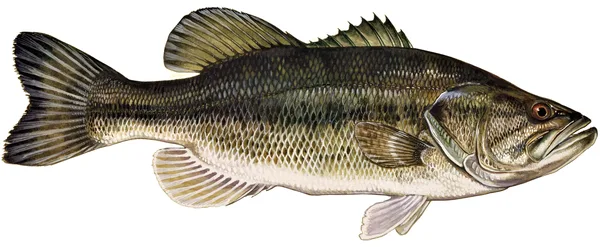
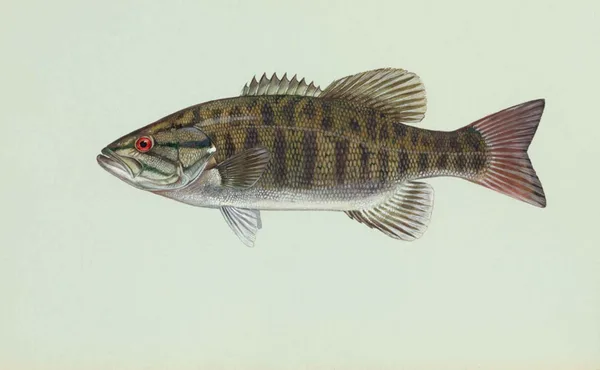
Schooling fish — feeding bass busting shad will eat a popper on the pause more often than they’ll chase a walking bait. Cast to the edge of the school, pop once, pause.
Clear-water flats where bass scrutinize baits closely. The popper’s longer pause gives them time to commit.
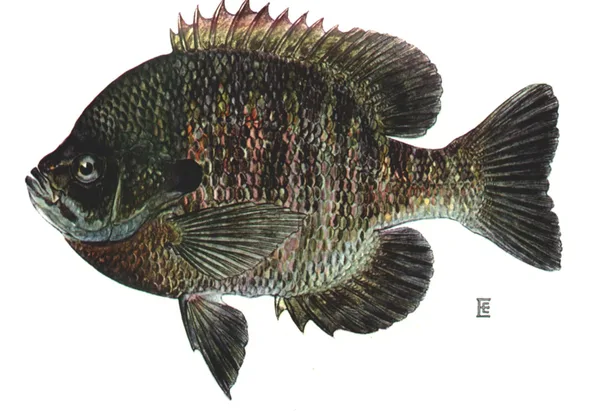
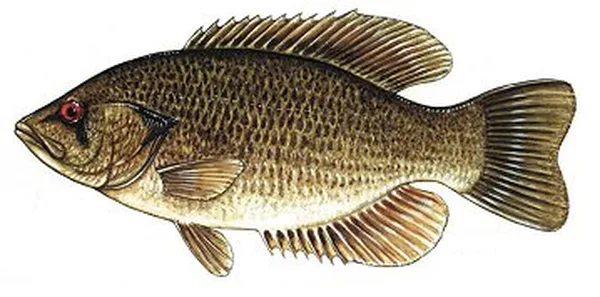
Bluegill and panfish topwater fishing. Tiny 1 to 1.5 inch poppers in chartreuse, white, or natural patterns are deadly for bedding bluegill and shoreline-cruising redear.
How to Work a Popper
Cast and let the bait settle for 5-8 seconds — many strikes happen on this initial pause as the rings spread.
Standard cadence: Sharp downward rod-tip twitch (the bait pops), pause 3-5 seconds, repeat.
Variations:
- Soft chug: gentle rod movement creates a softer “blip” — works on pressured fish
- Burst pop: 3 quick pops in succession, then long pause
- Walk-and-pop: walk the bait 2-3 feet (yes, poppers can walk-the-dog), then stop and pop in place
Color Selection
Bone-white, chrome, and white-feather are universal producers. Match-the-hatch shad and bluegill patterns shine in clear water. Black for low-light and night. Bright chartreuse and red-and-white for stained water.
Tackle
A 6’10” to 7’2” medium-power rod with a moderate-fast tip — the moderate action loads up on the cast and gives a softer hookset that won’t tear the small treble hooks free. 12-15 lb fluorocarbon or 50 lb braid with a 12 lb fluoro leader. 6.4:1 reel ratio is plenty.