
What Is a Walking Bait?
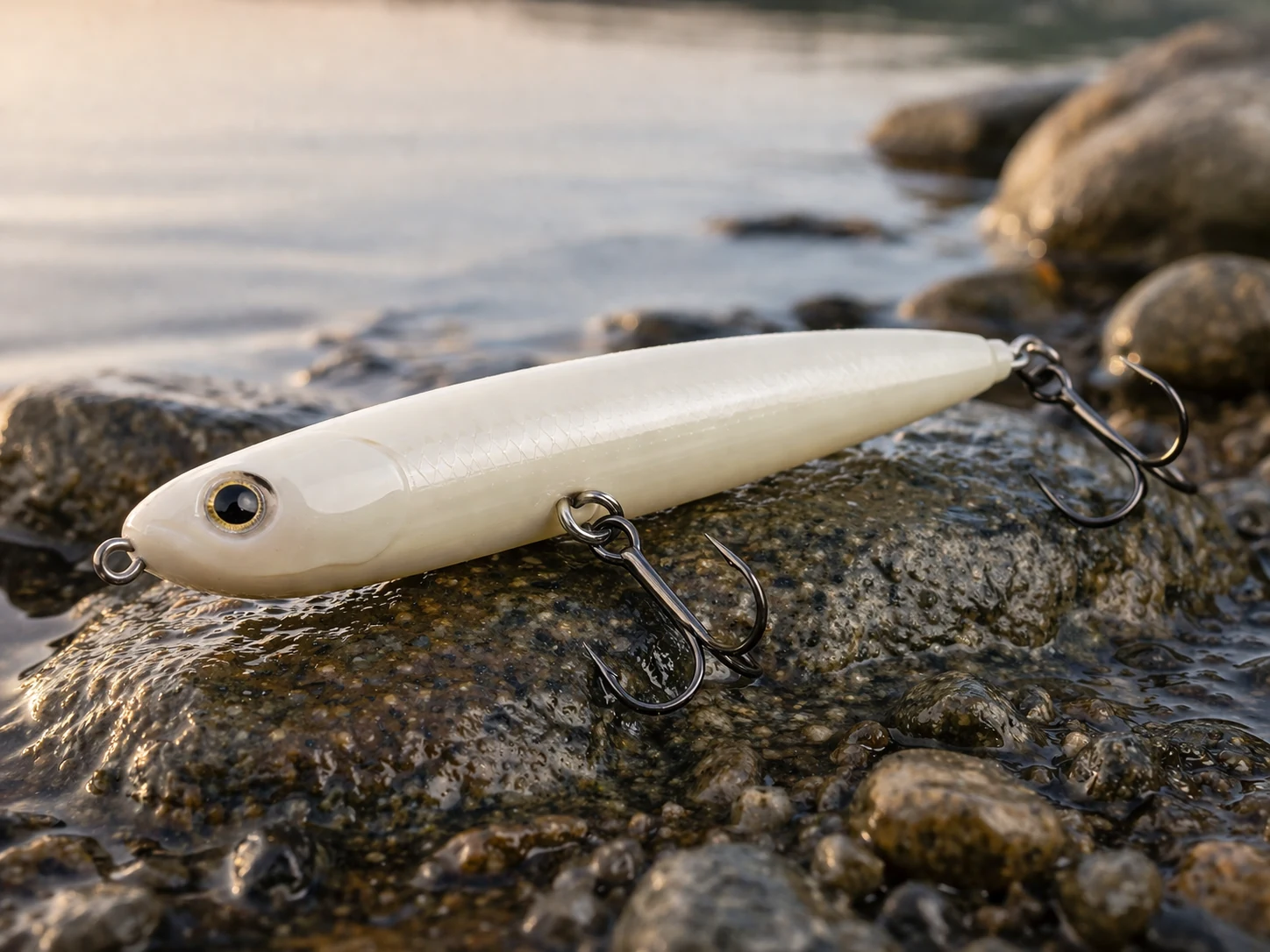
A walking bait is a long, cigar-shaped, surface-running topwater lure with no built-in action — the angler creates the side-to-side “walk the dog” presentation by twitching the rod tip in a steady cadence. The bait pivots left and right with each twitch, leaving a wide zigzag wake on the surface that draws bass from feet of cover.
The original is the Heddon Zara Spook (1922), and the entire category is sometimes called “spooks” generically. Modern variants include the Lucky Craft Sammy, the Megabass Dog-X, and dozens of others.
When and Where to Throw a Walking Bait
Dawn and dusk in summer — peak walking-bait windows. Bass push shallow to feed on emerging baitfish, and a steady walking cadence over the right water draws explosive blowups.
Schooling bass busting baitfish on the surface. Walking baits cast far, cover water, and hold up to the chaos of multiple fish striking.
Rocky main-lake points in early summer when bass push shallow at first light to ambush shad.
Open-water flats where bass are roaming. The walking-bait presentation pulls fish from a wide area.
Wind-blown banks — wind-driven baitfish accumulate on lee shorelines, and bass follow. A walking bait worked along these banks finds active fish quickly.
How to Work a Walking Bait
Cast and let the bait settle for a beat. Point the rod tip down at the water at about a 45° angle. Twitch the rod tip in short, rhythmic snaps — about every half-second — while taking up slack between snaps. The bait will pivot side to side as it moves forward.
Cadence variations:
- Steady walk for covering water
- Burn-then-pause: 4-5 quick twitches, then 2-3 second pause
- Long pause: walk 3 feet, stop dead for 5-8 seconds, then resume
The pause is when most strikes happen.
Tackle
A 7’ medium or medium-heavy power rod with a moderate-fast tip — the slightly softer tip lets you create the rhythmic twitch action without ripping the bait too aggressively. Tied directly to 12-15 lb fluorocarbon, OR 50 lb braid with a 12 lb fluorocarbon leader. Hook one of the line-tie eyes through a small split ring to allow free rotation.