Water Safety for Indiana Anglers
March 19, 2026
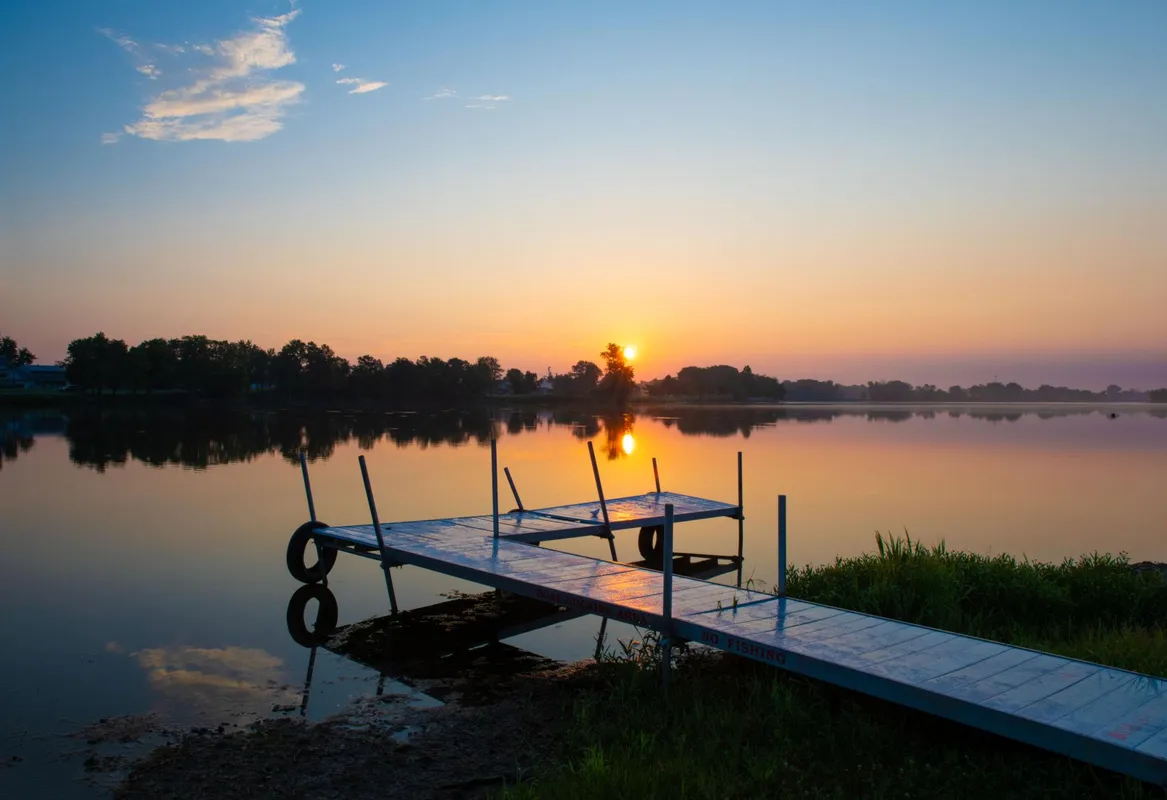
Indiana offers some of the best freshwater fishing in the Midwest. From the rocky tailwaters of Brookville to the limestone bluffs along Sugar Creek, from the sprawling flats of Monroe Lake to the urban reaches of the White River, there is no shortage of water to explore. But every body of water demands respect. Drowning is the leading cause of death in recreational boating incidents nationwide, and nearly every fishing-related fatality is preventable.
This guide covers everything Indiana anglers need to know about staying safe on and around the water — from legal requirements for life jackets to the silent killers lurking at low-head dams.
Life Jacket and PFD Rules in Indiana
Indiana boating law is clear on personal flotation devices (PFDs), and the rules apply to every angler who steps onto a boat, kayak, canoe, or float tube.
Boats and Motorized Vessels
Every recreational vessel in Indiana must carry one U.S. Coast Guard-approved Type I, II, III, or V PFD for each person on board. On boats 16 feet or longer, you must also carry one Type IV throwable device (a cushion or ring buoy) that is immediately accessible.
PFDs must be the correct size for the intended wearer, in serviceable condition (no rips, broken buckles, or waterlogged foam), and readily accessible — not buried under gear in a locked compartment. A PFD stuffed under a seat cushion that you can’t reach in an emergency doesn’t count.
Children Under 13
Indiana law requires children under 13 to wear an approved PFD at all times while on any vessel. Not just have one nearby — wear it. This applies to all watercraft, including bass boats, pontoons, jon boats, and kayaks. No exceptions.
Kayaks and Canoes
Paddlers must have a PFD on board and readily accessible. While adults are not legally required to wear it at all times, experienced kayak anglers strongly recommend wearing an inflatable or low-profile PFD whenever you’re on the water. A capsized kayak in current gives you no time to dig out a PFD.
Waders
There is no legal requirement for wade anglers to wear PFDs in Indiana. However, the Indiana Department of Natural Resources and fishing safety organizations strongly recommend inflatable belt-pack PFDs for anyone wading rivers. Modern inflatable PFDs are compact, weigh almost nothing, and can save your life if you lose your footing in fast water. They auto-inflate on contact with water or can be manually triggered.
Boating Safety for Anglers
A safe fishing trip starts before you leave the driveway. The majority of boating accidents happen because someone skipped basic preparation.
Before You Launch
- Check the weather forecast. Look at hourly forecasts, not just the daily summary. Afternoon thunderstorms in Indiana develop fast, especially May through September.
- Tell someone your float plan. Leave a note or text someone with where you’re fishing, what time you expect to return, and how many people are with you.
- Inspect your vessel. Check the drain plug (this one is embarrassingly common), battery charge, running lights, and fuel level.
- Verify safety equipment. PFDs for everyone, a whistle or horn, a throwable flotation device, navigation lights if you’ll be out near dawn or dusk, a fire extinguisher for motorized boats, and an anchor with sufficient line.
On the Water
- Avoid alcohol. Alcohol is involved in roughly one-third of all recreational boating fatalities. Indiana enforces boating under the influence (BUI) laws with the same severity as DUI. The legal limit is 0.08% BAC. Sun, heat, wind, and dehydration amplify alcohol’s effects on the water.
- Know right-of-way rules. Powerboats yield to sailboats, canoes, and kayaks. When two powerboats meet head-on, both turn to starboard (right). When overtaking, pass on the port (left) side. Always maintain a safe distance from shore anglers, docks, and swimmers.
- Watch your speed near shore. Indiana law prohibits excessive wake within 200 feet of shore, docks, piers, or anchored vessels. This is both a safety issue and a courtesy to other anglers.
- Carry a kill switch lanyard. If you’re running an outboard, attach the engine kill switch to your person. If you fall overboard, the engine cuts immediately. An unmanned boat circling at speed is a nightmare scenario.
Low-Head Dams: Indiana’s Silent Killers
If there is one section of this guide that could save your life, this is it.
Low-head dams — also called run-of-river dams or overflow dams — are among the deadliest features on any waterway. They look harmless. The water spills smoothly over a ledge that may only be a few feet tall. But at the base of every low-head dam is a recirculating hydraulic, a churning roller of aerated water that traps anything that enters it.
Why They Kill
When water pours over the dam face, it plunges to the bottom and rolls back upstream along the surface. This creates a “drowning machine” — a washing-machine effect that holds a person, boat, or any floating object in the backwash indefinitely. The aerated water reduces buoyancy, so even a strong swimmer or a PFD provides little help. The turbulence pulls victims under, spits them to the surface briefly, then pulls them back in.
The survival rate for someone caught in a low-head dam hydraulic is extremely low.
Known Dangerous Dams in Indiana
Indiana has dozens of low-head dams on rivers and streams. Some of the most notorious include:
| Dam Location | River | Notes |
|---|---|---|
| Broad Ripple Dam | White River (Indianapolis) | Multiple fatalities. Highly dangerous. |
| Various dams | Wabash River | Several low-head dams between Lafayette and Terre Haute |
| Dam near Cataract Falls | Mill Creek | Popular recreation area |
| Elkhart Dam | Elkhart River | Known hydraulic hazard |
| Various locations | Eel River | Multiple low-head structures |
| Various locations | Tippecanoe River | Dam remnants and active structures |
This is not an exhaustive list. Assume every low-head dam is deadly.
How to Stay Safe
- Never approach a low-head dam from upstream or downstream. The danger zone extends hundreds of feet below the dam and the current above can sweep you over before you realize you’re too close.
- Portage around dams. If you’re canoeing or kayaking, exit the water well upstream and carry around.
- Watch for warning signs. Many Indiana dams now have buoy lines, warning signs, and portage routes. Some do not. The absence of a sign does not mean safety.
- If someone is caught in a hydraulic, do NOT enter the water to rescue them. Call 911 immediately. Throw a rope or flotation device from shore if possible. Entering the hydraulic to attempt a rescue will likely result in two victims instead of one.
Wading Safety
Wade fishing is one of Indiana’s great pleasures — standing knee-deep in a rocky stream casting for smallmouth is hard to beat. But moving water is deceptively powerful, and wading accidents happen every season.
Essential Wading Gear
Wading belt. This is non-negotiable. A wading belt cinches tight around your waist and seals the top of your waders. If you fall, it dramatically slows the rate at which water fills your waders. Waders full of water weigh you down and make self-rescue nearly impossible. Every pair of chest waders should be worn with a belt, every time.
Proper footwear. Indiana’s rivers and streams have a mix of limestone, shale, gravel, and silt bottoms. Choose your wading soles accordingly:
| Sole Type | Best For | Limitations |
|---|---|---|
| Felt | Slippery rock, algae-covered surfaces | Wears out faster, can transfer invasive species |
| Studded rubber | Rocky streams, varied terrain | Less grip on smooth algae-covered rock |
| Rubber (plain) | Sandy, gravel bottoms | Poor traction on slick rock |
Many Indiana wade anglers prefer studded rubber for versatility, but if you’re fishing limestone streams like Sugar Creek or Blue River where algae slicks are common, felt soles provide superior grip.
Wading staff. A collapsible wading staff is cheap insurance. Use it any time you’re wading unfamiliar water, navigating deeper runs, or crossing current. Plant it downstream, step to it, then replant. Think of it as a third leg.
Wading Techniques
- Shuffle your feet. Never lift your foot high and step over obstacles — you’ll lose your balance. Slide your feet along the bottom to feel for drop-offs, holes, and unstable rocks.
- Face upstream or quartering into the current. Presenting your narrowest profile to the flow gives the water less surface area to push against.
- Cross at an angle. When crossing a river, move at a 45-degree angle downstream. Fighting directly across the current wastes energy and increases the risk of falling.
- Know your limits. If the water is above your thighs and the current is strong, turn back. No fish is worth a cold swim.
Check River Levels
Before every wade trip, check the USGS water gauge for your river. The USGS WaterWatch website and the free USGS Water Resources app show real-time flow data for streams across Indiana. Know the normal base flow for your favorite water and don’t wade when levels are significantly above it.
As a general rule, if a river has risen more than a foot above its normal level due to recent rain, wading conditions will be poor and potentially dangerous. Wait a day or two for the water to drop and clear.
Self-Rescue in Current
If you lose your footing in moving water:
- Don’t fight the current. Roll onto your back with your feet pointed downstream.
- Keep your feet up. Your boots and legs act as bumpers against rocks.
- Use your arms to ferry toward shore. Angle your body and use backstroke to work toward the nearest bank.
- If wearing waders with a belt, the trapped air will actually help you float briefly. This is why the belt matters.
- Do not try to stand up in fast water. Foot entrapment — getting a boot wedged between rocks while current pushes you downstream — is how many wading drownings happen. Stay on your back until you reach calm water.
Weather Hazards
Indiana’s weather is famously unpredictable, and anglers spend more time exposed to the elements than almost anyone. Understanding weather hazards is critical.
Lightning
Lightning is the single most dangerous weather event for anglers. You are often the tallest object on open water, holding a graphite rod that functions as a conductor. Lightning strikes on water are frequently fatal.
The 30-30 Rule:
- If the time between a lightning flash and thunder is 30 seconds or less (about 6 miles away), you are in the danger zone. Get off the water immediately.
- Wait at least 30 minutes after the last thunder before returning.
When you hear thunder:
- Reel in and head for shore immediately.
- Get into a vehicle (the metal body acts as a Faraday cage) or a substantial building.
- If caught in the open, avoid tall isolated trees. Crouch low with feet together if no shelter is available.
- Lay your rod down away from you — don’t hold it.
Do not wait until you see lightning to act. Thunder means lightning is already close enough to hit you.
Thunderstorms
Indiana sits in a corridor where warm Gulf air meets cooler northern air masses, making the state prone to severe thunderstorms from April through September. These storms can develop rapidly — a sunny morning can turn into a dangerous squall by 2 PM. On large reservoirs like Patoka Lake or Monroe Lake, storms bring wind, rain, and waves that can swamp boats in minutes.
Before your trip: Check radar, not just forecasts. If storms are possible, plan to be off the water by early afternoon.
On the water: Watch the sky to the west and southwest. Darkening skies, increasing wind, and a sudden temperature drop are warning signs. If you see a shelf cloud or wall cloud, you are out of time.
Wind
Wind is an underestimated hazard, particularly on Indiana’s larger reservoirs. A 15 mph sustained wind on a two-mile fetch of open water can generate 2-3 foot waves — enough to swamp a small jon boat or make a kayak unmanageable.
Know your lake’s fetch (the longest unobstructed distance wind can travel across the surface). Position yourself on the windward (sheltered) side of the lake when possible, and avoid crossing open water in high wind. If conditions deteriorate, hug the shoreline on your way back to the ramp.
Heat
Summer fishing in Indiana means heat indices above 100°F on the worst days. Anglers focused on the bite often forget to hydrate.
- Drink water steadily throughout the day — don’t wait until you’re thirsty.
- Wear a wide-brimmed hat and UV-protective clothing.
- Apply sunscreen (minimum SPF 30) and reapply every two hours.
- Know the signs of heat exhaustion: heavy sweating, weakness, nausea, dizziness, headache. Move to shade, drink water, and cool the skin. If symptoms include confusion or loss of consciousness, call 911 — that’s heat stroke.
Cold Water and Hypothermia
Indiana’s ice fishing and early spring seasons bring cold water that is far more dangerous than most anglers realize. Water conducts heat away from the body roughly 25 times faster than air. A fall into 50°F water can incapacitate a swimmer in as little as 15 minutes.
Spring is particularly treacherous because air temperatures may feel warm while the water is still dangerously cold. An angler wade fishing in 45°F water on a 65°F April afternoon can develop hypothermia without recognizing the symptoms: shivering, clumsiness, slurred speech, and confusion.
Wear layers, carry a change of dry clothes in your vehicle, and consider a dry suit or neoprene waders for early-season trips. If someone falls into cold water, get them warm immediately — remove wet clothing, wrap in blankets, and seek medical attention.
Wildlife Hazards
Indiana’s waterways are home to wildlife that can create hazards for anglers who aren’t paying attention.
Snakes
Indiana is home to four venomous snake species — the timber rattlesnake, eastern massasauga, copperhead, and cottonmouth (water moccasin). Cottonmouths are limited to extreme southwestern Indiana, but copperheads are present in the southern half of the state around rocky streams and bluffs. Most snake encounters happen when anglers are walking through tall grass, stepping over logs, or reaching into rock crevices along the shoreline.
For a detailed breakdown of which snakes you might encounter and how to identify them, read our guide to snakes at Indiana fishing spots.
Ticks and Mosquitoes
Ticks are a serious concern for Indiana anglers, particularly from April through October. Lone star ticks, deer ticks (blacklegged ticks), and dog ticks are all present. Deer ticks carry Lyme disease, and lone star ticks can cause alpha-gal syndrome (a red meat allergy triggered by tick bites).
- Treat clothing and gear with permethrin.
- Apply DEET-based repellent to exposed skin.
- Wear long sleeves and pants when walking through brush.
- Do a full tick check after every outing.
Mosquitoes are nuisance-level most of the season but can carry West Nile virus. Use repellent and avoid lingering near still, stagnant water at dawn and dusk.
Poison Ivy
“Leaves of three, let it be.” Poison ivy is abundant along Indiana’s shorelines, river banks, and hiking trails to fishing spots. Learn to identify it and avoid contact. If exposed, wash the affected area with soap and water (or a specialized wash like Tecnu) as soon as possible.
Emergency Preparedness
Preparation separates a bad day from a tragedy. Every angler should carry basic emergency gear.
Essential Safety Kit
- Charged cell phone in a waterproof case. This is your lifeline. A dead phone or one at the bottom of the lake can’t call 911.
- Whistle. Three blasts is the universal distress signal. A whistle carries farther than a voice and works when you’re too cold or exhausted to shout.
- Basic first aid kit. Bandages, antiseptic, tweezers (for hooks and ticks), pain reliever, and any personal medications.
- Knife or multi-tool. Useful for cutting line, dealing with tangled gear, and a dozen other situations.
- Headlamp or flashlight. If you’re fishing near dawn or dusk, a light source is essential for navigating back to your vehicle.
Know Your Location
In an emergency, responders need to find you. When you arrive at a fishing spot, note:
- The name of the lake, river, or creek
- The nearest road, parking area, or boat ramp name
- GPS coordinates from your phone (most map apps display them)
- Any nearby landmarks (bridge, dam, specific bay)
If you call 911 from a remote bank or an unmarked access point, GPS coordinates are the fastest way for emergency services to locate you.
Float Plans
This is not just for boaters. If you’re wade fishing a remote stretch of river or hiking into a backcountry pond, tell someone where you’re going and when you expect to be back. A simple text message — “Fishing Sugar Creek at the CR 200 bridge, back by 5 PM” — could trigger a search if something goes wrong.
Kids on the Water
Taking kids fishing in Indiana is one of the best ways to build lifelong anglers — and lifelong respect for the water. But children require extra precautions.
PFD Requirements
As noted above, Indiana law requires children under 13 to wear a PFD on all vessels. Choose a PFD that fits properly — a child-sized PFD should be snug enough that it can’t be pulled over the child’s head. Test it in shallow water before heading out.
Supervision
- Children should be within arm’s reach near any water.
- Bank fishing near steep drop-offs or swift current requires constant attention.
- Older kids who are strong swimmers still need supervision around boats and moving water.
Teaching Water Awareness
Start early. Teach children to:
- Recognize moving water and understand that current is strong
- Never run near the water’s edge on docks, dams, or rocky banks
- Identify and avoid low-head dams
- Know what to do if they fall in (float on their back, call for help)
- Understand that water safety equipment isn’t optional — it’s part of fishing
The goal isn’t to frighten kids away from the water. It’s to build respect for it. An eight-year-old who understands why they wear a life jacket will become a twenty-year-old who always boats sober and checks the weather.
Additional Resources
Water safety is a topic that connects to many other aspects of fishing in Indiana. For related guides, see:
- Kayak Fishing in Indiana — safety gear and techniques for paddle anglers
- Indiana Ice Fishing Guide — cold-weather safety and ice thickness guidelines
- Kids Fishing in Indiana — family-friendly spots and tips for young anglers
- Snakes at Indiana Fishing Spots — identification and avoidance
- Indiana Fishing Regulations — legal requirements for all anglers
- Find a Fishing Guide — hiring a licensed guide is one of the safest ways to fish unfamiliar water
Indiana’s waters are overwhelmingly safe for anglers who take basic precautions. Wear your PFD, respect low-head dams, check the weather, wade carefully, and carry a charged phone. The fish will always be there tomorrow — make sure you are too.
Frequently Asked Questions
Do you need a life jacket when fishing in Indiana?
Indiana law requires a U.S. Coast Guard-approved personal flotation device (PFD) on board for every person on a boat. Children under 13 must actually wear a PFD at all times while on a vessel. Kayakers and canoeists must have a PFD readily accessible. While waders are not legally required to wear a PFD, an inflatable belt-style PFD is strongly recommended for anyone wading rivers.
What are the most dangerous waters in Indiana for anglers?
Low-head dams are by far the most dangerous features on Indiana waterways. The hydraulic roller at the base of these dams traps and drowns people every year. The Broad Ripple Dam on the White River, dams on the Wabash River, and other low-head dams across the state have claimed multiple lives. Large reservoirs like Monroe, Patoka, and Salamonie can also become dangerously rough in high winds.
What should you do about lightning while fishing?
Get off the water immediately if you hear thunder or see lightning. Follow the 30-30 rule: if the time between a lightning flash and thunder is 30 seconds or less, you are in danger. Get to shore, a vehicle, or a substantial building. Wait at least 30 minutes after the last thunder before returning to the water. Anglers holding graphite rods on open water are particularly vulnerable.
How do you stay safe while wading Indiana rivers?
Always wear a wading belt to seal your waders in case of a fall. Use felt-soled or studded boots for traction on slippery rocks. Carry a wading staff in unfamiliar water. Check USGS river gauge levels before you go — don't wade rivers that are above normal flow. Never wade alone in deep or fast-moving water, and shuffle your feet rather than stepping high to maintain balance.