Overview
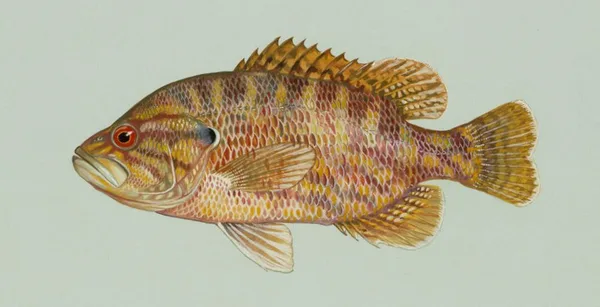
The warmouth is one of Indiana’s most underappreciated sunfish species. Often confused with rock bass or green sunfish, this thick-bodied panfish occupies a niche that few other sunfish fill — murky, heavily vegetated water with soft bottoms and slow or no current. Warmouth are solitary ambush predators that behave more like small bass than typical sunfish, lurking in cover and striking aggressively at anything that comes within range.
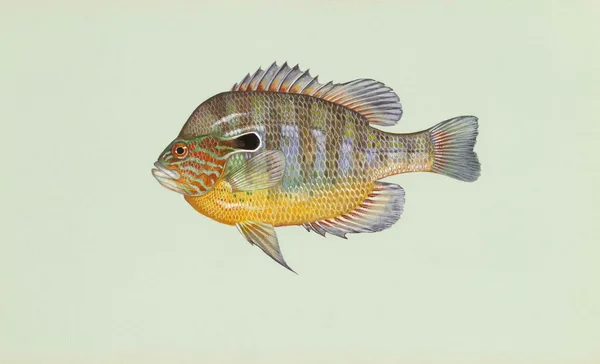
Warmouth are built differently than most sunfish. They have a large mouth, heavy jaw, and stocky frame that gives them a distinctly predatory look. Their coloring is dark olive to brown with mottled markings, and the telltale field mark is the set of dark reddish streaks radiating backward from the eye. They rarely travel in schools, preferring to hold individually near cover.
Where to Find Them in Indiana
Southern Indiana offers the best warmouth fishing in the state. The backwater sloughs and oxbow lakes along the Ohio River bottomlands in Posey, Vanderburgh, and Warrick counties hold good populations. The lower Wabash River floodplain, including Hovey Lake Fish and Wildlife Area in Gibson County, is one of the most reliable warmouth destinations in Indiana.
In central Indiana, look for warmouth in farm ponds with heavy vegetation, the sluggish sections of White River tributaries, and in wetland areas associated with state fish and wildlife properties. Goose Pond Fish and Wildlife Area in Greene County and the wetland complexes of the Muscatatuck National Wildlife Refuge in Jackson and Jennings counties support warmouth.
Warmouth are uncommon north of Indianapolis. They require warm, slow water with dense cover — conditions that are less prevalent in the glacial landscape of northern Indiana.
Target areas with submerged logs, dense aquatic vegetation, cypress stumps or standing timber, and undercut banks in slow water. Warmouth hold tight to heavy cover and rarely venture into open water.
Techniques
Because warmouth behave like miniature bass, presentations that mimic small prey items work best. A 1/16-ounce jig with a small soft plastic crawfish or creature bait, pitched into pockets in weed beds and along submerged wood, is highly effective. Work the bait slowly with short hops and pauses.
Live bait is equally productive. A small minnow or piece of nightcrawler on a size 6 or 8 hook, fished under a bobber set 1 to 3 feet deep near heavy cover, will draw strikes. Crickets and garden worms also work well.
Small inline spinners and tiny crankbaits retrieved slowly along weed edges and through openings in vegetation can trigger reaction strikes from warmouth holding in ambush positions.
Tips
Warmouth spawn from late May through July in Indiana, building nests in soft-bottomed shallows near vegetation. Unlike most sunfish, warmouth males do not nest in colonies — they are territorial loners. During the spawn, look for individual nests near stumps, logs, or weed clumps in 1 to 3 feet of water.
Warmouth are most active in warm water. Peak fishing runs from June through August when water temperatures are in the 70s and 80s. They feed well in stained or murky water and are often most active during overcast days and low-light conditions. Early morning and late evening are prime times.
One practical tip: if you are catching green sunfish in a weedy pond and notice a darker, heavier-bodied fish with eye streaks mixed in, you are likely catching warmouth. Pay attention to the habitat — if the water is murky with dense vegetation and a soft bottom, warmouth are probably present.