Shortnose Gar Fishing in Indiana
The shortnose gar is the less common of Indiana’s two gar species, with a range restricted to the larger river systems in the southern portion of the state. Smaller and more compact than its longnose cousin, the shortnose gar occupies a niche in the slow, turbid waters of the Ohio River drainage. While not widely targeted by rod-and-reel anglers, shortnose gar are taken regularly by bowfishers working the backwaters of southern Indiana’s river systems. The Indiana state record is 2 pounds 15.9 ounces, caught from the Wabash River in Tippecanoe County in 2025.
Identification
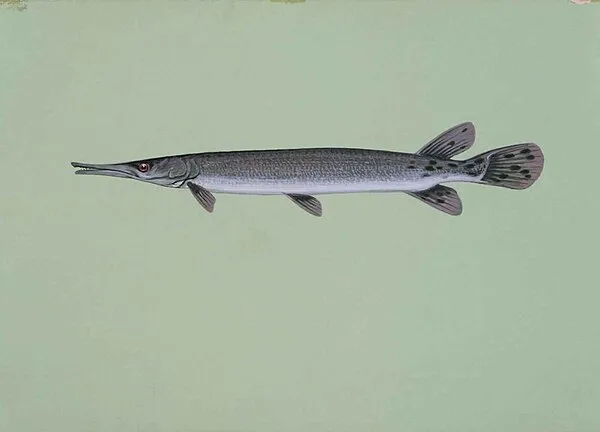
The shortnose gar is distinguished from the longnose gar by its shorter, broader snout. The distance from the eye to the tip of the snout is less than twice the width of the head — a quick visual check that separates the two species in the field. Shortnose gar have olive to brownish-green coloring on the back with a lighter belly and may display dark spots on the fins and posterior body. Adults typically range from 18 to 28 inches in Indiana, making them considerably smaller than longnose gar. Like all gar, they are covered in tough, diamond-shaped ganoid scales.
Where to Find Shortnose Gar
In Indiana, shortnose gar are found primarily in the Ohio River and its immediate backwaters, the lower Wabash River below Vincennes, and the lower reaches of the White River and East Fork White River. They prefer large rivers with slow current, turbid water, and soft substrates. Backwater sloughs, oxbow lakes, and flooded timber along major rivers are key habitats.
Shortnose gar are more tolerant of turbid, silty conditions than longnose gar, which explains their preference for the lower portions of Indiana’s river systems where water clarity tends to be poor. Look for them near the surface in calm backwater areas, especially on warm days when they rise to gulp air.
Rod-and-Reel Tactics
The techniques for catching shortnose gar on rod and reel mirror those used for longnose gar, with adjustments for their smaller size. The rope lure remains the most effective method — a small piece of unraveled nylon rope tied to a light jig head and retrieved slowly near the surface where gar are visible. The fibers tangle in the gar’s teeth, securing the fish without the need for a conventional hook set.
Cut bait (shad or skipjack herring) fished under a slip float is also productive. Position the bait near surfacing fish and allow the gar to hold the bait for a full minute or longer before attempting a hook set. Patience is critical with all gar species.
Medium spinning tackle with 12 to 17-pound line and a short wire leader is sufficient for shortnose gar. Their smaller size means they do not require the heavy gear necessary for longnose gar, but the wire leader remains essential to prevent bite-offs.
Bowfishing for Shortnose Gar
Shortnose gar are frequently taken incidentally by bowfishers targeting carp and longnose gar in the same waters. The backwaters of the Ohio River in Harrison, Floyd, Perry, and Posey Counties offer the best opportunities. Shallow, weedy backwater areas connected to the main river channel are the most productive spots, particularly from May through August.
Because shortnose gar are smaller, they present a more challenging bowfishing target. Concentrate on calm, clear backwater areas where fish can be spotted cruising near the surface. Early morning and late afternoon periods tend to bring the most surface activity.
Seasonal Patterns
Spring (May-June): Shortnose gar move into shallow backwaters to spawn when water temperatures reach 64 to 70 degrees. Spawning aggregations are the best opportunity for both rod-and-reel anglers and bowfishers to encounter concentrated numbers of fish.
Summer (June-August): The warmest months produce the most consistent surface activity. Shortnose gar bask near the surface during midday and feed actively in the morning and evening.
Fall (September-October): Fish begin shifting toward deeper water as temperatures cool. Surface sightings become less frequent, and fishing pressure typically drops off.
Winter (November-March): Shortnose gar retreat to deep holes in main river channels and become largely dormant. They are not realistically targeted during cold months.