
Striped Bass Fishing in Indiana
The striped bass is the largest member of the temperate bass family available to Indiana anglers, and the state record — a 40-pound, 3.8-ounce fish caught from the Blue River in Harrison County in 2023 — demonstrates the trophy potential these stocked predators offer. Originally a coastal migratory species from the Atlantic seaboard, striped bass have been introduced into landlocked reservoir environments across the country. In Indiana, the DNR maintains striper populations through periodic fingerling stockings in select reservoirs that offer sufficient depth, forage, and water quality.
Identification
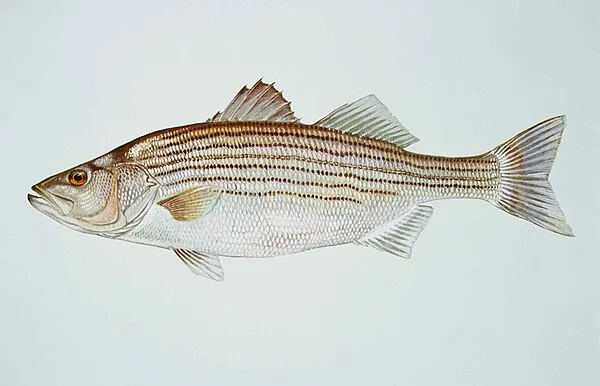
Striped bass have a long, streamlined body with a silvery-white coloration and seven or eight bold, dark horizontal stripes running from the gill plate to the tail. These stripes are typically unbroken and well-defined, which distinguishes them from hybrid striped bass (which usually have broken or offset stripes). Stripers have a large mouth, two dorsal fins (the first spiny, the second soft-rayed), and a moderately forked tail. They can grow substantially larger than any other bass species in Indiana — fish over 15 pounds are realistic targets at stocked reservoirs.
Where to Find Striped Bass
Cecil M. Harden Lake (Raccoon Lake) in Parke County is Indiana’s flagship striper destination. This 2,060-acre reservoir has been the centerpiece of Indiana’s striped bass stocking program. The lake offers adequate depth, cool-water refuge near the dam, and a strong gizzard shad forage base that supports striper growth.
Monroe Lake in Monroe County, Indiana’s largest inland lake at 10,750 acres, has also received striped bass stockings. The reservoir’s size and depth provide habitat, though striper numbers can fluctuate with stocking schedules and forage availability.
The DNR evaluates additional reservoirs for striper stocking suitability based on factors including thermal stratification, dissolved oxygen levels in deep water, and shad populations. Not every reservoir can sustain striped bass through hot Indiana summers — these fish need access to cool, oxygenated water when surface temperatures climb.
Seasonal Patterns
Spring (April-June): The best period for striped bass in Indiana. As water temperatures rise through the 50s and 60s, stripers move into upper lake areas and creek arms following shad migrations. They feed aggressively near the surface during low-light periods. Topwater blowups on schooling stripers are possible when conditions align. Trolling large crankbaits and swimbaits along creek channels and main-lake points is the most consistent spring approach.
Summer (July-August): Stripers retreat to the deepest water with adequate dissolved oxygen, often suspending in open water at thermocline depth (typically 15 to 25 feet). Locating them requires electronics. Downlining live shad or trolling deep-diving plugs at thermocline depth are the primary summer tactics. Early morning and late evening surface feeds can still occur.
Fall (September-November): The second-best window. Cooling water temperatures allow stripers to roam more freely, and they chase shad schools across the reservoir. Surface-feeding frenzies become more common. Casting swimbaits and topwater plugs into surface-busting schools is the most exciting way to catch fall stripers. Trolling umbrella rigs and large spoons also produces.
Winter (December-March): Stripers slow down but remain catchable. They hold in deep water near the dam or along main-lake channel edges. Slow-trolled or vertically presented live bait (shad or large shiners) near bottom structure accounts for most winter catches.
Tactics and Rigging
Trolling is the most reliable method for locating and catching Indiana stripers. Medium to large crankbaits (size 7 to 10 Shad Raps, deep-diving stickbaits) trolled at 2 to 3.5 mph along creek channels and main-lake structure cover water efficiently. Use planer boards to spread lines and cover more area.
Live bait fishing with gizzard shad is deadly when you can locate fish on electronics. Hook a 4 to 6-inch shad through the back on a circle hook with enough weight to reach the fish’s depth, and freeline it near suspended schools.
Casting swimbaits and topwater plugs to surface-feeding stripers is the highest-adrenaline approach. Keep a rod rigged with a large walking bait or popper ready when you see birds diving or baitfish spraying on the surface. These windows can be brief — be ready to cast immediately.
Use a 7-foot medium-heavy baitcasting rod with 15 to 20-pound monofilament or 30-pound braid with a fluorocarbon leader. Stripers make powerful runs and will test light tackle.