Indiana Fishing in June 2026 — Post-Spawn Bass, Topwater & Catfish Nights
May 31, 2026
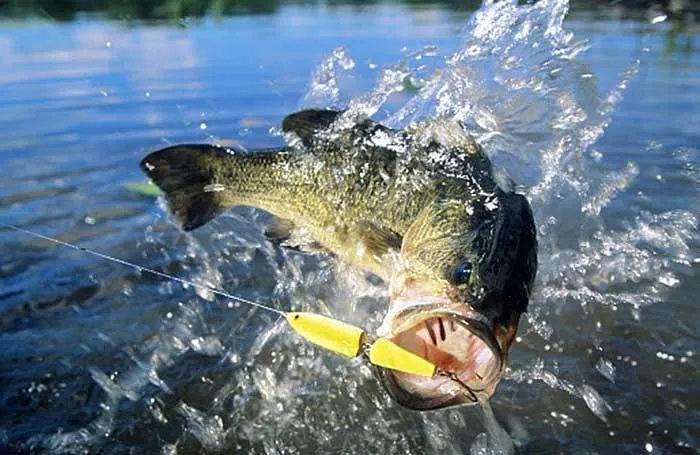
June is the transition from spring to summer in Indiana fishing. Spawning is mostly complete, water temperatures push into the 70s, and patterns shift to dawn-and-dusk topwater, deeper structure midday, and night fishing for catfish. The action is excellent — but the timing matters more than it did in May.
Here is what is biting right now and where to find it.
Largemouth Bass: Post-Spawn Patterns
Largemouth bass finish spawning across most of Indiana by mid-June. Post-spawn fish recover for a week or two before transitioning to summer feeding patterns.
What Is Happening
Female bass move from spawning beds back to deeper water — points, ledges, channel swings, weed edges in 8-15 feet. Males stay shallow longer guarding fry. By late June, bass settle into stable summer patterns: shallow at dawn and dusk, deeper through the heat of the day.
Where to Go
Monroe Lake — main-lake points, secondary points off creek arms, and the deep weed line in 12-18 feet. Topwater frogs over the hydrilla flats at dawn.
Patoka Lake — submerged timber and standing wood in 8-15 feet. Spinnerbaits over flats at dawn.
Geist Reservoir — riprap, docks, and ledges. Wacky-rigged Senkos around docks all summer.
Eagle Creek Reservoir — fishing piers and shallow structure for shore anglers.
Farm ponds — topwater frogs and buzzbaits at first/last light produce the best action of the year.
How to Catch Them
Dawn/dusk topwater: Hollow-body frogs over grass, walking baits along shorelines, buzzbaits on shallow flats.
Mid-day deep: Texas-rigged plastics on points, deep-diving crankbaits along ledges, drop shots over offshore structure.
Cover bass: Jigs flipped into laydowns, spinnerbaits slow-rolled along weed edges, chatterbaits ripped through grass.
Hybrid Striped Bass: Surface Schooling Begins
Hybrid striped bass start their famous summer surface-schooling behavior in June. This is one of the most exciting fisheries in Indiana — fish hammering shad on top in feeding frenzies that draw birds and bait.
Where to Go
Patoka Lake — Indiana’s top hybrid striper fishery. Surface schools in the main basin, especially near creek mouths.
Monroe Lake — strong hybrid striper population stocked by DNR. Main lake at dawn and dusk.
Brookville Lake — surface activity around the dam area and main basin.
Mississinewa and Salamonie Reservoir — periodic hybrid striper schools, especially in upper reaches.
Ohio River tailwaters (Newburgh Lock & Dam) — current-break schooling.
How to Catch Them
When you see surface activity (boils, splashing, diving birds), cast immediately:
- Small topwater plugs (4-inch walking baits, poppers) — the most exciting method
- 3-inch white swimbaits on 1/4-oz jigheads
- Kastmaster spoons in chrome or chrome/blue
- Blade baits counted down through the school
Off the surface (between feeding bursts), use vertical jigs (1-oz spoons) or live shad on slip-bobber rigs over the schools.
Bluegill and Redear: Sunfish Spawn Transition
Bluegill spawning winds down in early June across most of Indiana. Redear sunfish (also called shellcrackers) spawn slightly later — June is peak redear time.
Where to Go
Patoka Lake — strong redear population. Beds in 4-8 feet of sandy/gravel cover.
Monroe Lake — both bluegill (finishing) and redear (peaking) bedding.
Lake Wawasee and northern natural lakes — bluegill spawn still active in early June.
Farm ponds — peak action for bluegill, plus redear in stocked ponds.
How to Catch Them
Redear feed primarily on snails and clams — they hit the bottom more than bluegill. Use:
- Worms or red wigglers on a #6 or #8 hook fished on the bottom
- Small jigs tipped with worms dragged slowly through bedding areas
- Bobber rigs set deeper than for bluegill — 4-6 feet
Redear average larger than bluegill — Indiana redear over 1 lb are common in stocked lakes.
Channel and Flathead Catfish: Night Time
June marks the start of serious summer catfishing in Indiana. Water temperatures in the 70s push channel cats and flatheads into night-feeding patterns.
Where to Go
Wabash River — Indiana’s premier flathead fishery. Davis Ferry Park (Lafayette), Fairbanks Park (Terre Haute), Mt. Vernon Riverfront. Trophy 30-50 lb flatheads come out at night.
Ohio River — trophy blue catfish (over 80 lbs caught annually) and flatheads. Newburgh, Mt. Vernon, and Madison are all top access points.
White River — channel cats throughout. Indianapolis Broad Ripple area is accessible and productive.
Reservoirs: Patoka, Monroe, Mississinewa, Salamonie all hold quality channel cats for nighttime bank fishing.
How to Catch Them
Channel cats: Chicken liver, cut shad, or nightcrawlers on a 2/0 baitholder hook. 12-17 lb mono on a medium-heavy spinning rod.
Flathead cats: Live bait only — bluegill, suckers, or small bullheads. 40-65 lb braid, 5/0 to 8/0 circle hook, 2-3 oz egg sinker. Sit on a known hole and wait.
Blue cats (Ohio River): Same as flathead but with cut skipjack herring or shad. Heavier gear (50-80 lb braid). Drift-fish current breaks.
Walleye: Deep-Water Patterns
Walleye move deep as water warms past 70°F. By late June, most walleye are in 15-25 feet on Indiana reservoirs, feeding briefly at dawn and dusk in shallower water.
Where to Go
Brookville Lake — deep main lake structure in 18-30 feet. Drop-off edges off rocky points.
Mississinewa Reservoir — humps and ledges in 12-20 feet.
Salamonie Reservoir — deep main basin.
How to Catch Them
Crawler harnesses trolled at 1.2-1.7 mph along structure (use bottom bouncers).
Vertical jigging with 3/4-oz Rapala Rippin’ Rap or VMC Tingler in 18-25 feet.
Live bait rigs with sucker minnows on 6-foot leaders dragged along bottom structure.
Dawn and dusk, walleye move shallow — work shoreline points with crankbaits during the low-light windows.
Smallmouth Bass: River Heat Up
Smallmouth bass thrive in 65-75°F water — exactly Indiana’s June river temperatures. River smallies are at their most active.
Where to Go
Upper Wabash River — between Lafayette and Wabash. Rocky riffles and pools in cleaner water.
Tippecanoe River — between the Norway Dam and the Wabash confluence. Premium smallmouth water.
White River — East Fork — Bedford to Williams Dam.
St. Joseph River — Mishawaka and Granger area.
How to Catch Them
Tube jigs and ned rigs in green pumpkin or watermelon — work them slow on the bottom.
Small swimbaits (3-inch) on 1/4-oz jigheads.
Topwater poppers and walking baits at dawn and dusk.
In-line spinners (Mepps, Rooster Tails) — surprisingly effective on river smallies.
Wade-fishing the riffles is the most productive approach for shore anglers.
Lake Michigan: Perch Start to Return
Yellow perch begin moving from deeper offshore water back toward Indiana’s piers and breakwalls in mid-June. Action picks up steadily through the summer.
What to Expect
Pier fishing for yellow perch is best from late June through November. Live minnows on slip-bobber rigs in 15-25 feet of water off the breakwalls — Hammond, Buffington Harbor, Whihala Beach, Portage Lakefront, Michigan City.
Charter trips target chinook and coho salmon trolling in 50-100 feet of water. Lake trout and brown trout off-shore.
Browse Indiana fishing guides for Lake Michigan charter captain options.
June Fishing Checklist
- Confirm your Indiana fishing license is current
- Stock up on topwater frogs, walking baits, and chatterbaits for shallow bass
- Buy live bait for catfish: shad, bluegill (where legal), nightcrawlers
- Pack bug spray — June mosquitoes are at peak
- Plan dawn or dusk trips — midday fishing slows considerably as water warms
- Check Lake Michigan boat conditions before heading to the piers
- Pre-tie leader rigs at home — saves on-water time during fast-action bites
Looking Ahead to July
July brings the deepest mid-summer patterns — bass deeper, walleye deeper, bluegill in shaded cover, but Lake Michigan perch fishing kicks into high gear. Night fishing for catfish is the most productive approach. Topwater bass at first and last light. Plan around the heat — early mornings and evenings are when the fish bite.
For month-by-month fishing guidance, see our best time to fish Indiana guide and summer fishing in Indiana guide.
Frequently Asked Questions
What fish are biting in Indiana in June 2026?
June kicks off summer patterns. Post-spawn largemouth bass move to deeper structure but feed aggressively at dawn and dusk. Hybrid striped bass start surface-schooling on Patoka, Monroe, and Brookville. Channel and flathead catfish are active at night. Bluegill spawn winds down with redear spawning peaking. Lake Michigan perch start returning to nearshore waters. Summer is officially on.
When do hybrid stripers start surface schooling in Indiana?
Hybrid striped bass surface-schooling typically begins in early-to-mid June and peaks through August. Look for them on big reservoirs (Patoka, Monroe, Brookville) at dawn and dusk, smashing schools of shad on the surface. Cast small topwater plugs, swimbaits, or 3-inch white spoons into the boil. Pelican-style birds diving on baitfish are the giveaway.
Is summer night fishing better than daytime in June?
For some species, yes. Channel catfish, flathead catfish, and largemouth bass all become highly active at night during June. Daytime fishing is still productive for bluegill, walleye in deep water, and Lake Michigan perch — but the most consistent action for many warm-water species shifts to dawn, dusk, and overnight as June progresses.
What's the trout situation in Indiana in June?
Inland trout streams remain stocked through the spring/early summer. By late June, water temperatures in stocked streams climb above the trout's tolerance and survival drops. Catch-and-keep stocked trout while they're available. Lake Michigan steelhead trout fishing transitions to deeper trolling on charter boats.