Indiana Fishing in August 2026 — Night Catfish, Pier Perch & the Salmon Stage
July 31, 2026
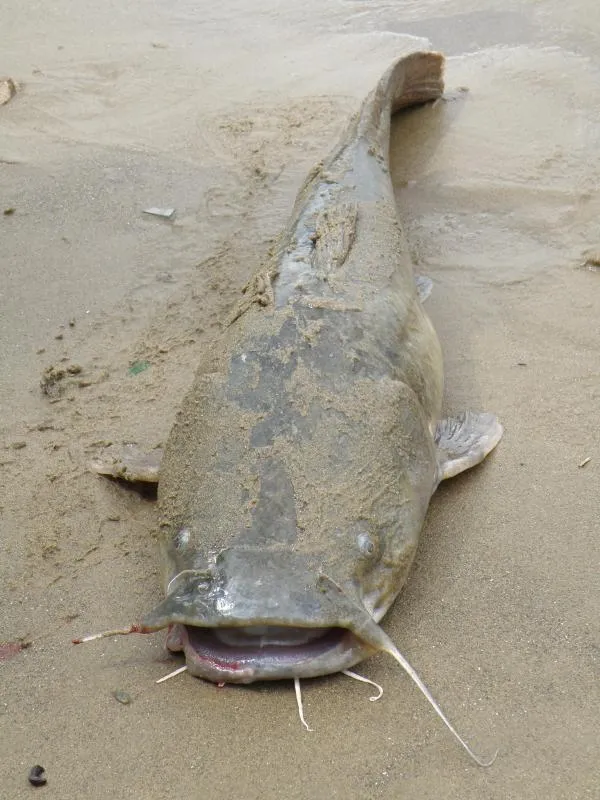
August is the hottest, hardest month to fish in Indiana during daylight — and the single best month to fish after dark. Surface temperatures on inland lakes sit in the low-to-mid 80s, oxygen levels drop in the shallows, and most warm-water gamefish compress their feeding into narrow low-light windows.
The anglers who do well in August do one of three things: fish at night, fish Lake Michigan, or fish the first and last hour of daylight. Everyone else complains about the dog days.
Channel and Flathead Catfish: The Peak Month
August is the high point of the Indiana catfish year. Water is warm, metabolism is maxed, and both channel and flathead cats feed aggressively through the dark.
What Is Happening
Flathead catfish are actively hunting live prey at night, moving out of deep log jams and onto adjacent flats and current seams after sunset. Channel catfish roam more broadly and will take cut bait and prepared baits along shorelines, riprap, and river bends.
The best window runs from about an hour before dark through 2 AM, with a secondary bite right at first light.
Where to Go
Ohio River — the state’s premier flathead water. Fish the outside bends, wing dams, and log jams. Trophy fish over 40 pounds are realistic.
Wabash River — excellent flathead and channel cat numbers. Deep holes below riffles hold fish through the day; they move onto the shallow tails at night.
White River — accessible, productive, and heavily under-fished at night. Log jams and undercut banks.
Monroe Lake — big channel cats on the flats near the causeway; flatheads in the standing timber.
Mississinewa Reservoir and Salamonie Reservoir — both produce good channel catfish numbers on night flats.
How to Catch Them
Flatheads: Live bait only, and big — 6-10 inch bluegill, creek chubs, or green sunfish on a 5/0-8/0 circle hook, fished on a slip sinker rig near cover. Patience matters more than casting volume; one good spot fished for three hours beats six spots fished for thirty minutes.
Channel cats: Cut shad, cut bluegill, chicken liver, or prepared dip baits on a 2/0-4/0 circle hook. Fan-cast across flats and let the scent work.
Gear: Heavy rods, 30-50 lb braid or mono, a solid rod holder, and a headlamp with a red mode so you keep your night vision.
Yellow Perch: Lake Michigan at Its Best
Where to Go
August is the strongest month of the year for yellow perch off Indiana’s Lake Michigan shoreline. The schools are in, they’re concentrated, and they’re catchable from shore.
Michigan City Pier — reliable and heavily fished. Get there early for a spot.
Portage Lakefront and Riverwalk — good access, room to spread out.
Hammond Marina and Whihala Beach — consistent producers.
Buffington Harbor and East Chicago — deeper water close in.
Lake Michigan proper — boat anglers work 25-45 feet and can move with the schools.
How to Catch Them
Live minnows on a slip bobber or a two-hook crappie rig fished tight to the bottom. Perch schools move — if you go fifteen minutes without a bite, adjust depth before you move spots. Small pieces of nightcrawler work when minnows run out.
Indiana’s yellow perch daily bag on Lake Michigan is 15 fish. Check current Indiana fishing regulations before you go, since perch rules have changed in recent years.
Lake Michigan Salmon: The Stage Begins
What to Expect
Mid-to-late August is when chinook salmon and coho salmon begin orienting toward their natal streams. Fish stack near harbor mouths and tributary outflows, and they are aggressive.
This is the best charter fishing of the Indiana year. Boats out of Michigan City, Portage, and East Chicago troll spoons, flashers, and flies on downriggers and dipsy divers, working 60-120 feet of water early in the month and moving progressively shallower and closer to harbor mouths as August ends.
Lake trout and steelhead fill out the mixed bag.
Pier anglers get their first real shot at staging kings in the last week of August — casting spoons and body baits at first light near the Michigan City and Portage harbor mouths. See our Lake Michigan charter fishing guide for how to book a trip.
Largemouth Bass: First Light and Full Dark
Where to Go
Largemouth bass are in a hard summer pattern. Expect a short, intense dawn bite, a long slow mid-day, and a good evening window.
Monroe Lake — offshore humps and ledges in 15-22 feet mid-day; shallow weed edges and points at dawn.
Patoka Lake — submerged timber, 12-18 feet.
Geist Reservoir and Eagle Creek Reservoir — dock shade and riprap, best in the first hour of light.
Brookville Lake — deep clear-water structure; drop shot and shaky head.
Farm ponds — the most reliable August topwater in the state. Frogs over mats at daybreak.
How to Catch Them
Dawn: Hollow-body frogs over slop, walking baits on points, buzzbaits along shorelines.
Mid-day: Drop shot, Carolina rig, and deep crankbaits on offshore structure. Slow down.
Night: Big dark spinnerbaits with Colorado blades, black jigs with a chunk trailer, and dark plastic worms fished slow on main-lake points. Night bass fishing in August is genuinely underrated in Indiana.
Hybrid Striped Bass: Surface Schools Continue
Where to Go
Hybrid striped bass schooling activity continues through August and often intensifies late in the month as shad schools grow.
Monroe Lake — main-lake basin, watch for birds and surface boils at dawn.
Patoka Lake — open water near the dam and mid-lake humps.
Brookville Lake — good hybrid numbers in the main basin.
How to Catch Them
Keep a rod rigged with a topwater walking bait or a shad-imitating swimbait ready at all times — surface activity is brief and unpredictable. When the fish are down, a jigging spoon or a blade bait vertical-fished under the school works. Watch your electronics and follow the bait.
Walleye: Deep and Dawn
Where to Go
Walleye and saugeye hold deep through August daylight and feed at the edges of the day.
Brookville Lake — the state’s best walleye reservoir. Points and humps in 20-30 feet.
Mississinewa Reservoir and Salamonie Reservoir — troll crankbaits along creek channels.
Tippecanoe Lake — deep, clear northern natural lake with a solid walleye population.
How to Catch Them
Nightcrawler harnesses trolled slowly along breaklines, deep-diving crankbaits on long-line passes, and vertical jigging over structure. After dark, walleye move shallow onto rocky points and gravel bars — a shallow-running stickbait cast from shore at night is one of the most effective and least-used August tactics in Indiana.
Smallmouth Bass: Low, Clear River Water
Where to Go
August rivers run low and clear, which concentrates smallmouth bass into predictable deeper holes and riffle heads. This is prime wading season.
St. Joseph River — northern Indiana’s best smallmouth water.
Wabash River — long stretches of wadeable smallmouth habitat.
White River — accessible from many central Indiana access points.
How to Catch Them
Downsize and lengthen your leader — clear water makes fish spooky. Tubes, small swimbaits, Ned rigs, and topwater poppers at first light. Approach from downstream and stay low. Wade quietly; in August the fish will see you before you see them.
Bluegill and Sunfish: Deep and Shady
Where to Go
Bluegill and redear sunfish have moved off the spawning flats into deeper weed edges, brush piles, and dock shade in 8-15 feet.
Nearly every Indiana lake produces. Lake Wawasee, Lake Maxinkuckee, and Sylvan Lake are strong northern options.
How to Catch Them
Small jigs or a piece of nightcrawler under a slip bobber set to the exact depth of the weed edge. Precision on depth matters far more in August than in spring.
August Fishing Checklist
- Headlamp with a red-light mode, plus spare batteries
- Bug spray with DEET — mosquitoes peak now
- Extra water; heat exhaustion is the real August risk
- Plan trips around dawn, dusk, or full dark
- Cooler with plenty of ice — warm-water fish spoil fast
- Life jacket and navigation lights if running a boat after dark
- Check Lake Michigan small-craft advisories before pier or boat trips
- Watch for low-oxygen fish kills on small ponds during heat waves
- Tell someone your plan and expected return time for night trips
Looking Ahead to September
September is the turn. Shortening days and the first cool nights drop water temperatures, oxygen returns to the shallows, and fish begin feeding hard ahead of winter. Expect the Lake Michigan salmon run to push into Trail Creek and the Little Calumet, smallmouth to go on a fall tear, and bass to move back shallow and chase bait.
September 26 is also Indiana’s final free fishing day of 2026 — no license required, though all other regulations still apply. See our free fishing days guide for details.
For month-by-month fishing guidance, see our best time to fish Indiana guide and our night fishing in Indiana guide.
Frequently Asked Questions
What fish are biting in Indiana in August 2026?
August is the peak month for night catfishing — flathead and channel catfish feed hard through the dark hours on the Ohio, Wabash, and White rivers and on the big reservoirs. Yellow perch fishing on Lake Michigan piers is at its best. Lake Michigan salmon begin staging near harbor mouths and tributary outflows late in the month. Largemouth bass hit topwater at first and last light, then hold deep. Hybrid striped bass continue surface schooling on Monroe and Patoka.
Is August a good month to fish in Indiana?
Yes, if you fish the right hours. August has the hottest, most oxygen-stressed water of the year, so mid-day fishing on inland lakes is slow. But dawn, dusk, and full-dark are excellent — arguably the best night fishing of the entire year for catfish. Lake Michigan fishes well all day. Late August, as daylight shortens, inland fish start feeding more aggressively ahead of fall.
When does the Lake Michigan salmon run start in Indiana?
Chinook and coho salmon begin staging off Indiana's Lake Michigan harbor mouths in mid-to-late August as water cools and the fish orient toward their natal streams. Charter action near Michigan City, Portage, and East Chicago is strong through the month. The actual tributary run into Trail Creek and the Little Calumet generally starts in September and peaks in October.
Why is night fishing so much better in August?
Surface water on Indiana lakes and rivers sits in the low-to-mid 80s during August days. Warm-water gamefish become lethargic and hold deep or under cover during daylight, then move shallow to feed once the sun is off the water. Catfish in particular are nocturnal feeders that hunt shallow flats and current seams after dark. Night fishing also avoids the heat, boat traffic, and skiers.
Are there free fishing days left in Indiana in 2026?
Yes — one remains. September 26, 2026 is Indiana's final free fishing day of the year, when the fishing license requirement is waived. All bag limits, size limits, and other regulations still apply. It falls on a Saturday and lines up well with the start of fall fishing.